

Loading articles
Get the latest updates, tips, and insights on mineral rights, oil, and gas.
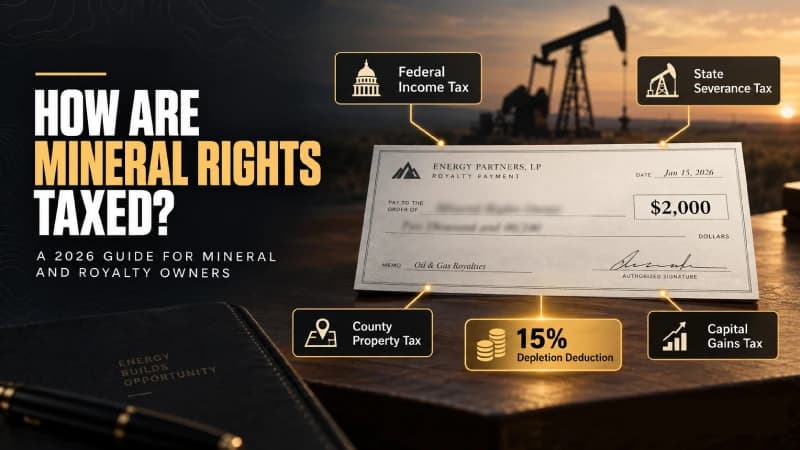
A Texas royalty owner gets a $2,000 check in January. By April, four different governments want a piece of it - and one of them already took theirs before the check was even cut. Federal income tax. State severance tax. County property tax. And if the owner ever sells, capital gains tax on top. Most mineral owners know they owe something. Almost none know exactl…
Read →
Enhanced oil recovery (EOR) is a set of tertiary techniques that extract oil left behind after primary and secondary production. By injecting CO₂, steam or chemicals into a reservoir, operators raise total recovery from roughly 20–40% of the original oil in place to 30–60% or more. Once the traditional well runs dry, it does not necessarily go dry. As a matte…
Read →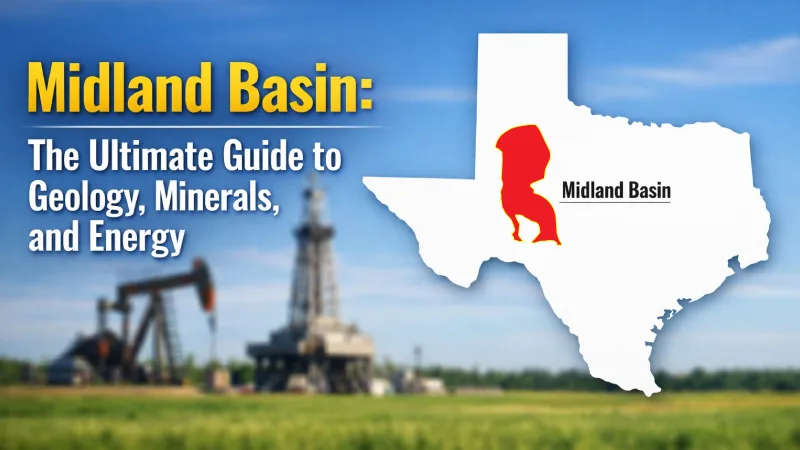
The story of Texas energy isn't just about what’s on the surface; it’s about a massive, ancient bowl of rock buried miles beneath the red dirt of West Texas. If you have ever driven through the city of Midland and seen the "Tall City" skyline rising out of the desert, you are standing on the edge of one of the most significant hydrocarbon accumulations on the planet…
Read →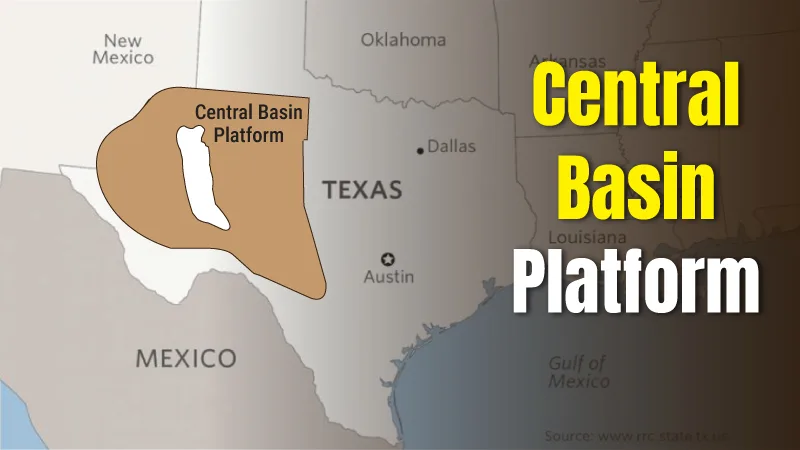
The Central Basin Platform is an uplifted block of rock in West Texas and southeastern New Mexico that splits the Permian Basin in two — the Delaware Basin to the west and the Midland Basin to the east. It covers roughly 6,400 to 7,000 square miles across eight Texas counties, and its oil sits shallow: most wells produce from 3,000 to 8,000 feet. For many years, the Central…
Read →
The fracking pros and cons debate looks very different depending on who you are. For Texas mineral owners, hydraulic fracturing ("fracking") has transformed oil and gas development by unlocking shale reserves that were previously considered uneconomic to produce. The benefits are substantial: access to previously unrecoverable reserves, materially higher production rates, increa…
Read →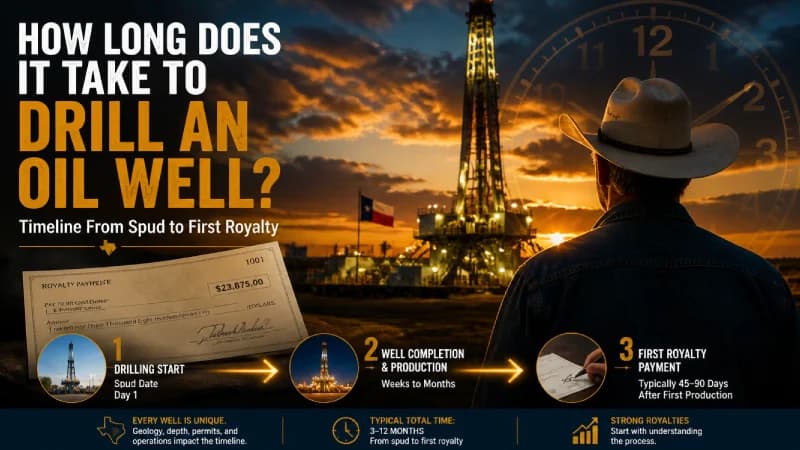
If you can see a drilling rig operating on or near your Texas acreage, one of the first questions that naturally comes to mind is: How Long Does It Take to Drill an Oil Well? More importantly for mineral owners, how long will it take before the well actually starts producing and royalty payments begin? Drilling a modern horizontal oil well in Texas typically takes 15 to 60 days from spu…
Read →
For many Texas mineral owners, an oil and gas lease offer arrives before they fully understand what they are being asked to sign. A landman may call, a standard lease form may arrive, and the owner may feel pressure to respond quickly. This guide explains what an oil and gas lease is, which terms matter most, and what Texas mineral owners should review before signing, so they can make a more infor…
Read →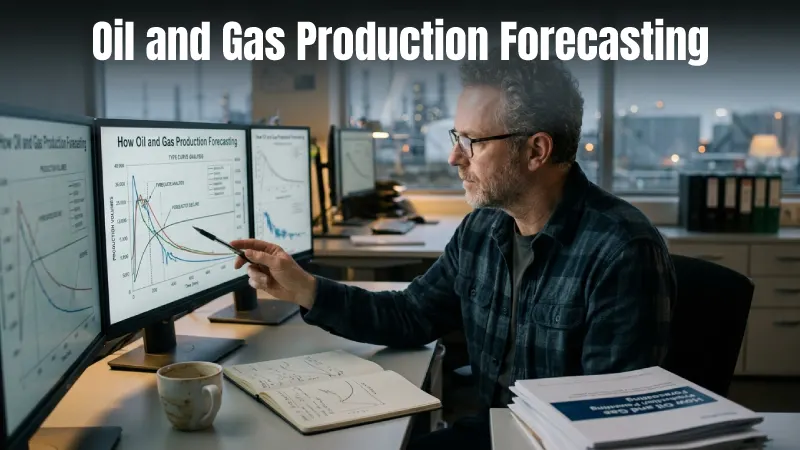
"Every producing well tells a story, but only if you know how to read it." For Texas mineral owners, that story is written through oil and gas production forecasting. It determines how production declines, how long a well will generate revenue, and ultimately how valuable that asset becomes over time. While production numbers are publicly available through the Texas Railroad Com…
Read →
A mineral lease may look like a standard document, but in reality, it’s where the true value of your minerals is decided. Certain important terms can determine how much you earn, how long your land stays locked, and whether you benefit from future opportunities or miss them entirely. That’s why understanding oil, gas, and mineral lease clauses is essential.&#…
Read →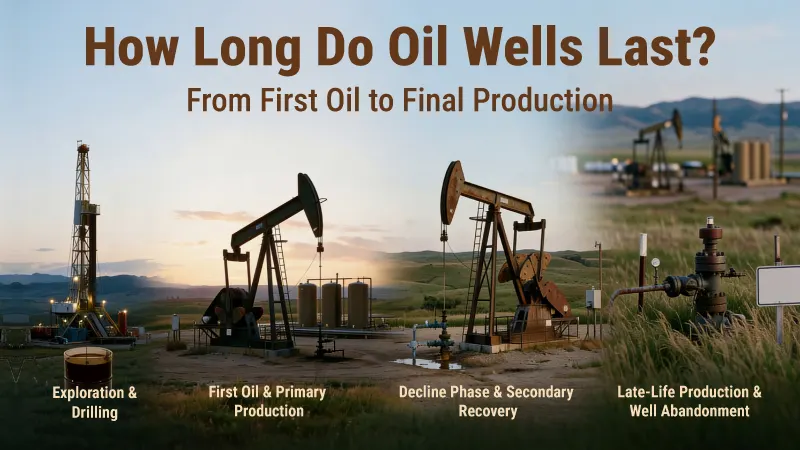
How Long Do Oil Wells Last? If this question has crossed your mind, you are not alone. Many mineral owners in Texas lease their land hoping to receive royalty income for years, sometimes even generations. Yet the reality is not always the same for every well. Some wells stop producing sooner than expected, while others continue generating oil and gas for decades. The lifespa…
Read →
Owning a piece of the Lone Star State is a dream for many, but in Texas, what you see on the surface is often only half the story. If you’ve ever walked across a Texas ranch and wondered if there’s a fortune sitting thousands of feet below your boots, you’re thinking about mineral rights in Texas. Whether you are a multi-generational landowner or a first-t…
Read →
Consider a scenario involving two neighbors in the heart of the Permian Basin, David Martinez and Laura Thompson. Both own 160 acres of family land passed down for generations. One Tuesday afternoon, a landman knocks on their doors with a “standard” lease offer: $500 per acre and a 1/8 royalty. David is thrilled. Seeing an $80,000 bonus check, he signs immediately and uses…
Read →
The Texas oil and gas industry has reached a remarkable milestone, over $27 billion in state and local taxes and royalties, according to TXOGA’s 2025 Annual Energy & Economic Impact Report. Behind these numbers are thousands of mineral owners receiving income from the resources beneath their land. For many landowners, oil and gas royalties provide long-term financial…
Read →
Imagine opening your mailbox to find a royalty check that is significantly larger than usual because of a new well on your family’s acreage in the Permian Basin. While that’s a win, it also comes with understanding the associated tax liabilities. Many Texas mineral owners treat their royalty checks like a simple paycheck; they deposit the money and pay taxes on the net amou…
Read →
Suppose there are two mineral owners in the center of the Permian Basin. The first owner sells his mineral rights at a life-changing price of seven figures. He achieves financial freedom, only to watch years later as new horizontal wells generate millions in royalties on land he no longer owns. The second owner decides to never sell mineral rights. He continues to get regular royalty che…
Read →
Once drilling is completed and the wellhead equipment (commonly known as the “Christmas Tree”) is installed, your role as a mineral owner shifts from leasing to production. Months, and sometimes years later, you may receive a formal document from the operator’s land department: the division order in oil and gas document. This document often looks complex, combining co…
Read →
If you own land in Texas, you may have heard the saying that the real wealth lies beneath your feet. For many families, that value isn’t visible on the surface; it exists deep underground in shale and limestone formations. You might receive an offer to buy your minerals or inherit a small share in a producing well and wonder whether your monthly royalty check truly reflects its real wor…
Read →
If you own minerals in Texas, you have likely received a phone call or a letter from someone claiming they want to "lease your minerals." That person is a landman. To a beginner, the oil and gas industry can feel like a labyrinth of legal jargon, county records, and complex math. At the center of this maze stands a professional who translates the complex requirements of large-s…
Read →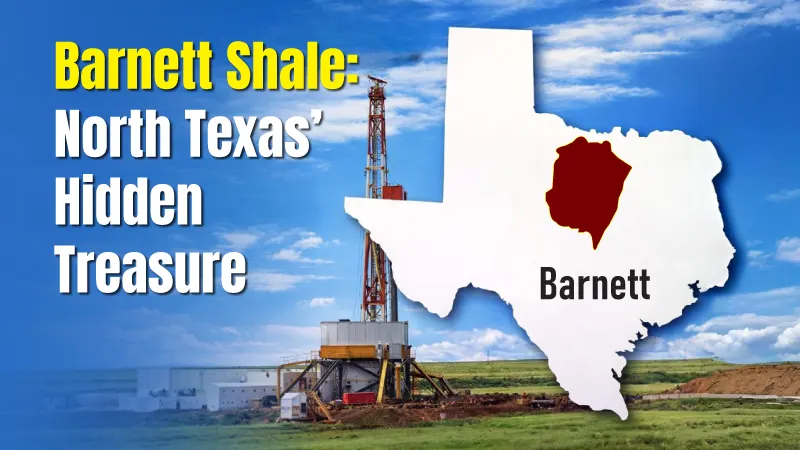
Before the Barnett Shale transformed North Texas, America’s natural gas supply was drying up. Experts warned that we were running out of fuel and would soon have to pay a fortune to import energy from overseas. But George Mitchell, a stubborn oilman from Houston, had a different plan. While everyone else saw a dead end, Mitchell saw a massive opportunity hidden deep underground. &#…
Read →
If you own minerals in the heart of the Midland Basin or across the sprawling Texas ranchlands, you likely know the feeling of watching a massive oil company plant a single flag on your property. You sign a lease covering 640 acres, they drill one decent well in the corner, and suddenly, your entire section is "held by production." For the next forty years, that one well keeps…
Read →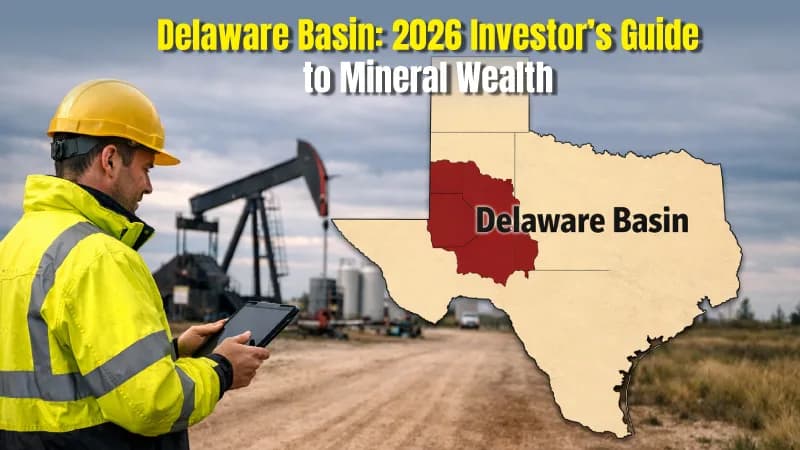
The Permian Basin is a title that is heavy in any boardroom in Houston to Dubai, yet to learn where the real heavy lifting of American energy occurs, you must go West, that is, into the Delaware Basin. The Delaware Basin functions as a vast, multi-layered subterranean reservoir system, characterized by high-porosity rock units and organic-rich intervals extending several…
Read →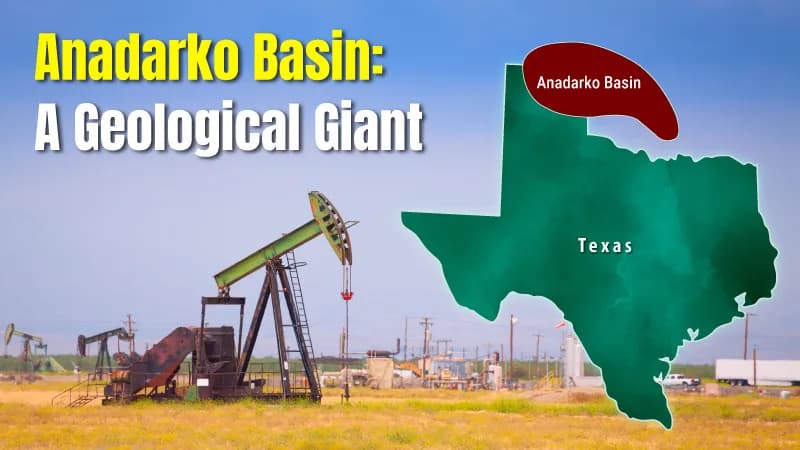
What many people imagine about the American heartland is the never-ending rolling plains and wheat lands but there is something below the surface of the Texas Panhandle and Western Oklahoma that is a geology giant. Peel back the earth, and there is a huge, bowl-shaped hole, stuffed with miles of prehistoric rock, pressurized gas and black gold. It is the Anadarko Basin, one of the most impor…
Read →
You must not look at the horizon anymore; you must look underneath it to really see land ownership in Texas. Texas, on the ground and the rocks way down in the ground are, in a way, two absolutely distinct legal worlds. This is how it is with the split estate, a notion that has been controlling the Texas land for more than 100 years. You may have inherited family property, or you…
Read →
Just imagine that you wake up and find out that a piece of land that was owned by your great-grandfather in the Permian Basin has been producing oil throughout the past ten years. You had no idea about the well, the oil company had lost track of you and the checks had been in a state vault at Austin. This is a common administrative reality for thousands of families under Texas Property…
Read →
As of January 2026, thousands of feet beneath your property, pressurized reservoirs of crude and natural gas are seeing a major resurgence due to new federal leasing incentives and export demand. You do not own the drilling rig, you did not employ the engineers, and you are not putting a penny of your savings on the job of getting that oil to the surface. But once a month, a check is include…
Read →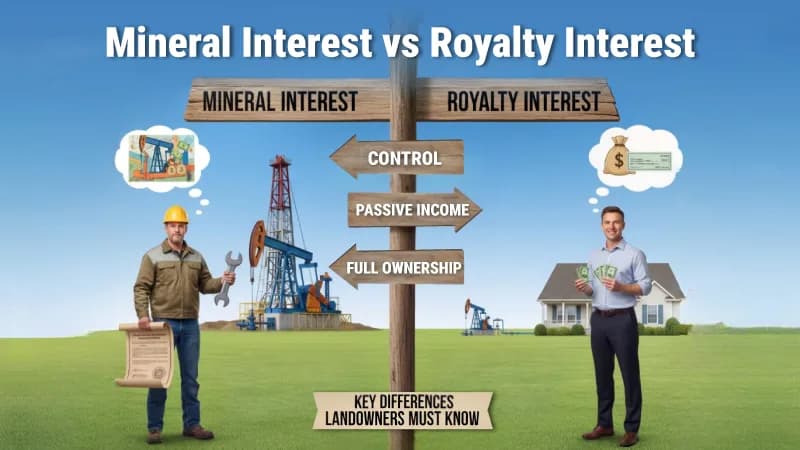
For any Texas landowner or heir discovering potential assets, distinguishing between Mineral Interest vs Royalty Interest is the single most important factor in determining your legal rights, tax liabilities, and wealth potential. While often used interchangeably, these terms represent distinct estates under Texas law: one offers perpetual control and lease bonuses, while the other…
Read →
If you own land in Texas, you’ve likely heard that you own a "bundle of sticks." It’s a classic legal metaphor used to explain that property ownership isn't just one single right; it’s a collection of many. In the world of Texas oil and gas, the two most important sticks in that bundle are the power to make deals and the right to get paid. When a family inheri…
Read →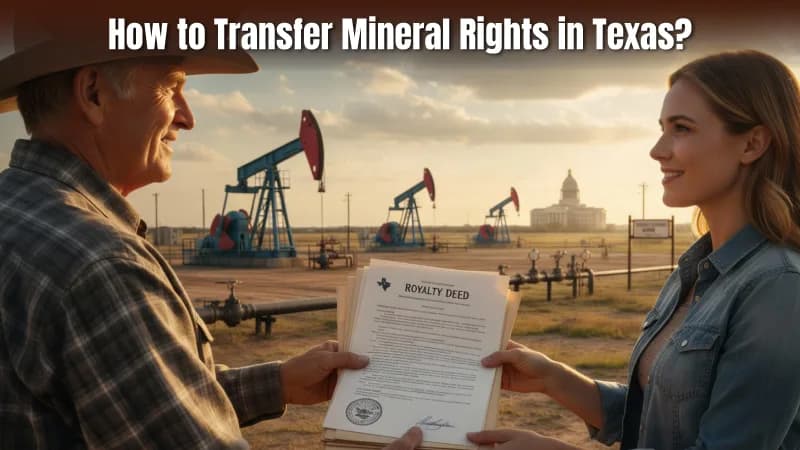
To transfer mineral rights in Texas, the owner must execute a valid deed (Mineral, Royalty, or Gift Deed) containing a precise legal description of the property. This deed must be notarized and filed with the County Clerk where the land is located, followed by submitting a certified copy to the oil operator to update pay records. The process of how to transfer mineral rig…
Read →
For many families, owning mineral rights feels a bit like owning a mystery box. Every month, a check arrives in the mail (or a deposit hits the bank), and with it comes a complicated piece of paper covered in tiny numbers, RRC lease ID codes, and confusing Post-Production Cost (PPC) deductions. You look at it, see that the amount is different from last month, and wonder, "Is this right?&…
Read →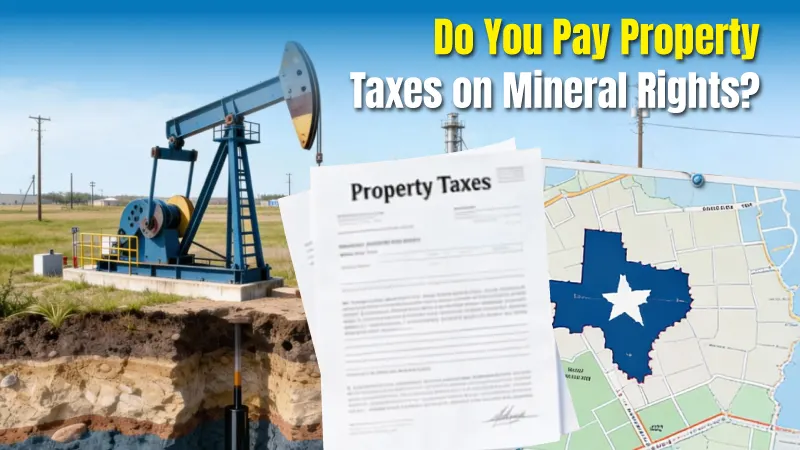
Mineral rights in Texas can be a reward to own financially but also can create puzzling questions, particularly on taxes. The mineral owners are often surprised to find out that although they do not own the surface land or run a well, they might still be charged a property tax bill. Many mineral owners are taken aback by their initial tax bill, particularly if they have no control over leasing dec…
Read →
When you are thinking about purchasing rural property or land in the Lone Star State or elsewhere in the U.S., one of the most important questions you will face is, “What exactly am I buying?” Most individuals concentrate on the surface, such as the acreage, the quality of the soil, the availability of water and the view but fail to look at the one beneath the grou…
Read →
The process of inheriting the property is usually a bittersweet experience, but when the inheritance is the subsurface, then this process may soon turn into a puzzle. Inherited mineral rights in Texas are one of the rare types of real estate that possess their own regulations, customs, and legal norms of operation. Mineral rights are not visible, like a house or a parce…
Read →
You have discovered the right ranch in Texas or Colorado. The house itself is gorgeous, the views are breathtaking, and the price appears exquisite. You put your hands together, you sign the papers and you are the owner of the land... or are you? A property sale does not necessarily involve a clean transfer in mineral-rich states such as Texas, Oklahoma and Pennsylvania. You may…
Read →
The legendary Texas oil patch has created fortunes for generations, and if you are a Texan who owns mineral rights, you hold a unique asset that comes with both the promise of life-changing wealth and the headache of risk. Waiting on those uncertain future royalty checks can be stressful, increasing your exposure to volatile oil prices, dry holes, and complex legal paperwork. If you are one o…
Read →
You’re going about your day when a polite call or letter arrives asking about the mineral rights tied to your land. For many Texas landowners, this is the first hint that there may be oil and gas interests beneath property they’ve owned for years. It naturally raises a big question: What Happens If You Find Oil on Your Property? Your mind may jump to lease bonuses an…
Read →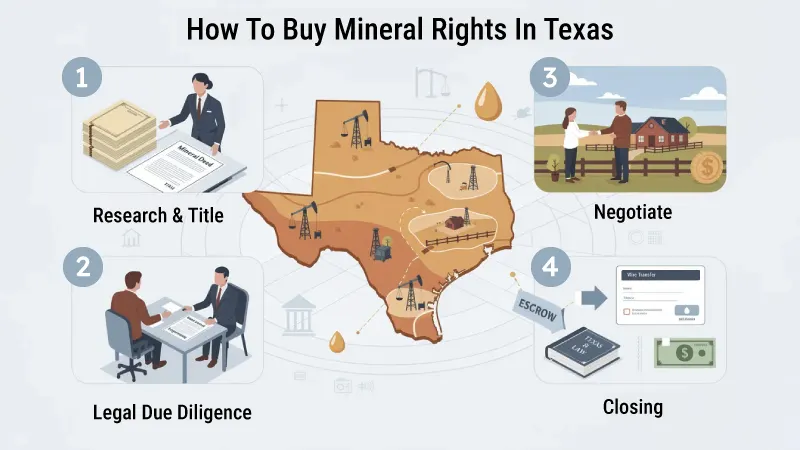
Are you trying to decipher how to buy mineral rights in texas? Surely, It is a clinical process with risk involved. However, we will give you a clear understanding of buying texas mineral rights! Through this comprehensive buying guide (with leasing and selling), you will understand the legal background of the deal, drivers of value, regional peculiarities, risks and the entire proce…
Read →
A mineral deed is a document that conveys the ownership of minerals that are found under a piece of land like oil, gas, and other natural resources. Mineral rights can be separated and transferred independently of surface ownership, unlike surface ownership, in which a party can only own the land but not the minerals beneath the land. A mineral deed can contain executive rights…
Read →
Mineral rights refer to who actually owns the valuable resources like oil, gas, and other minerals hidden beneath a property's surface. For mineral owners, understanding the value of these rights is essential, as it can significantly impact both the overall property value and the potential income from resource extraction. The value of these rights is influenced by various factors, such as…
Read →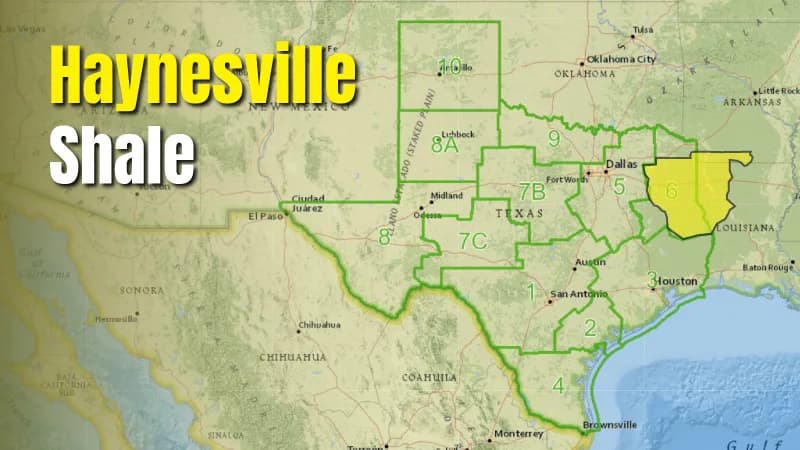
Key Takeaways The Haynesville Shale is a Jurassic-era rock formation covering roughly 9,000 square miles across East Texas and Northwest Louisiana, with its reach extending into Southwest Arkansas. However, when it comes to actual gas production, all the action happens exclusively in Texas and Louisiana. Chesapeake Energy’s 2008 breakthrough in h…
Read →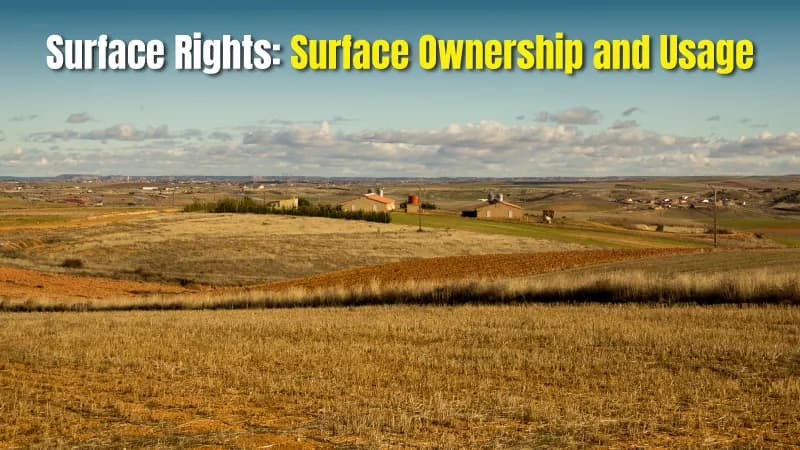
When you buy a property, you probably think you own the whole package- the grass on top and all the minerals beneath - but land ownership is actually a whole lot more complicated than that. Surface rights - the bit that actually lets you control what happens on the surface of your land - is a concept that can get really tricky, especially when mineral and surface rights get split off and you…
Read →
Beneath your Texas property, there could be some seriously valuable oil, natural gas, and other minerals just waiting to make you rich - potentially thousands or even millions of dollars. Yet, all too often property owners remain in the dark about who actually owns these hidden resources. And in Texas, mineral rights can be owned separately from the land itself - creating a right old mess of…
Read →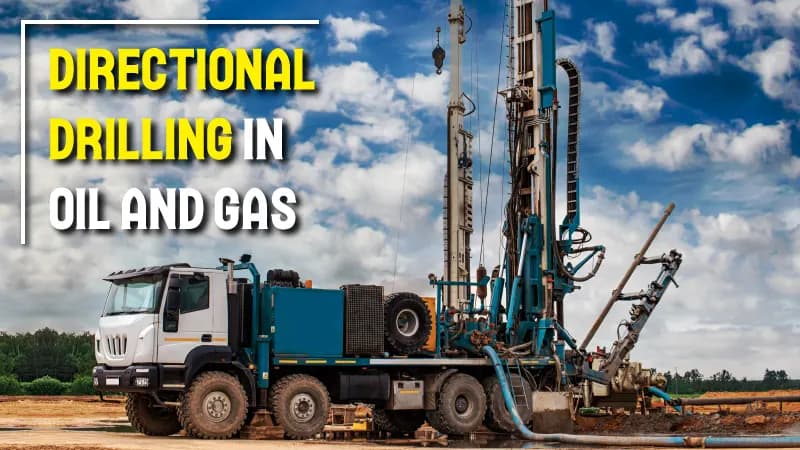
Directional drilling in the oil and gas industry might not have started yesterday, but it’s a technique that has become an absolute must-have for extracting hydrocarbons with any degree of precision. Unlike traditional vertical drilling, or just drilling straight down into the earth, directional drilling offers a bunch of advantages that have really taken off. Most directional wells st…
Read →
As we know, the oil and gas industry is one of the paramount aspects in energy generation as well as economic growth. Although it helped shape the nation in financial terms, it includes some complex tasks like keeping an eye on drilling rigs, continuous pipeline monitoring, etc.Now, to reduce the efforts in such tasks, the industry has welcomed the Digital Twin in oil and gas innova…
Read →
The manner in which we consume and generate energy constantly evolves, yet oil and gas remain so prominent in daily life. Though there is a global shift toward clean energy sources such as wind and sunlight, oil and gas power vehicles, warm homes, and energized machines. That's why people are considering investing in oil and gas in 2025. At first, it might look complicated, but if you know the fun…
Read →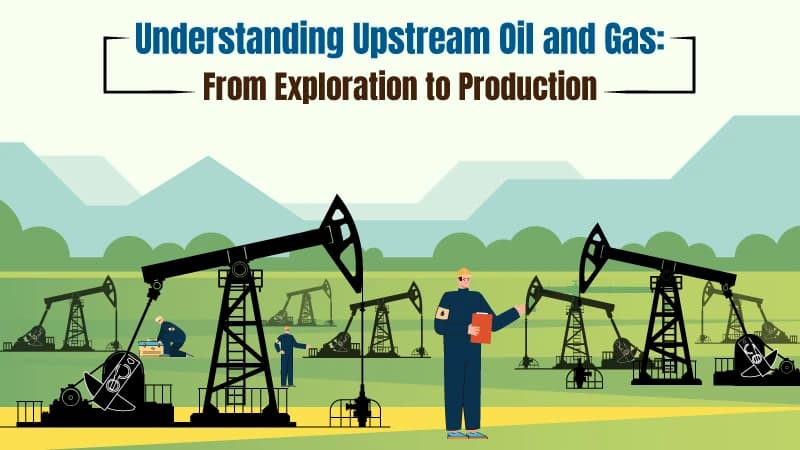
Our homes, cars, and industries are all powered by oil and gas, which are essential to our everyday existence. Have you ever wondered, however, how these resources are discovered and brought to us? The "upstream" stage of the oil and gas sector is where the process starts. Upstream includes everything from drilling and extracting these precious resources (production) to looking for oil and…
Read →
Known for its high production rates, oil and gas production is the one thing responsible for keeping our world running. Fuel is provided for homes, transport, and industries. But just how is it done? What does it mean for our planet? Take a journey through the amazing world of oil and gas production; understand what its life cycle entails from start to finish. We will examine how these resources,…
Read →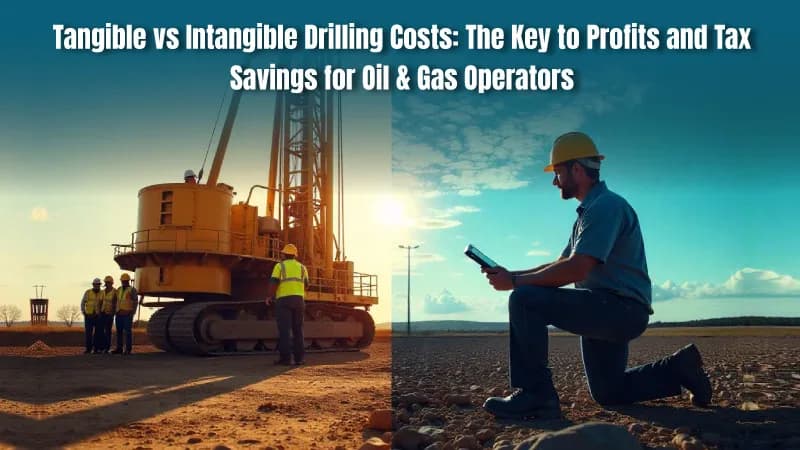
When oil and gas companies drill new wells, they spend money on many things. Some of these are physical tools and equipment, while others are services and labor, involving labor costs. These are divided into two types: tangible drilling costs and intangible drilling costs. Knowing the difference between the two is important for saving money, improving cash flow and leveraging financial advantages…
Read →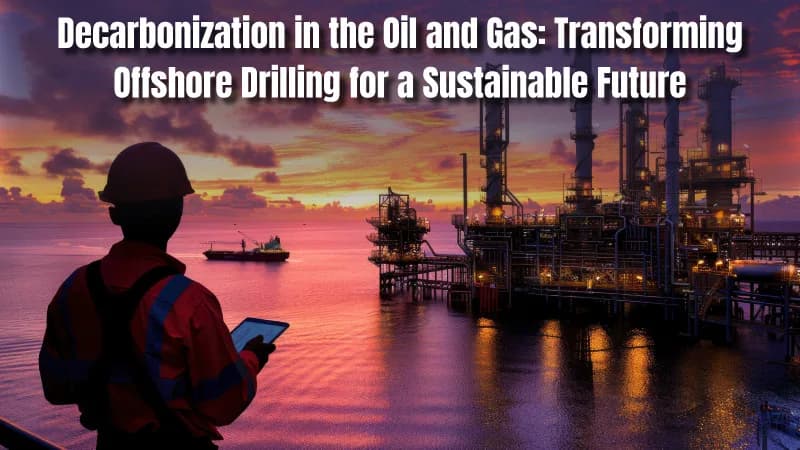
Offshore drilling—the most important thing in the oil and gas industry—has given positive outcomes in the enhancement of the economy through its major contribution to the energy industry. As this industry gives such positive results, it also brings some environmental issues like pollution of water and air. To overcome these concerns, the mineral experts have started implementing decarb…
Read →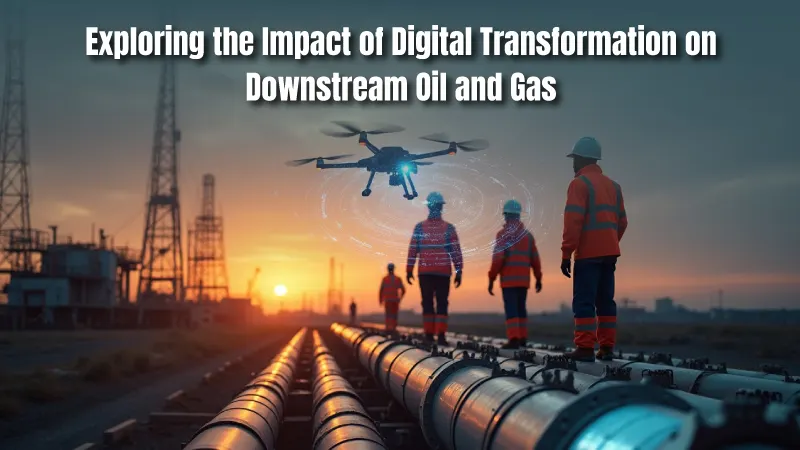
The downstream oil and gas industry is essential to the conversion of natural gas and crude oil into everyday products like jet fuel, diesel, and gasoline. The emergence of digital technologies is causing a significant change in this sector. Digital transformation is changing the way downstream oil and gas firms work, from increasing sustainability and efficiency to simplifying operations. This co…
Read →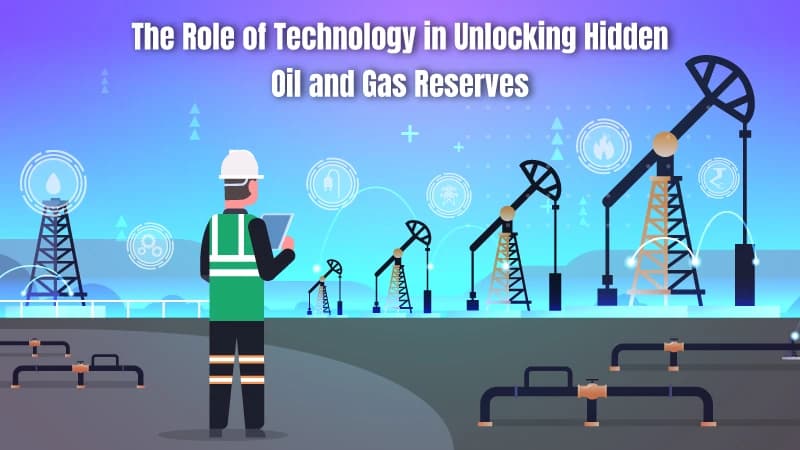
The oil and gas industry is under increasing strain to discover new energy sources while boosting the effectiveness of current operations in a time when the world's energy needs are only going to rise. The majority of the world's recoverable oil and gas reserves have already been used, leaving undeveloped reserves buried in difficult-to-reach places or deep beneath the surface of the planet. For s…
Read →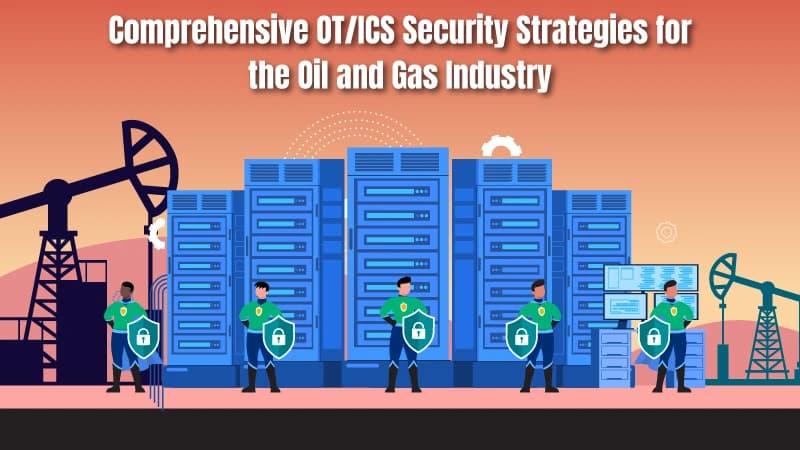
The oil and gas sector is highly dependent on technology to maintain seamless and effective operations in the connected world of today. Systems like Industrial Control Systems (ICS) and Operational Technology (OT) are essential for anything from drilling rig control to pipeline monitoring. But as OT/ICS security systems develop more sophistication, cybercriminals attack them as well. This blog wil…
Read →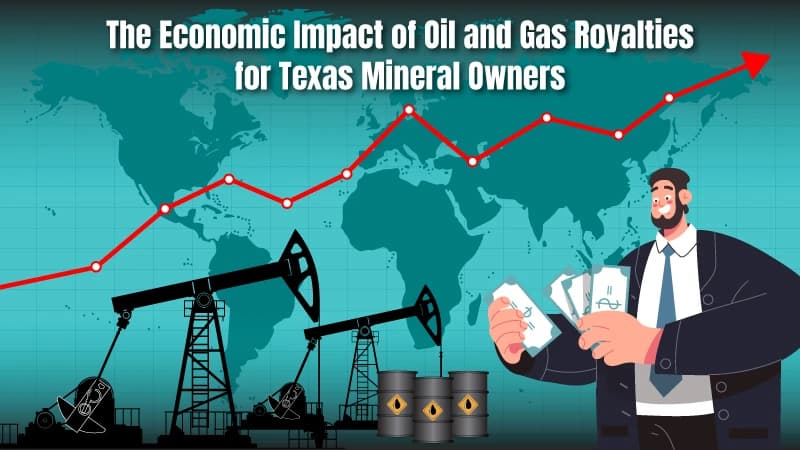
In Texas-the state that leads the nation in energy production-the oil and gas sector not only supports the state's economy but also offers significant financial advantages to individual mineral owners. Oil and gas royalties can be a game-changer for landowners with mineral rights since they provide a reliable stream of income that is frequently disregarded. However, understanding deeply what these…
Read →
To keep ahead in the fast-paced oil and gas industry, one must work smarter, not harder. Yes, even the oil and gas industry involved smart working within it. One such smart way of working is oil and gas automation. The sector is changing as a result of automation, which makes work safer, quicker, and more effective. Companies can save time, lower hazards, and increase production by utilizing cutti…
Read →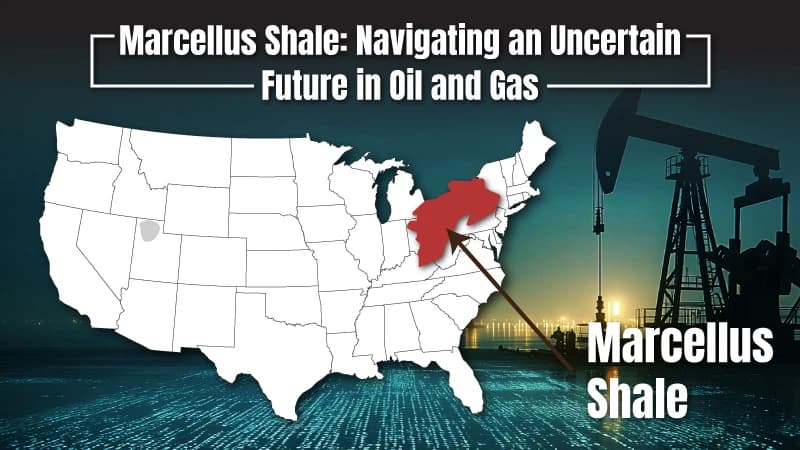
The US holds numerous shale plays and basins that enhance the outlook of the oil and gas industry. These shale plays act as a transformative tool for the energy industry, ultimately contributing to the nation’s financial growth. Among all the shale plays, there is one high-potential shale, Marcellus Shale—the shale with less recognition, holding extensive natural gas reserves. In this…
Read →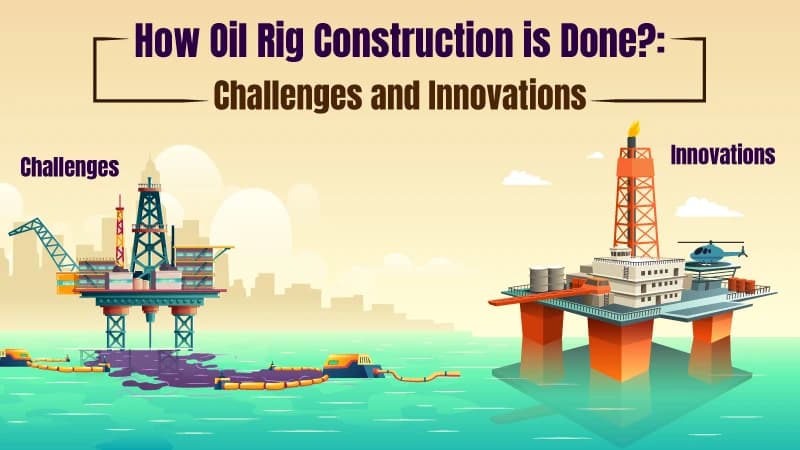
An oil rig construction is a challenging yet crucial task for oil exploration. Oil rigs are incredible feats of engineering and resilience, found everywhere from the tall platforms on land to the deep depths of offshore drilling. But beneath these enormous obstacles are enormous difficulties, such as overcoming hostile environmental conditions and figuring out tricky logistical concerns. In this p…
Read →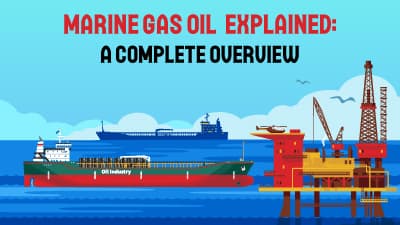
The selection of fuel is an important aspect for following environmental laws as well as ensuring effective operation in the maritime transportation industry. Marine Gas Oil (MGO) is one of the fuels that is often utilized in the shipping sector. However, various individuals ask what exactly marine gas oil is and why it is so significant. This informative piece will give you a complete overview of…
Read →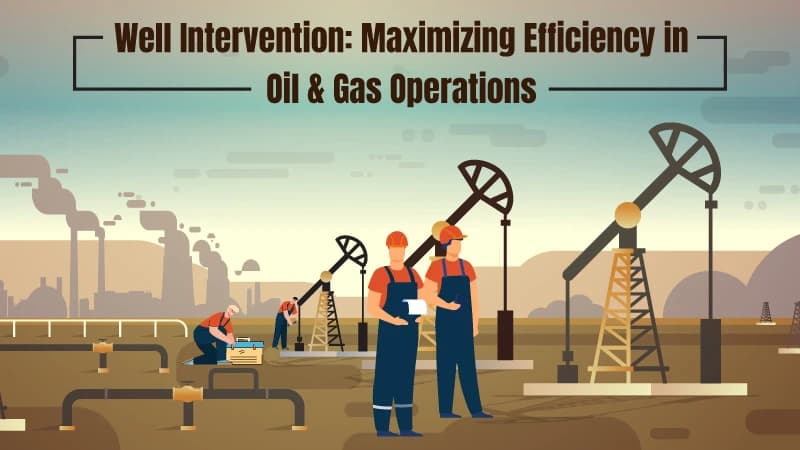
Well intervention is crucial to the smooth and efficient running of oil and gas activities. It includes fixing, maintaining, or improving a well to improve its performance or deal with issues. By correcting a blocked flow, improving equipment, or increasing production, well intervention ensures that wells operate as efficiently as feasible. In this in-depth article, we will look at how effective i…
Read →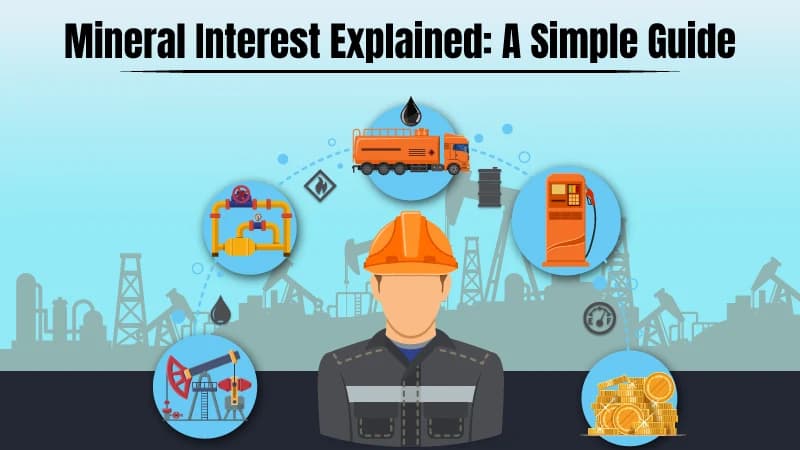
Understanding mineral interest can feel complicated, but it doesn’t have to be. In simple terms, mineral interest refers to ownership of the natural resources—like oil, gas, or other minerals—found beneath a piece of land. This guide will break it down into easy-to-understand sections, so you will know what it means, how it works, and why it’s important. Whether you are a m…
Read →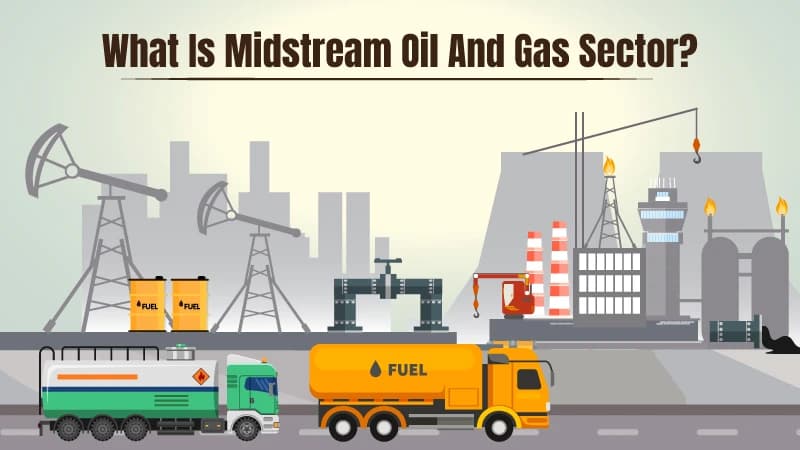
The oil and gas industry comes with multiple stages, such as upstream, midstream, and downstream. The midstream industry among these two is a more integral part of the process, ensuring smooth transitions and operations across the value chain. Yet, most people often get a question: What is midstream oil and gas specifically? The latest reports of AltaGas state that in May 2024, it transported arou…
Read →
In a world where energy powers everything, including technology and transportation, oil continues to be an essential commodity, empowering the global economy. Even with the increasing popularity of renewable energy sources, oil remains a significant commodity for portfolio diversification investors. But how to invest in oil and get better returns while understanding the volatility of the market, g…
Read →85 articles — every one opens in full. Prefer to watch or listen? →