


Lease Audit — does your royalty check match what the well actually produced?
Not an accusation — a comparison. The public production record, lined up against what you were paid, month by month.
Expected royalty vs. what you were paid
What you should have been paid, next to what you were paid — month by month. Most months line up just fine. The audit catches the ones worth a second look.
Read the full story
Your royalty check is based on production you never see firsthand — and the check stub only tells you so much. The Lease Audit goes beyond it. We take what your operator reported to the Railroad Commission of Texas, apply prices and your decimal interest, and compare that expected royalty with what you were actually paid — month by month, across the revenue history of the lease. Most months line up just fine, and knowing that brings real clarity to your mineral ownership. The audit is there to catch the ones worth a second look.
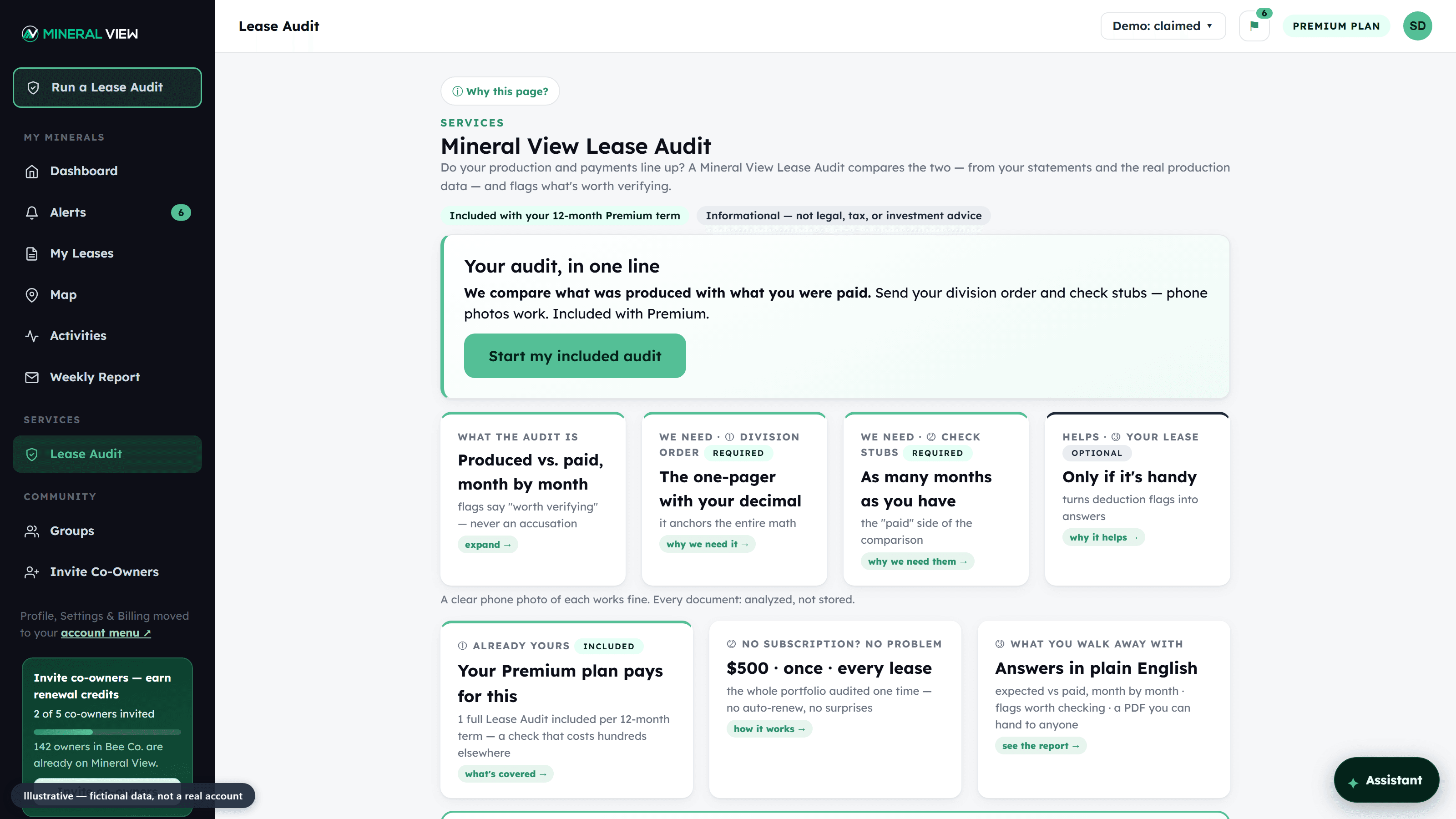
The check-up, plus the full lease picture
- A month-by-month comparison against verified RRC production data
- A free sample audit on every account, so you can see how it reads
- Estimated Ultimate Recovery (EUR) and remaining reserves on every lease report
- Every well's story by API number — permits, completions, geology, original filings
Read the full story
Every lease report also carries the numbers that describe the asset itself: the Estimated Ultimate Recovery (EUR) for your wells — how much oil and gas they're expected to give up over their lifetime — and the remaining reserves, what's likely still in the ground after everything already produced. Oil and gas are finite; comparing what's been extracted against what remains tells you, at a glance, how much life is left in the lease. Alongside it: the lease's production history, its cash-flow trend, and its MVestimate value — the complete statistical picture of your property, not just this month's check.
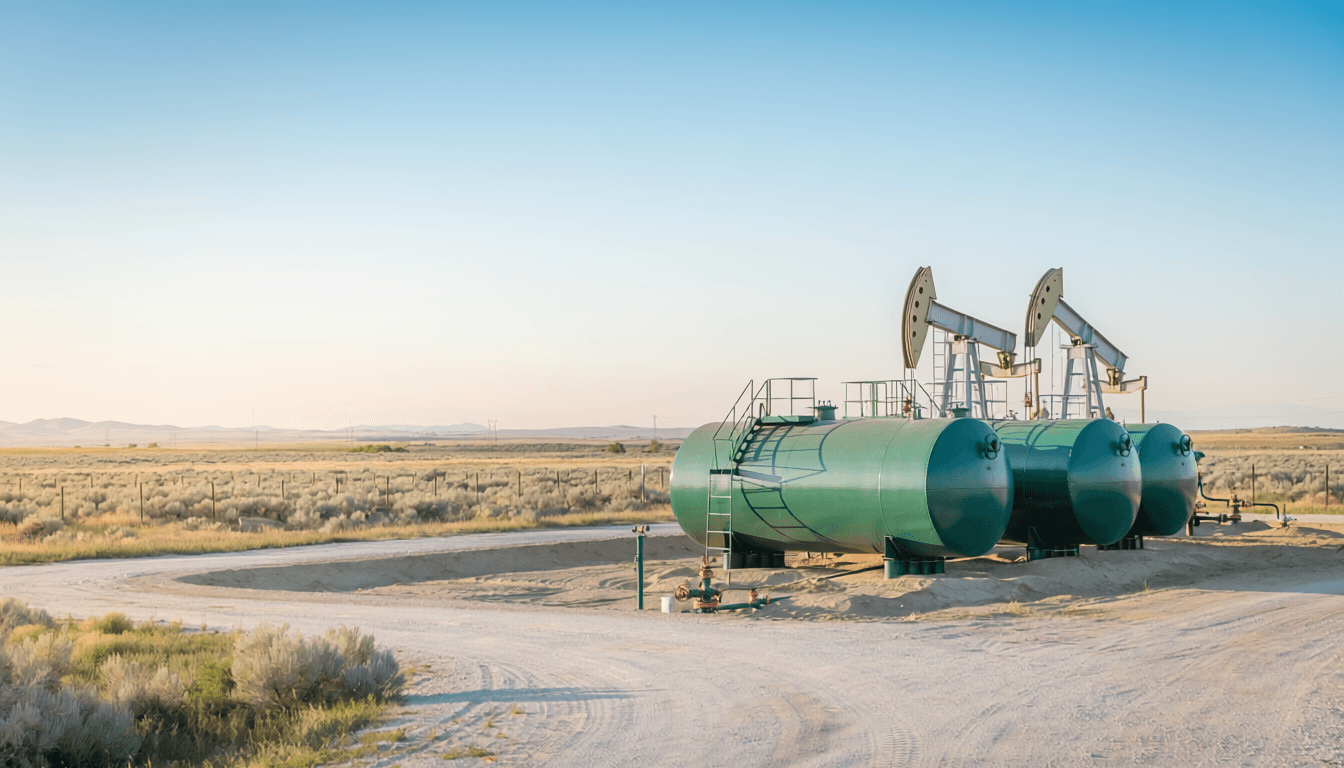
Behind every lease sit individual wells, and each one has a digital biography in the public record. Open any well on your lease — or look one up by its API number — and you'll find the operator of record, the well's current status, its spud-to-today production lifecycle, and links to the original RRC filings like the W-1 drilling permit and the completion report, so you can verify everything yourself. Even the geology is there: the formations the wellbore passes through, at depth. It's the same record landmen and engineers work from — organized so an owner can actually read it.
From claimed record to month-by-month read
Claim your owner record. The audit works from your Texas leases and your decimal interest — no digging through filing cabinets required.
Open Lease Audit and pick a lease. Every account includes a free sample audit, so you can see how it reads.
Read the month-by-month results against the official production record — lined up, or worth checking into.
Rather have it done for you? A done-for-you audit is $500 one-time, and Premium includes audit comparisons.
Knowing your checks add up
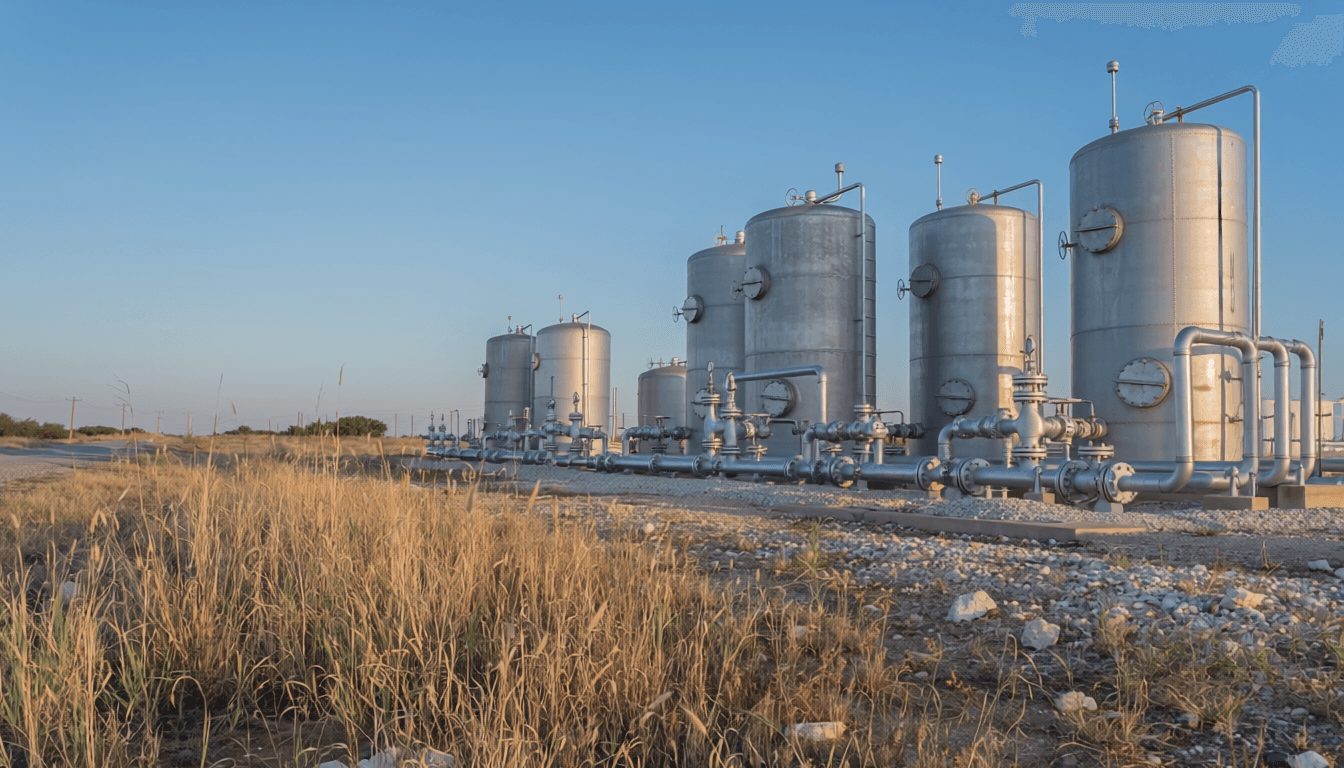
Almost nobody checks their royalty statements against the state's record. Verified is the difference between hoping your checks add up and knowing they do.
Read the full story
Oil and gas are finite resources — every barrel your lease gives up is one it won't give up twice, and every one of them is reported to the state. Yet almost nobody checks their royalty statements against that record; statements are dense, and a shoebox of check stubs can't do the math. That's the gap the audit closes. Most months everything matches, and having that verified is worth something on its own — it's the difference between hoping your checks add up and knowing they do. And if the audit does surface a statement issue worth pursuing, it may well pay for itself. Either way, you manage your property with the complete statistical picture instead of a hunch.
How to access
A sample Lease Audit on your visible lease, so you can see how it reads.
Audit comparisons included with a 12-month Premium term; done-for-you audit $500.
Owner portal → Lease Audit.
Always a free plan · no credit card · no commitment.