The manner in which we consume and generate energy constantly evolves, yet oil and gas remain so prominent in daily life. Though there is a global shift toward clean energy sources such as wind and sunlight, oil and gas power vehicles, warm homes, and energized machines.
That's why people are considering investing in oil and gas in 2025. At first, it might look complicated, but if you know the fundamentals, it might be the key to making more money. Oil and gas can yield solid returns, but they entail some risk.
Prices fluctuate rapidly, and more individuals demand cleaner energy. If you are considering an investment in 2025 oil and gas, it’s wise to know the advantages and disadvantages. This simple guide will assist you in knowing whether it is suitable for you.

Why Consider Oil and Gas in Your Investment Portfolio?
Some of the very basic reasons why individuals put oil and gas in their investment portfolio are as follows:
Periodic Payments:
Regular payments (dividends) are made by some large oil companies to those individuals who own shares in them. If you wish for periodic cash inflows, this is helpful.
Space for Development:
Because more and more people on the planet use energy—particularly in nations that are still developing—oil and gas remain in demand. That means there is still space for these investments to expand.
How to Beat Inflation:
If it costs more, oil will also cost more. That means your dollars won't depreciate as fast.
Oil and gas won't necessarily move with the rest of the stocks. That is, they also help to decrease your overall risk in your portfolio of investments.
Potential Tax Advantages:
Certain oil and gas investments allow you to decrease the amount of taxes you owe. You may be able to deduct a portion of the drilling costs or receive credit for depletable resources.
The Oil and Gas Landscape: A Primer for Investors
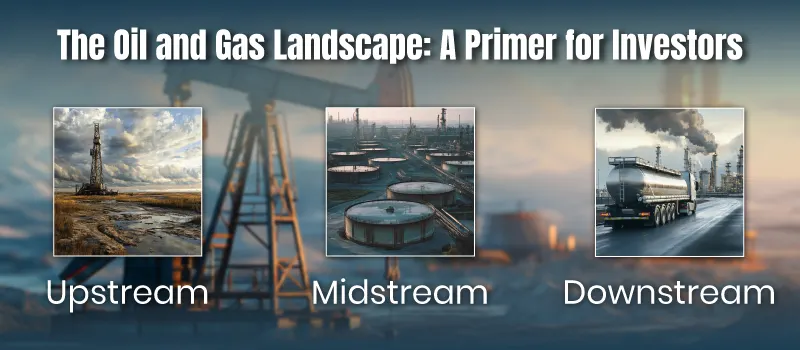
The oil and gas industry is usually divided into three divisions. They have different possibilities to make money—and types of risks:
Upstream (Looking for and Producing Oil):
This involves finding oil and pumping it from the earth. It can be lucrative in big quantities if it is successful, but occasionally businesses cannot discover oil, or it is too expensive to produce.
Midstream (Transportation and Storage):
This entails transporting oil and gas by pipelines or trucks and storing it safely. This segment of the business typically provides stable revenue and lower risk.
Downstream (Converting Oil to Useful Products):
This entails refining crude oil into commodities such as gasoline, jet fuel, or heating fuel. Profit here relies on the price of the oil and what consumers pay for the final product.
Some of the world's biggest firms, such as ExxonMobil and Chevron, are involved in all three areas. They are referred to as integrated companies. They diversify their enterprise throughout the complete system; therefore, they are steady even when one area of business is not doing well.
If you prefer quick growth and are not afraid of risk, upstream would be your choice. If you prefer steady cash and security, midstream would be your choice. And if you prefer to gain from the sale of finished products, downstream would be your choice.
Navigating Your Options: How to Invest in Oil and Gas
There are several means to engage in 2025 oil and gas investments. There are some that are ideal for starters, while others are ideal for participants already conversant with the industry. Here are some options:
Stocks in Oil and Gas Companies:
You invest in tiny chunks (shares) of oil and gas companies. It is easy to begin with. You can make money if the share price rises or when the firm pays dividends. Prices can, however, fall extremely low.
ETFs and Mutual Funds
These are oil and gas stock baskets rolled into one fund. They decrease your risk by diversifying your money. Some are linked to the price of oil, while others are linked to the performance of companies.
Direct Investments
This involves investing your money into oil drilling projects directly. These require more cash and are not easily salable. They usually suit individuals who already have some ideas about the oil industry. They also qualify as tax-deductible.
DPPs (Working Interests):
You invest in the cost of a drilling operation and participate in its proceeds. These potentially earn high returns but are risky and more difficult to sell.
Mineral Rights
You purchase the right to the oil or gas beneath a piece of land. If a firm drills and finds oil, you receive a share of profits (royalties). It can provide steady income, though they make no promises that they will find anything.
Futures and Options
These are contracts to sell or purchase oil sometime in the future at a fixed price. They are easy to make lots of money with but are difficult to comprehend and extremely risky. Most suitable for those who already know how they function.
Comparison Table:
| Type of Investment | Risk Level | Starting Cost | Easy to Sell? | Good Points | Bad Points | Best For |
|---|---|---|---|---|---|---|
| Company Stocks | Medium | Low | Yes | Easy to buy, may pay dividends | Price can change fast | Most people |
| ETFs/Funds | Medium | Low to Medium | Yes | Low risk, easy to manage | May have fees | Starters |
| DPPs | High | High | No | High rewards, tax help | Tough to sell, big risk | Wealthy people |
| Mineral Rights | High | Medium to High | No | Can earn income | Not always profitable | Long-term holders |
| Futures/Options | Very High | Medium to High | Yes | Fast gains possible | Very risky, complex | Skilled traders |
Understanding the Risks: What to Watch Out For
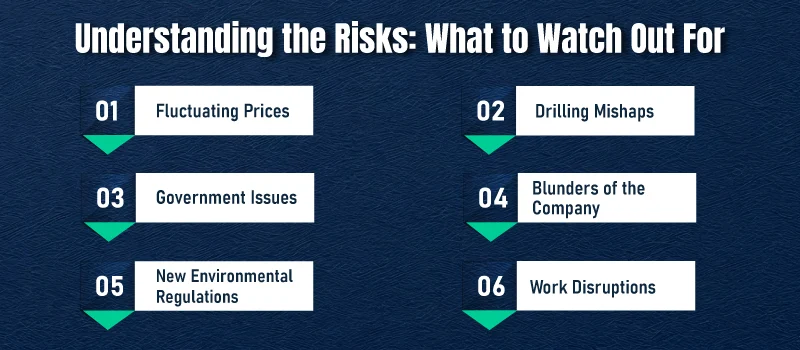
Though oil and gas investments in 2025 can be lucrative, the following are some things that can go awry:
Fluctuating Prices:
Prices of oil are quick but can be influenced by war, natural catastrophe, or international politics. Prices in 2020 even went into the negative!
Government Issues:
The majority of countries with oil have unstable governments. Abrupt change can hike or dip oil prices at a quick rate.
New Environmental Regulations:
More nations are establishing regulations to safeguard the environment. Drilling may be more expensive or even delayed due to this. Leaks or oil spills also cause massive losses.
Drilling Mishaps:
Some locations lack oil despite appearing to. Or the oil is out of depth or cost-prohibitive to access.
Work Disruptions:
Equipment malfunctions, work strikes, or mishaps can halt work and cause additional expenses.
Blunders of the Company:
High oil prices do not make it whatsoever possible for a company to have mistakes. Poor decisions or excess debt can lead to losses or no dividends at all.
Key Factors Influencing Oil and Gas Investments
Some of the things that might impact your 2025 oil and gas investments are:
World Supply and Demand:
If the economy is robust globally, oil is consumed. When the economy is weak, demand decreases.
OPEC+ Actions:
It is a collective of nations that produce oil. Whatever they decide to produce and deliver into the market can influence prices globally.
Improved Equipment:
Additional equipment and technology enable cheaper, quicker drilling. Prices may decline, though, if more oil than expected is discovered.
Economic Climate:
Things such as inflation and interest rates also determine how much oil is consumed by whom and where consumers spend their money.
Increased Green Energy:
Electric vehicles and photovoltaic power are gaining popularity with consumers. That could reduce oil consumption in the future. Cleaner options are also being worked on by some oil producers.
Delivery Issues:
Refineries or pipelines that get into trouble can slow down deliveries and damage profits.
Getting Started: Your Next Steps in Oil and Gas Investing
If you’re ready to try oil and gas investments in 2025, follow these simple steps:
Learn First:
Read about the companies or funds you want to invest in. Look at their past results and plans for the future.
Know Your Comfort Level:
Are you okay with prices moving up and down? Do you want quick profits or a long-term plan?
Start Small:
Don’t put all your savings into one place. Try a mix of different investment types to reduce risk.
Understand the Basics:
Learn simple oil terms like barrels, royalties, and WTI (a type of oil). It’ll help you follow the news better.
Get Advice:
If you’re putting in a large amount or trying something complex like DPPs, talk to a trusted financial advisor.
Open an Account:
Use an online platform to buy company shares or ETFs. For direct projects, you’ll need to work with a private company.
Conclusion: Weighing the Opportunities in Oil and Gas
Oil and gas investments in 2025 can still be a smart way to earn money—but there are risks too. You might get steady payments, grow your money, and protect yourself from rising prices. But you also need to be ready for price changes, new rules, and company problems.
The world of energy is changing fast. Some oil companies are also starting to support green energy projects. As someone looking to invest, you should keep learning and paying attention to what’s happening.
Not every oil and gas option will work for everyone. But if you take your time to learn, start small, and choose carefully, you can find something that fits you. Smart steps today can help you stay safe and successful in this changing field.
People Also Ask
What is the Oil and Gas Outlook for 2025?
The oil and gas perspective is positive by 2025. The expectancy is that this demand will remain high as world travel and manufacturing expand. OPEC+ can answer by changing supply to stabilize the prices. The U.S. is most likely to remain among the leading producers, and new technology will reduce the expenses. Although clean energy is expanding, oil and gas will continue to have a significant contribution to the overall energy mix in the world.
What is the Future Prediction for Oil Stock in 2025?
The oil stocks of 2025 will fare positively, in particular, among those companies that have a healthy balance and cash flow. Hiking oil prices, stable demands, and increased share dividends may draw more investors. Firms specializing in oil as well as cleaner alternatives might get a long-term benefit.
What Oil and Gas Stocks to Buy for 2025?
Among the best oil and gas stocks investors should think about in 2025, there are petroleum giants such as ExxonMobil, Chevron, ConocoPhillips, and EOG Resources. These companies are reputed to have good profits, good production and good dividends. Even stocks such as Cheniere Energy and EQT can be worth investing in by those interested in natural gas.
What is the Future Prediction for Oil and Gas?
Oil and gas have a good future till 2025 and beyond. Global needs will continue to force the supply to vary as the demand in the developing countries will remain high. The oil and gas will keep fueling transport, industry, and power long into the future despite the growth of renewable energy.