In a world where energy powers everything, including technology and transportation, oil continues to be an essential commodity, empowering the global economy. Even with the increasing popularity of renewable energy sources, oil remains a significant commodity for portfolio diversification investors. But how to invest in oil and get better returns while understanding the volatility of the market, geopolitical concerns, and environmental factors? The options are many; from buying stocks in oil companies to direct investments, but they require a right and goal driven approach.
This investor's guide covers the most significant aspects of 'how to invest in oil', from market trends to risk management and oil investment types. You will gain the perspective necessary to navigate the details of oil investing and make wise, profitable choices, regardless of your level of experience.
Let's examine what is oil, also referred to as crude oil.

What is Crude Oil?
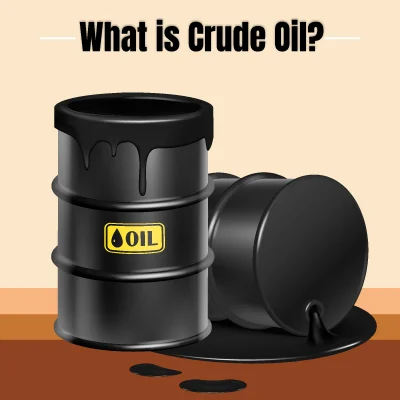
Crude oil is the naturally occurring liquid petroleum product that is made up of hydrocarbon deposits and other organic components that were once living things that existed millions of years ago. After being exposed to heat, pressure, and layers of sand, silt, and rock, these organisms finally transformed into a kind of fossil fuel that is refined into products that may be used, such as gasoline, diesel, liquefied petroleum gases, and feedstock for the petrochemical sector.
Since crude oil is a nonrenewable resource, its supply is restricted because it cannot be produced naturally at the rate at which humans utilize it. It is frequently extracted by carrying out drilling, where it is typically found with other resources like saline water (which sinks below) and natural gas (which is denser and rests above the crude oil).
Crude oil is collected from the earth, processed, and used to make a wide range of petroleum products (the terms "petroleum" and "oil" are frequently used interchangeably).
Here is the list of products made from crude oil.
Heating oil (to power boilers and furnaces).
Cosmetics and lotions.
Plastics.
Jet fuel.
Asphalt.
Waxes.
As oil is a limited resource, its supply will eventually run out. Meanwhile, demand can rise as that supply decreases, and we continue to rely on it extensively. However, that requirement can be changed in the coming period.
Below are some crucial takeaways regarding crude oil:
-
Extracted from the earth, crude oil is a raw natural resource that is refined to create products like jet fuel, gasoline, and other petroleum-based products.
-
It is made up of organic debris and hydrocarbon deposits that originated from the remains of millions of years-old plants and animals.
-
Crude oil, the raw oil that is extracted from the earth, and various products made from refined crude oil are all referred to by the more general term petroleum.
-
Crude oil is a worldwide commodity that is traded on international markets in both spot and futures forms.
-
Since crude oil is currently the world's primary source of energy, many economists consider it to be the most significant commodity overall while efficiently understanding the oil markets.
Understanding the Oil Market
"Oil" is more than just the fuel you utilize for your vehicle, and comprehending this intricate market involves more than just holding out on filling up until the prices at your neighborhood gas station drop. The price of oil is determined by supply and demand, just like any other investment.
A number of variables affect the price of crude oil, an essential asset, including changes in global politics, cyclical trends in consumption, and production rates. established by groups like OPEC. West Texas Intermediate (WTI) and Brent Crude lead the global oil market. WTI is mostly traded in North America, but Brent is a worldwide price benchmark because of its extensive usage elsewhere.
According to the latest reports by Rigzone, Brent increased 2.7% to close above $75, while West Texas Intermediate gained 2.8% to close above $71.50 a barrel, the largest rise since early October.
Additionally, the latest technologies, like hydraulic fracturing and horizontal drilling, have transformed US oil extraction. This has increased shale oil production, changing the oil market equilibrium.
When we look upon the current outlook of the oil market, it is experiencing mixed trends, with stable prices and poor global demand, particularly from China.
The supply and demand of oil are influenced by a number of factors, including the growth of renewable energy sources like solar and wind power, the quantity of oil in the world, and any legal disputes or conflicts associated with the production of oil. Yet, investors consider many different ways to invest in oil.
How to Invest in Oil Market and What Are its Different Ways?
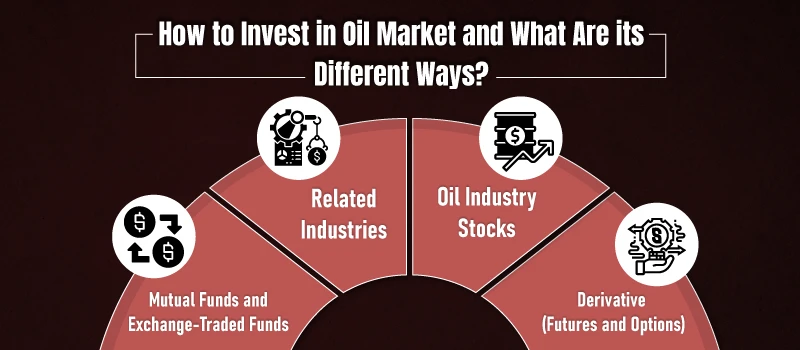
Investing in oil can be done in a number of ways, with suitability varying based on investor sophistication, risk tolerance, and capacity to buy in. Purchasing stock in oil and gas companies, such as producers, refiners, and master limited partnerships (MLPs), is one way to invest. This procedure can be streamlined by mutual funds and exchange-traded funds (ETFs), which combine several stocks into a single pooled investment.
Following are some of the most preferred ways to invest in oil.
Mutual Funds and Exchange-Traded Funds
-
Investors should take into consideration mutual funds or exchange-traded funds (ETFs) that group a variety of stocks under a single ticker symbol in order to reduce company-specific risks. Vanguard Energy Fund Investor Shares (VGENX) and Integrity Mid-North American Resources Fund (ICPAX) are mutual funds that include oil businesses; the Energy Select Sector SPDR Fund (XLE) and the Vanguard Energy ETF (VDE) are exchange-traded funds (ETFs).
-
In addition to stocks, several exchange-traded funds (ETFs) invest in futures for oil, including the United States Oil Fund (USO). It monitors the performance of West Texas Intermediate (WTI) crude contracts for the next or near month.
Oil Industry Stocks
-
Investing directly in the firms that produce oil is the simplest approach to making an oil investment. Purchasing stock in publicly traded oil firms like Chevron or Exxon Mobil allows you to participate in the gains and losses of this sector. It's crucial to remember that when you buy particular stocks, you're investing in the companies rather than the products they make.
-
Although you will be investing in the management and performance of that firm rather than the price of oil itself, this can be advantageous because a well-run business can prosper even when its asset prices decline.
Derivatives (Futures and Options)
-
Financial products known as derivatives derive their value from an underlying asset. The two most prevalent types on the market are futures and options contracts, both of which derive their value from the goods they are meant to represent. The greatest way to actively invest in the price of oil is through one of the various commodity-based futures and options available. You can directly invest in oil through oil futures.
-
For futures on other types of petroleum, the same holds true. When you purchase an oil futures contract for a long position, you commit to purchasing a predetermined quantity of barrels at a predetermined price on a predetermined date.
-
You engage in attempting the exact same thing in reverse when you take a short position in a futures contract: selling a predetermined quantity of barrels at a predetermined price.
-
This enables you to benefit from price fluctuations. Let's consider an example where you purchase 1,000 barrels of oil on June 1st at $50 a barrel using a futures contract. Your contract allows you to purchase oil for $10 less per barrel than it is worth if the price of oil rises to $60 per barrel by June 1.
Related Industries
-
Lastly, investors looking for secondary exposure to the oil sector can look for companies associated with this asset. One of the world's most astonishingly versatile items is crude oil. It is true that the energy generated by burning this commodity powers modern society, but that ignores the enormous amount of tangible goods that it either entirely or partially contributes to.
-
For instance, natural gas, another type of petroleum, is used to make plastics, and many kinds of fertilizers also. Oil is the basis for many items, including asphalt and chemical compounds, and the price of jet fuel obviously has a direct impact on the travel sector. All of these are types of petroleum, as previously mentioned (often also called hydrocarbons).
-
A good strategy to invest in oil to some extent is to invest in businesses whose products rely on it. Purchasing shares in a chemical or plastics producer, for instance, exposes you to a business that is probably going to do well when oil prices decline.
-
This enables you to invest in the market and, in addition, maybe a wise countercyclical move to balance out any direct investments you have made. The same holds true for businesses that transport the product on ships, manufacture and install pipelines, and offer drilling and production services.
These are some ways to invest in oil markets, which can deliver you positive returns along with other benefits. However, you cannot neglect the risks behind it.
The Benefits and Risks of Investing in the Oil Market
Oil investment has certain benefits as well as risks. The below table will assist you in understanding the benefits and risks of investing in the oil market:
| Benefits of Investing in Oil | |
|---|---|
| Price Appreciation | Potential for price gains if oil prices rise. |
| Inflation Hedge | Oil futures can act as a hedge against inflation when the economy is strong. |
| Equity and Funds Gain | Price gains in oil benefit oil equities, futures funds, and individual companies. |
| Dividends | Oil companies often return capital to shareholders via dividends. |
| Share Buybacks | Companies buy back shares to return capital to investors, reducing reliance on expensive drilling, which can lead to an oversupply of oil. |
| Outperformance of Oil Stocks | Oil stocks can outperform oil prices due to corporate efficiencies that increase cash flow. |
| Risks of Investing in Oil | |
| Long-Term Risk | The long-term risk is that alternative energy sources could diminish oil's role in the economy, leading to lower demand for oil. |
| Company-Specific Risks | Risks include poor management decisions, overpaying for acquisitions, or exceeding budgets on exploration projects. |
| Cyclic Risks | Short-term risk involves buying oil at the wrong point in the cycle, such as when supply is increasing or demand is decreasing. |
| Oil Price Decline | Oil prices may decline due to deteriorating economic forecasts, increased production from OPEC, or easing geopolitical tensions. |
| Economic Shift Away from Oil | Economies may reduce reliance on oil faster than anticipated, lowering demand structurally. |
Conclusion
‘How to invest in oil’ is the question many investors have that makes them think twice while making an informed decision about oil investment. Oil investments come with opportunities as well as risks. Crude oil is an essential global commodity that is used in many industries, including manufacturing and energy, and changes in price can have an effect on the overall economy.
Potential gains in value, dividends, and share buybacks are advantageous to investors, and oil-related stocks have the potential to beat crude oil prices. But there are also inherent challenges like difficulties unique to the industry, drops in the price of oil, and the move toward renewable energy.
Understanding supply-demand patterns, market dynamics, and risk mitigation through diversification are all necessary for successful oil investment. However, if you are planning for your next investment, oil investment can be a great option.
People Also Ask
Will it Be Safe If I Invest in the Oil Market?
Investing in the oil and gas sector carries a number of risks, such as the potential for dividend reductions, unintentional oil spills, and volatile oil and gas prices. Nevertheless, because of the industry's liquidity, high return potential, and ability to diversify portfolios, it is a popular choice for investors.
Is it Smart to Invest in Oil?
Oil is an excellent diversifier for your portfolio since it can still generate good returns even if one of your investments loses value. Source of passive income: You can produce consistent cash flow by investing in crude oil futures, oil equities, energy companies, mutual funds, or exchange-traded funds (ETFs).
How to Invest in Oil or Buy Stock?
With an oil exchange-traded fund (ETF), investing in oil is among the simplest options. As opposed to some gold ETFs that possess the real physical metal, an oil ETF owns futures and options contracts on crude oil.