Our homes, cars, and industries are all powered by oil and gas, which are essential to our everyday existence. Have you ever wondered, however, how these resources are discovered and brought to us? The "upstream" stage of the oil and gas sector is where the process starts.
Upstream includes everything from drilling and extracting these precious resources (production) to looking for oil and gas deposits underground (exploration). It is the first and most important phase in the energy supply chain and calls for knowledge, cooperation, and cutting-edge technology.
In this blog, we’ll explore the journey of upstream oil and gas, breaking it down into simple steps. Whether you're new to the industry or just curious, this guide will help you understand how energy starts its journey from beneath the earth to powering the world around us.
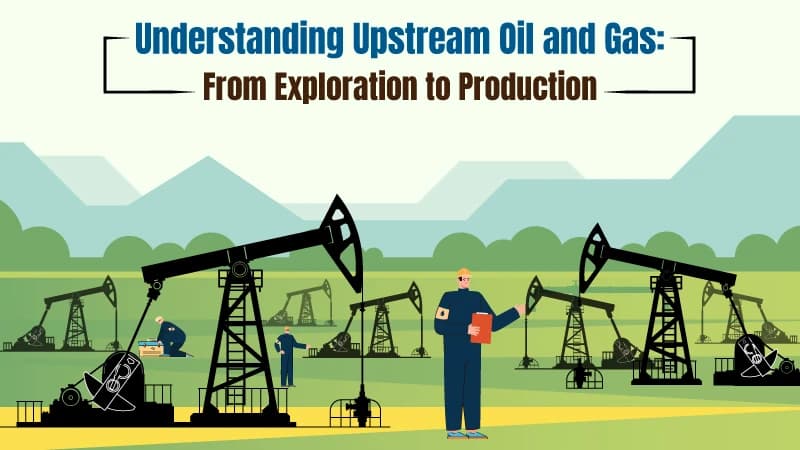
What is Upstream?
In the oil and gas sector, the stages of operations that include production and exploration are referred to as upstream. Upstream, midstream, and downstream are the three important stages into which oil and gas industries are divided. The exploration and early production undertakings of the oil and gas sector are the main areas of focus for upstream companies.
Some companies integrate upstream, midstream, and downstream operations—which occur after the production stage and continue until the point of sale—such big companies are referred to as "Integrated" companies.
Below are some essential and quick highlights of upstream oil and gas:
-
Production points that start early in the processes are referred to as upstream.
-
Upstream, often known as exploration and production (E&P), is the segment of the oil and gas supply chain that is most away from the final consumer.
-
Exploration, drilling, and extraction are examples of upstream activities.
-
The midstream (crude oil transportation) and downstream (refining and distribution) phases come after the upstream phase.
Understanding the Activities of Upstream
The entire process, from initial exploration to resource extraction, is referred to as the upstream stage of the oil and gas industry. Companies operating in the upstream sector may participate in all or a portion of the steps in this stage of the oil and gas industry's life cycle.
The exploration and production (E&P) sector is another term for the upstream oil industry, which is actually more indicative of what takes place during this phase of the development of an oil and/or natural gas asset. The first stage of the production of oil and gas is known as the E&P segment. Companies in this sector are mostly concerned with finding and removing the oil and gas reserves from the ground.
Another important activity in upstream oil and gas is the search for hydrocarbons and is part of the exploration stage. To help find the most promising places, land surveys are conducted. Prior to drilling, the objective is to discover particular minerals beneath the ground in order to estimate the amount of oil and gas reserves. To determine whether there is oil or natural gas in the soil, geologists examine the geological formations and sedimentary layers of the land.
Seismology can be used in the procedure, which generates seismic waves by using significant vibrations caused by explosives or machinery. The location of an oil and gas reservoir can be determined by the interaction of seismic waves with the reservoir. The test drilling procedure can start as soon as it is established that there seem to be reserves beneath the surface.
Midstream and Downstream Sectors
The upstream stage of the company stops their when the resource is extracted. Midstream companies collect the raw material and deliver it to refineries by tanker truck, pipeline, or railroad. The downstream stage of the oil and gas sector is represented by refineries. To create their final petroleum products, they process the basic crude oil. Additionally, they transmit and sell natural gas and products made from crude oil.
Midstream
One of the three primary stages of operations in the oil and gas sector is midstream. Oil, natural gas, and natural gas liquids are processed, stored, transported, and marketed as part of midstream operations. Midstream companies concentrate on using pipes to store and move natural gas and oil. Companies engaged in the downstream stage of production receive the reserves from midstream companies.
Downstream
The companies that offer the closest connection to regular consumers are in the downstream sector. The procedures used to transform gas and oil into the final product are known as downstream operations. These include turning crude oil into a range of energy sources such as diesel, gasoline, and natural gas liquids. An oil and gas company is considered further downstream if it is closer to the process of supplying petroleum products to customers.
Essential Features in Upstream Industry
Of all the oil and gas sectors, the upstream sector is undoubtedly the most intricate. It is extremely dangerous, heavily regulated, capital-intensive, and the foremost stage of oil and gas production. Considering the unpredictability of each well's outcome, upstream investments are extremely risky. Environmental and safety concerns add to the risk.
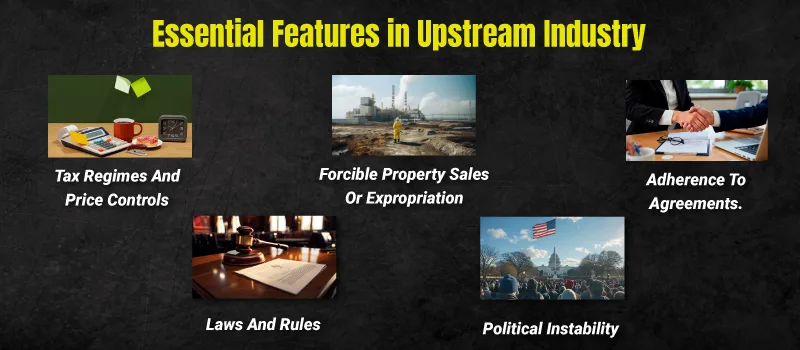
Outside of the US, the political climate and laws of the host nation have an influence on the upstream sector as well. These include:
-
Political Instability (International Conflicts, Civil Unrest, or War)
Laws and Rules (Social Programs, Environmental Laws)
Tax Regimes and Price Controls
Forcible Property Sales or Expropriation
Adherence to Agreements.
Crude output allocations, economic expansion and contraction, and global supply and demand all affect upstream.
Production can also be impacted by seasonal weather patterns and disruptions from severe weather events while working in exposed areas.
All facets of the upstream industry are driven by technology, which makes it even more capital-intensive.
What is the Future of Upstream Oil and Gas?
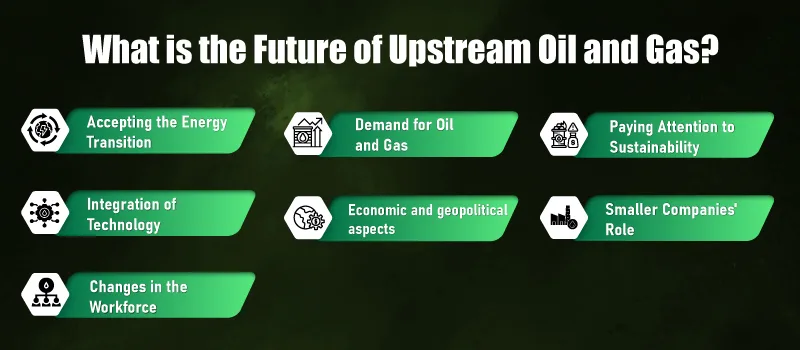
As the world evolves, so does the future of upstream oil and gas, which is the sector of the industry that focuses on discovering and producing oil and gas. Below are some important point associated with the future of upstream oil and gas.
Accepting the Energy Transition
To combat climate change, the globe is shifting to cleaner energy, and governments, businesses, and individuals are searching for methods to consume less gas and oil. However, the upstream industry is adjusting because these fuels are still required today:
Investing in greener technology to generate oil and gas with lower emissions.
Making use of carbon capture and storage (CCS) to capture toxic gases and reduce hazardous gases spreading in the atmosphere.
Demand for Oil and Gas
For many years to come, oil and gas will remain crucial, particularly in the production of products like plastics, chemicals, and medications. However, as renewable energy sources like solar, wind, and hydrogen expand, the demand might decrease.
Integration of Technology
The integration of technology is shaping the outlook of the oil and gas industry. Several oil and gas companies have already integrated the technologies; some of them are listed below.
-
Artificial Intelligence (AI): Evaluates information and locates oil and gas more quickly.
-
Robotics and Drones: Reduces the human intervention and makes operations safer and more effective.
-
Digital Twins: Shows the virtual representations for equipment monitoring and optimization.
These technological advances lessen their negative effects on the environment, save money, and increase security.
Paying Attention to Sustainability
Governments and investors are focusing on oil and gas companies to lessen their environmental impact. Numerous upstream companies have an objective to:
Reduce emissions of greenhouse gases.
-
Utilize sustainable energy sources in their operations.
Reduce land use and recycle water.
Economic and geopolitical aspects
The economy and world politics have a big impact on oil and gas. Some important aspects to be kept in mind are:
-
The necessity of energy security, or making sure nations have adequate energy.
-
Price swings caused by supply, demand, and disputes.
-
Production shifts from established locations, such as the Middle East, to developing regions in South America or Africa.
Changes in the Workforce
Younger individuals with technological and sustainable abilities are being drawn to the industry. To address the new difficulties facing the industry, training programs emphasize digital skills and environmental understanding.
Smaller Companies' Role
Even while large corporations are at the forefront of innovation, smaller companies continue to play a critical role in resource exploration and production in less well-known fields. They can also frequently collaborate with bigger companies or governments.
These are some important factors that may influence the future of upstream oil and gas. However, as the demand for oil and gas is increasing on a global scale, the upstream companies continue to add their attempts at helping the economy grow.
Conclusion
The upstream oil and gas sector is the foundation of the energy industry, encompassing exploration, drilling, and extraction—the crucial first steps in delivering energy to the world. This phase demands advanced technology, significant investments, and expertise, making it both challenging and rewarding.
As the world shifts towards cleaner energy, upstream companies are embracing sustainability, integrating cutting-edge technologies, and adapting to global economic and political changes. While the future may bring shifts in demand and workforce dynamics, oil and gas will remain vital for years to come, ensuring the industry's ongoing relevance in powering homes, industries, and innovation worldwide.