The selection of fuel is an important aspect for following environmental laws as well as ensuring effective operation in the maritime transportation industry. Marine Gas Oil (MGO) is one of the fuels that is often utilized in the shipping sector. However, various individuals ask what exactly marine gas oil is and why it is so significant.
This informative piece will give you a complete overview of marine gas oil, regardless of whether you work in the field or are just interested in learning more about marine fuels. Let's understand deeply what marine gas oil is.
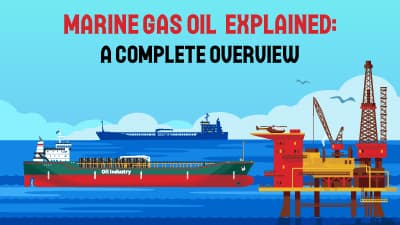
What is Marine Gas Oil?
Marine gas oil, often known as low-sulfur fuel oil (LSFO), is a bunker fuel used in maritime boats. Crude oil is distilled to produce this fuel distillate.
The distillation process separates crude oil components based on their boiling points. At varied temperatures, these compounds evaporate before condensing back into liquid. This process creates a variety of fuels, including gasoline, diesel, kerosene, marine fuel, and gas oil. Marine gas oil, or MGO, is denser than diesel and does not require heating during storage, unlike HFO (Heavy Fuel Oil).
You can purchase gas oil if you own a boat and use it for recreational purposes, but you must pay the full tax rate. This has been accompanied by bunker fuel.
What is Bunker Fuel?
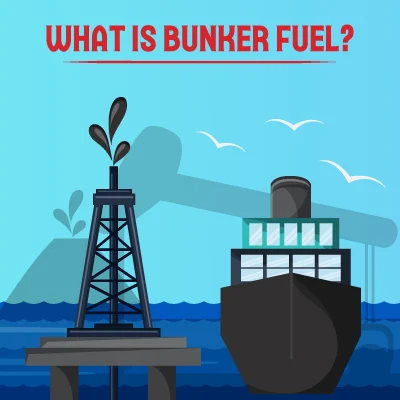
The term "bunker fuel" is widely used in the maritime and offshore industries. Bunker fuel is derived from the term "fuel bunker," which refers to a storage compartment inside a boat or other vessel for fuel. It was originally used on steam-powered ships. Bunker fuel refers to any fuel, other than marine gas oil, that is stored aboard a ship. Other bunker fuels include HFO, MDO, MFO, and MGO.
The fuel you intend to use will affect the type of vessel you have; for example, marine boats' engines run on bunker fuel. It may not be your average DERV, though. Larger ships often get their fuel from marine gas oil.
Because bunker fuel isn't limited to any one form of fuel, it can be used with a range of fuel types:
MGO, or Marine Gas Oil
MDO, or Marine Diesel Oil
Fuel Oil Intermediates (IFO)
MFO, or Marine Fuel Oil
HFO, or heavy fuel oil.
Until recently, HFO powered the majority of large commercial ships. Today, the MGO is widely used in a variety of applications based on its specifications.
Marine Gas Oil Specifications and Uses
Maritime gas oil is used on a variety of maritime vessels, including tankers, cargo ships, passenger ships, smaller boats, and yachts. It generates heat and electricity, in addition to powering the engines. Marine gas oil is also used in various industries, such as agriculture for tractors and farm equipment, and as a backup fuel for diesel generators. Some notable applications of MGO are listed below.
Uses for Marine Gas Oil
-
Typically used as a fuel for maritime vessels such as cargo ships, tankers, and passenger ships.
Also used on smaller vessels and yachts.
Fuels ship engines.
Used to generate heat and electricity on ships.
Other Uses of Marine Gas Oil
-
Power generation: Used as a backup fuel for diesel generators.
Agriculture: Used in tractors and other farm equipment
Marine Gas Oil Specifications
For maritime boats to use marine gas oil, it needs to fulfill specified requirements. The International Maritime Organization (IMO) and the International Organization for Standardization (ISO) have established these requirements. The IMO Annex VI and ISO 8217 are the most widely used specifications for marine gas oil.
Sulfur Cap Set by the International Maritime Organization (IMO)
This law, which went into force in 2020, is primarily intended to lessen air pollution and shield ecosystems from the damaging impacts of sulfur emissions, such as acid rain. Shipping companies must utilize scrubbers or exhaust gas cleaning systems, investigate alternate biofuels, or convert to low-sulfur fuels in order to comply.
ISO 8217
The requirements for marine fuels used in marine diesel engines and boilers are outlined in this international standard. It addresses a number of topics related to marine fuels, including their chemical makeup, physical qualities, and performance traits.
By guaranteeing the quality and compatibility of marine fuels, this standard seeks to improve the safety and efficiency of ship operations.
IMO Annex VI
Air pollution from marine vessels is regulated by MARPOL Annex VI of the International Maritime Organization. This rule restricts the release of sulfur and nitrogen oxides from ship exhausts, which are harmful to the environment.
The term "ECA" refers to the designated emission control areas that are established in Annex VI. The utilization of alternative fuels and energy-efficient technology is encouraged in these regions with more stringent emission regulations. This is to lessen the pollution that shopping activities produce.
Benefits And Drawbacks: Marine Gas Oil
Although MGO utilized in multiple applications, it comes up with benefits as well as drawbacks. Below are mentioned some potential benefits and drawbacks of MGO.
| Aspect | Benefits | Drawbacks |
|---|---|---|
| Sulfur Content | Low sulfur content meets IMO regulations, reducing air pollution. | Higher cost compared to heavy fuel oil (HFO), impacting operating expenses. |
| Engine Maintenance | Cleaner combustion reduces maintenance needs and engine residue buildup. | Not completely free from greenhouse gases, contributing to climate change. |
| Performance | Superior cold-weather operation and fuel stability remain fluid in low temperatures. | Limited energy density may require more frequent refueling, affecting operational range. |
| Contamination Risk | Less prone to microbial contamination, enhancing safety and efficiency. | Less efficient in high-load scenarios compared to heavier fuels. |
| Availability | Widely available in ports worldwide, facilitating easier refueling. | Transition requires engine modifications, potentially leading to high upfront costs. |
Difference Between Marine Gas Oil vs Heavy Fuel Oil
| Fuel Type | Marine Gas Oil (MGO) | Heavy Fuel Oil (HFO) |
|---|---|---|
| Composition | Refined distillate, similar to diesel, lower viscosity. | Residual fuel, higher viscosity and density. |
| Sulfur Content | Lower sulfur content, compliant with stricter regulations. | Higher sulfur content, higher emissions without mitigation. |
| Use | Smaller vessels, auxiliary engines, backup fuel. | Large vessels, main engines for propulsion. |
| Storage and Handling | Easier to store and handle due to lower viscosity. | Requires heating for pumping, more complex handling. |
HFO is a heavier, less costly fuel that is mostly used in large marine engines but is subject to harsher environmental regulations due to its higher emissions. MGO, on the other hand, is lighter, cleaner, and suitable for compliance with stricter emissions standards.
The Future of Marine Gas Oil

Worldwide Market for Marine Gas Oil (MGO) The global Marine Gas Oil (MGO) market is expected to grow at a compound annual growth rate (CAGR) of over the forecast period 2022-2029, from an estimated USD million in 2022 to a readjusted USD million by 2029 as a result of the COVID-19 pandemic.
Taking into consideration the economic impact of the current health crisis, the global market for marine gas oil (MGO), which is accounted for by low-sulfur fuel oil (LSFO) in 2021, is expected to reach USD million in value by 2029, with a revised compound annual growth rate (CAGR) of 2022–2029.
During the course of this projected period, the Tanker Vessels segment will now have a CAGR. The marine gas oil (MGO) market in North America is expected to reach USD million by 2022, while the market in Europe is expected to reach USD million by 2029. While the percentage of North America is in 2021, that of Europe is expected to reach in 2029, with a compound annual growth rate (CAGR) of during the analysis period of 2022–2029 of.
Regarding Asia, the two most significant markets are South Korea and Japan, with corresponding CAGRs of and for the ensuing six years. Major producers of marine gas oil (MGO) worldwide include BP, Total, Engen, Lubrizol, Chevron, ADNOC, ExxonMobil, Shell, and Petrogulf Oil Manufacturing. The three biggest companies worldwide hold a market share of Marine Gas Oil (MGO) in terms of revenue in 2021.
Global Market for Marine Gas Oil (MGO): Opportunities and Challenges The research study includes an examination of several aspects that contribute to the growth of the market. It consists of the drivers, trends, and constraints that either positively or negatively alter the market. The extent of several market categories and applications that may have future significance is also provided in this section.
Based on historical turning points and present patterns, the complete information is provided. Additionally, a study of the production volume for each type and the global market from 2017 to 2029 is provided in this part. The production volume by region from 2017 to 2029 is mentioned in this section.
The research includes pricing analysis by type for the period of 2017 to 2029, by manufacturer for the period of 2017 to 2022, by region for the period of 2017 to 2022, and by global price for the period of 2017 to 2029. A comprehensive analysis of the report's constraints illustrates how they differ from drivers and provides space for tactical planning.
The factors that obscure the market's growth are crucial because they may be used to understand and create new strategies for seizing the profitable chances found in the ever-expanding market. To further comprehend the market, insights into the viewpoints of mineral industry experts have been taken into consideration.
Segment Analysis of the Global Marine Gas Oil (MGO) Market Particular sections by manufacturer, kind, application, and area (country) are included in the study report. For the projection period of 2017 to 2029, each category offers details on output. Each application category additionally gives consumption throughout the predicted period of 2017 to 2029. Recognizing the significance of various elements that support market expansion is made easier by an understanding of the segments.
Conclusion
In the maritime sector, marine gas oil (MGO) is paramount since it offers a cleaner substitute for conventional heavy fuels, particularly in consideration of the IMO's sulfur cap and other escalating environmental regulations. Its applications in agriculture and power generation demonstrate its adaptability outside the confines of naval vessels.
Even though MGO performs better in colder climates and has a lower sulfur content than heavier fuels like HFO, it is more expensive. The growing need for cleaner fuel alternatives is propelling the global market for MGO, which presents possibilities and challenges for the sector as it adjusts to tighter emission regulations and changing consumer preferences.