Understanding mineral interest can feel complicated, but it doesn’t have to be. In simple terms, mineral interest refers to ownership of the natural resources—like oil, gas, or other minerals—found beneath a piece of land. This guide will break it down into easy-to-understand sections, so you will know what it means, how it works, and why it’s important. Whether you are a mineral owner or just curious to know about mineral interest, this guide is here to help! Lets begin with what mineral interest is.
What is Mineral Interest?
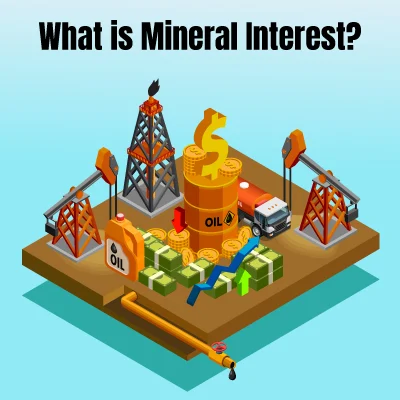
A right that permits someone to look for, extract, and sell minerals is known as a mineral interest. Once the minerals are separated from the surface land, a mineral interest is the real estate interest in oil and gas. A reservation or transaction typically involves with a mineral interest.
When a company or individual buys a property's mineral interest, the original owner may keep entire control over the surface, but the mineral rights are owned and managed by a totally different company or people. When the minerals are separated from the surface, the ownership of the minerals takes on a life of its own, with a chain of titles distinct from the title controlling surface land use.
A surface interest is less effective than a mineral interest. The right to use the surface as needed for exploration, development, and/or extraction of the minerals underneath belongs to the owner of a mineral interest. For this reason, mining interests are frequently referred to as the "Dominant Estate."
The executive rights of a mineral interest owner include the ability to drill or develop the minerals below the surface, the ability to enter into a lease, and the ability to use the minerals on, in, or beneath the land for reasonable purposes. Additionally, the right to explore, develop, and prepare the minerals for production belongs to the owner of a mineral interest.
In addition, they are eligible to collect royalties for the minerals on the site, lease incentives, rental payments, and shut-in payments. In order to keep a lease on currently unproductive mineral assets, oil firms pay the lessor royalties known as "Shut-in Payments."
Anyone interested in purchasing mineral rights needs to be aware of whether the rights are for a producing, non-producing, or leasing estate as those terms are defined by the U.S. Mineral Exchange. Since mineral interests are regarded as real property, they are governed by the same laws as real estate.
The Types of Mineral Interests
Below are three main types of mineral interests.
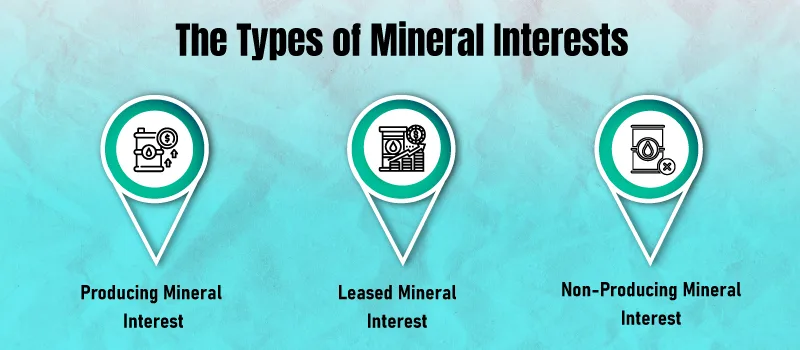
Producing Mineral Interest
This mineral interest includes minerals that are now being produced or extracted from the subsurface of the land, which results in monthly income. In general, royalty owners place a high value on it. Mineral production is frequently linked to one or two operating oil and gas wells. Landowners (or another owner of a royalty interest) receive royalties from the sale of minerals that are discovered on their property.
Non-Producing Mineral Interest
These are mineral rights that don't have any related revenue. In many instances, the anticipated profit may not be sufficient to cover the production costs. Non-producing mineral rights are typically valued using a price multiplier per net acre. The net acre value of these mineral holdings depends on a number of criteria. These consist of factors including oil pricing, production history, and the distance from producing wells. These elements result from the market's ongoing fluctuations.
Leased Mineral Interest
This type of mineral interest includes subsurface fluid minerals as well as geothermal, oil, and gas deposits. A contract between a mineral owner, also known as the lessor or holder of the royalty interest, and a working interest owner, also known as the lessee, is also involved.
Under the terms of the lease, the lessor gives the lessee the right to explore, exploit, and produce oil, gas, and other related minerals for a specific amount of time. Royalties are typically paid to the legitimate royalty owners as a result of an oil or gas lease. Owners of mineral rights may insist that a corporation (such as an oil company) lessen the amount of noise and light pollution that results from the minerals' extraction. Leases are typically term-dependent.
This suggests that the company has a set amount of time to work on the resources. Otherwise, it could lose its authority to perform extraction. Even though the property in issue belongs to another landowner, a mineral rights owner (such as an energy corporation) with certified ownership rights may be eligible to take the certain minerals found there.
These are the main three types of mineral interests. Yet mineral interest ownership is classified in different aspects.
The Classifications of Mineral Interest Ownership
Mineral Interest
This basically includes granting ownership of mineral interests underground. Owners of mineral interests are eligible to receive lease, royalty, and shut-in payments. Oil companies keep a lease on currently unproductive mineral assets by paying the lessor a royalty interest known as "Shut-in Payments."
Net Proceeds
The net proceeds are simply what the seller receives from selling a mineral right after the deduction of expenses. The expenses incurred during the sale may be small or a significant deduction made from the gross proceeds. It is the net proceeds that are subject to capital gains tax.
Non-Executive Rights
This includes giving up the ability or right to lease an interest. Any royalties paid in relation to the mineral interest lease in dispute are still payable to the non-executive mineral interest owner.
For a variety of factors, certain organizations to an oil and gas conveyance may find it simple to agree to grant the executive rights to one party over another. A landowner grantor might, for example, give up surface ownership while keeping an undivided one-half risk.
Executive Rights
These are the mineral rights that a company or entity has that allow them to provide leases for oil and gas. Stated differently, it is the authority to carry out any activity that has an impact on a mineral estate's development, exploitation, and exploration.
These rights are also required to conduct mining, oil and gas production, and geophysical exploration. This suggests that even if an owner has mineral interests or mineral deeds, it will be extremely difficult to carry out any kind of extraction on the property if they lack the executive powers.
Non-Participating Royalty Interest (NPRI)
Similar to a standard royalty interest, a non-participating royalty interest is exempt from all expenses associated with drilling and well operations. However, the interest owner frequently does not earn lease bonuses and lacks the authority to make certain decisions, including leasing.
In other words, the costs of exploration, development, and production are typically not borne by owners of non-participating royalty interests.
When mineral owners want to maintain their power to make decisions about their rights and royalty interests while using a portion of the interest in talks, they frequently generate these mineral rights.
Working Interest
A working interest is a form of ownership in which the percentage of ownership determines how expenses and profits are distributed. Drilling, well preparation (completion), and continuing operating costs are included in the costs. For working interest owners, the cost share can occasionally be higher than the revenue share. This is because royalty interests that do not cover drilling and operating expenses must be paid.
Overriding Royalty Interest (ORRI)
A royalty that is higher than the royalty granted to the owners in an oil and gas lease is known as an overriding royalty interest. The owners are unaffected by this. For instance, the operator might offer a landowner or geologist a 1% overriding royalty interest in return for title work or subsurface investigation.
Royalty Interests
An investor who owns oil and gas royalty rights and receives royalties on their investment is considered to have a royalty interest. The owner gets a share of the revenue made by the E&P company as the minerals are taken from the leased land.
In other words, when a mineral owner signs a lease, owners of royalty interests keep a portion of the property's output.
Non-Operated Working Interest
An owner with an interest in a gas or oil well or other mineral extraction company but no involvement in or responsibility for the well's or mine's actual operation is said to have a non-operated working interest. Under the insurance coverages specified on the operation, interest owners with a non-operating working interest are typically covered.
Leased Interest
There are times when oil and gas companies prefer a lease agreement to mineral rights. Oftentimes, this situation or choice arises when there is any uncertainty about the extent of minerals or other resources present in the land. If the company finds appropriate material, extraction will occur. If not, officials will wait for the lease to expire, and then the rights revert to the property owner.
Mineral Classification
For a substance to be classified as a mineral, it must exhibit the characteristics of a crystalline substance. Besides this, it must also be an inorganic, homogeneous, naturally occurring substance with a distinct chemical composition.
Mineral Interest vs Royalty Interest
In simple terms, a mineral interest is a real estate interest that arises when minerals are extracted from the surface of a piece of land. However, royalty interests guarantee that their owners receive a portion of the money made from production.
Consider a landowner who can use the resources beneath their land however they see fit because they have a mineral interest in them. Exploration, mining, and utilization of these resources are all included in this.
On the other hand, a landowner who has a royalty interest in the resources—which is covered by the rights—that is provided under a lease arrangement with an oil and gas company does not. However, they are entitled to royalties, which are a percentage of any money the business makes from the resources over a predetermined period of time. Additionally, there's a chance to get more leasing bonuses. The mineral owner regains possession of the mineral rights after the period has passed.
How to Calculate Mineral Interest?
Owners' curiosity about the worth of mineral interests is quite acceptable. Using an existing offer is the most effective way to determine the value of mineral rights. Some buyers will present low-value proposals, while others will present teaser offers that are contingent on certain conditions.
For instance, the rule of thumb is two to three times the lease incentive when calculating leased rights in cases where the owner has an ongoing agreement but does not receive royalty checks.
Let’s assume, Alex possesses 40 net mineral acres if he owns 1/2 of the 80 acres' worth of minerals. He has leased his minerals at a certain royalty rate, such as a quarter of the total. 1/2 X 80 X 0.25 = 0.10000 is the royalty division of interest, which may also be used to estimate his royalty percentage share of the unit and well revenues.
Conclusion
Mineral interest is an important concept for anyone dealing with land and natural resources. It represents the rights to explore, extract, and profit from valuable minerals beneath the surface. Whether it’s producing minerals, leasing rights, or calculating royalties, knowing the basics helps landowners and investors make better decisions.
By learning about different types of mineral interests and their classifications, you can better understand how they work and how they impact ownership, leases, and income. With this knowledge, you’re better prepared to navigate opportunities and challenges in mineral ownership!