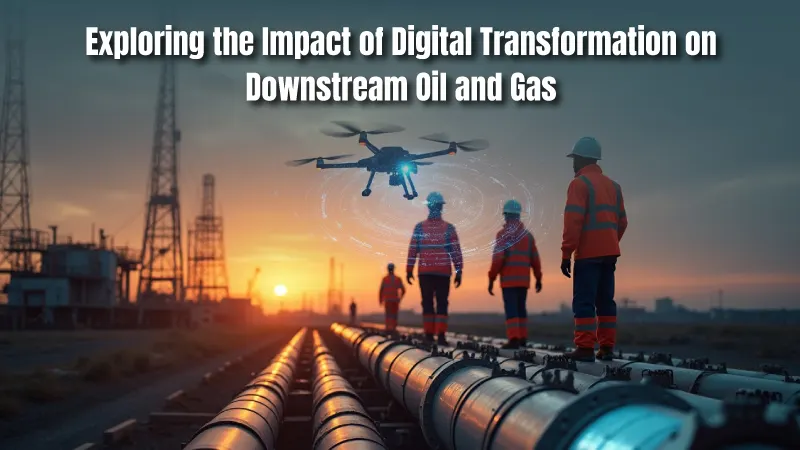
The downstream oil and gas industry is essential to the conversion of natural gas and crude oil into everyday products like jet fuel, diesel, and gasoline. The emergence of digital technologies is causing a significant change in this sector. Digital transformation is changing the way downstream oil and gas firms work, from increasing sustainability and efficiency to simplifying operations.
This comprehensive piece will educate you about how these changes influence the industry and the advantages they offer to both consumers and companies. Let's begin with what digital transformation is.
What Is Digital Transformation in Oil and Gas?
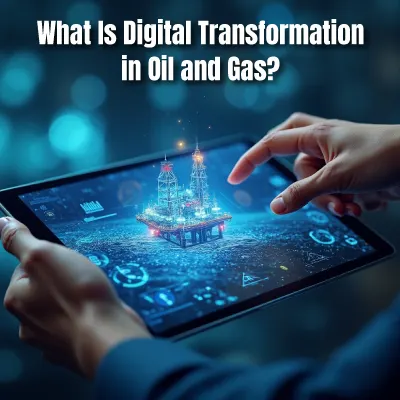
Cutting-edge technologies like the Internet of Things (IoT), cloud services, field ticketing, preventive maintenance, inventory management, and more must be integrated and used as part of the oil and gas industry's digital transformation.
By reducing expenses, improving customer satisfaction, and boosting worker productivity and efficiency, these revolutionary technologies have the potential to completely transform the operations of upstream, middle, and downstream oil and gas organizations.
Oil and gas workers can obtain accurate data, optimal equipment performance, and smooth communication between on-site personnel and back-end offices by utilizing the capabilities of state-of-the-art technology.
The main goal of a thorough digital transformation is to drastically cut down on reliance on laborious, time-consuming manual work processes, which frequently result in inaccurate data management and buildup as well as inappropriate resource use.
But it's not always easy to achieve digital transformation for a company. The length and complexity of the process might vary depending on the business's activities and industry.
Key Trends Driving Digital Transformation in Downstream Oil and Gas
The downstream industry is just beginning its digital transition. In other words, managers have a lot of options when it comes to using a data-driven strategy to digitize their company.
The asset's age has a significant impact on how simple it is to digitize. Since it is simpler to digitize a new asset from the start, greenfield factories are probably the most digitalized. However, the most difficult plants are brownfields.
Although traditional systems continue to be the primary mechanism inside refineries, the retail side of downstream is also heavily digitalized to be in direct touch with customers.
Middle East Refining Sector Growth
-
Increased refining capacity to diversify economies away from crude exports.
-
Competitive pressure on aging Western European facilities to optimize assets through digitalization.
APAC Refining Capabilities
-
New, advanced facilities process lower-quality, cheaper feedstock.
-
Accelerates the push for digitalization in the refining industry.
Gas Processing Trends
-
Global demand for cleaner fuels is driving a shift from 90% oil to 70% gas production.
-
Operators focus on digitalization and intelligent data management for productivity and profitability.
-
Digital transformation offers a competitive edge in downstream operations.
AI in Downstream Operations
-
Predicts consumer demand for petroleum products.
-
Measures supply shortages and recommends optimal oil blends for refining processes.
AI-Based HSE Systems
-
Real-time supervision enhances workplace safety.
-
Reduction in reported injuries and environmental damage.
-
AI detects safety hazards, PPE violations, and early fire signs, enabling prompt action by HSE managers.
Advantages of Digital Transformation for Downstream
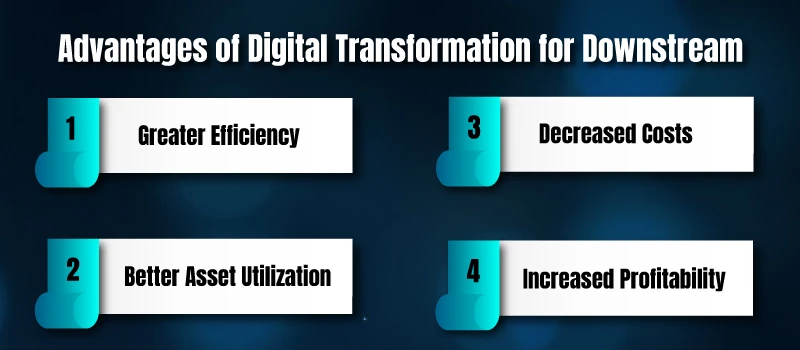
Greater Efficiency
Maintenance is the primary motivator for assets since unscheduled downtime has a significant impact on profits.
Planning is the first step in a proactive maintenance strategy, which is crucial for this reason. However, both short-term and long-term market factors have an impact on the plan itself. Long-term supply and demand pressures, as well as short-term feedstock prices influenced by the economy and regulations, can significantly alter a maintenance plan if they are not already taken into account.
Automation solutions for digital transformation downstream will simplify turnaround planning prediction and prevention, increasing asset uptime and decreasing downtime.
Better Asset Utilization
Due to their direct interaction with the system, your workers, clients, and business partners are at the core of the digitalization process.
They must comprehend the new data-driven system's operation, procedure, and modification. For them to have the proper input and output, they must receive training in data collection and interpretation.
By strengthening adaptive abilities and addressing skill gaps, it may be possible to overcome certain cultural barriers, such as reluctance to change. It has been shown that open-source learning works well for quickly reskilling workers.
Decreased Costs
The majority of downstream expenses are OPEX. The OPEX will change significantly with reduced maintenance expenditures, which are necessary for increased asset utilization. The negative impact shutdowns have on the downstream's financial health can be eliminated only by eliminating them.
Asset services, which deal with structural, electrical, and mechanical systems, account for 72% of maintenance costs in both the gas processing and refinery segments. The remaining maintenance tasks are made up of asset integrity, which includes support for the efficiency of asset services. Machine learning and data-driven solutions can improve both categories.
Because fewer employees are needed for operations, human resources also have a lower cost.
Above all, employing artificial intelligence to monitor operations and identify safety concerns and violations will significantly lower the cost of injuries and fatalities as well as environmental damage.
Increased Profitability
Unplanned maintenance has a significant impact on profitability, which is mostly determined by asset usage.
Revenue currents will continue to flow uninterrupted if asset safety and uptime optimization are prioritized in a digitalized maintenance plan. Data accuracy stands in the way of digital transformation.
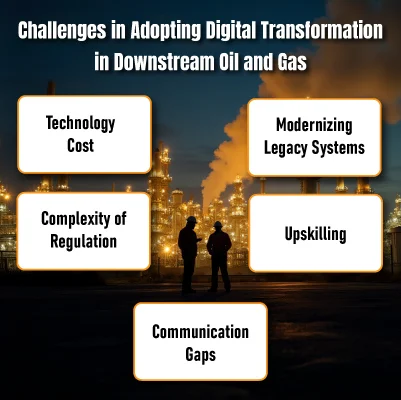
Challenges in Adopting Digital Transformation in Downstream Oil and Gas
70% of the companies that start digital transformation are stuck in the pilot stage; did you know that? What might be causing this delay?
Due to various operational procedures and non-technical elements, any company faces a unique set of obstacles. However, the following list of common digital transformation challenges needs to be addressed.
-
Technology Cost
While a complete digital transformation can be expensive, investing in contemporary technology can increase operational efficiency. For many small and medium-sized businesses with tight budgets, this can be challenging. Due to the high expense of technology, many firms are frequently forced to put off digital projects, which is likely to backfire because of the ongoing use of antiquated technology.
-
Modernizing Legacy Systems
While updating manual procedures and outdated legacy systems can be challenging, there are also new advantages and opportunities. The agility and connection of modern digital solutions are lacking in many oil and gas companies' machinery, which was built for the previous century.
-
Complexity of Regulation
Because of shifting regulations and shifting locations, it can be difficult for oil and gas companies to maintain regulatory compliance. Oil and gas firms find it challenging to quickly adjust and implement new strategies on long-term investments and day-to-day field operations due to ongoing regulatory changes and geographical uncertainty.
-
Upskilling
Only when individuals are properly taught and upskilled to apply digital transformation will it produce the intended results—various departments in the oil and gas business require different training programs. For instance, distinct training programs are required for engineers, offshore crews, and field supervisors based on their usage needs.
Oil and gas firms can help customers and employees adapt to new technologies smoothly, improve workflows, and enhance productivity and efficiency with a cutting-edge digital transformation tool.
-
Communication Gaps
Ineffective communication has a negative impact on interactions with suppliers, vendors, and customers. Furthermore, a lack of prompt communication among managers, field technicians, and backend office workers leads to misunderstandings and a lack of clarity, which impairs employee productivity and operational efficiency as well as the credibility and image of the company.
Conclusion:
Digital transformation is revolutionizing the downstream oil and gas industry by improving efficiency, reducing costs, and enhancing profitability. Through technologies like IoT, AI, and cloud services, companies can streamline operations, optimize asset utilization, and ensure workplace safety.
However, challenges such as high technology costs, updating legacy systems, regulatory complexities, and upskilling staff need to be addressed. With the right strategies and training, businesses can overcome these hurdles and unlock the full potential of digitalization, driving sustainable growth and competitiveness in the industry.
People Also Ask
How has Technology Affected the Oil and Gas Industry?
Technology has made oil and gas work faster, safer, and more efficient. It helps find oil, drill better, and reduce risks and costs.
What is Digitization in the Oil and Gas Industry?
Digitization means using digital tools and data to track, control, and improve oil and gas operations.