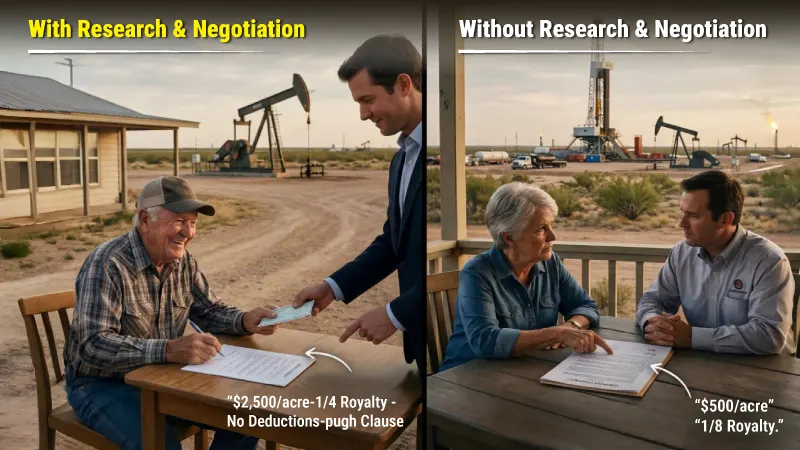
Consider a scenario involving two neighbors in the heart of the Permian Basin, David Martinez and Laura Thompson. Both own 160 acres of family land passed down for generations. One Tuesday afternoon, a landman knocks on their doors with a “standard” lease offer: $500 per acre and a 1/8 royalty.
David is thrilled. Seeing an $80,000 bonus check, he signs immediately and uses the money to upgrade his ranch equipment.
Laura hesitates. Remembering her grandfather’s advice that “oil is a long game,” she asks questions, researches nearby wells, and negotiates stronger terms, including a cost-free royalty and a Pugh clause. It takes three extra weeks, but she secures $2,500 per acre and a 1/4 royalty.
Three years later, a massive horizontal well was drilled across both properties.
-
David receives royalty checks that are 20% smaller than expected after transportation and marketing deductions.
-
Laura, however, receives checks nearly twice as large, with no expenses deducted.
The difference between David and Laura wasn’t luck, it was negotiation strategy. In Texas mineral rights, the words in your lease can be just as valuable as the oil beneath your land. This guide will help you understand how to negotiate an oil and gas lease so you can protect your minerals and improve your royalties.
What Is an Oil and Gas Lease?
An oil and gas lease is a legal contract where a mineral owner grants an oil company the right to explore for and produce minerals. In Texas law this type of lease is called a Fee Simple Determinable, which simply means the company keeps the rights to produce oil or gas only as long as the well continues producing in paying quantities. If production stops or the lease conditions are not met, the rights automatically return to the mineral owner.
When learning how to negotiate an oil and gas lease, you should look beyond the initial signing bonus. While the bonus payment provides immediate cash, the real long-term value comes from the royalty percentage and the protective clauses included in the lease.
In this relationship, you are the Lessor and the oil company is the Lessee. Your objective is to limit the scope of what the Lessee can do on your land while optimizing the amount they must pay you for accessing your property. To balance these interests effectively, you first need to understand the primary term.
Understanding The Primary Term
The primary term is essentially a "use it or lose it" period for the oil company. Typically, companies will ask for a timeframe of three to five years to begin their operations. In an active market, it is often in your best interest to keep this term as short as possible, ideally three years without an option to extend.
This is because if the company fails to drill within that window, you want the rights to your minerals back so you can lease them again to a more active operator.
If you decide to grant an "option to extend," you should ensure the price for that extension is at least equal to, or higher than, the initial bonus payment you received. You should never give away a "paid-up" lease extension for free, as your time is a valuable commodity in the Texas energy market.
Securing a short primary term ensures the company is motivated to produce oil and gas quickly, and once that production starts, this is where the royalty clause arrives.
The Royalty Clause: The Heart of the Deal
The royalty clause is where the long-term wealth of your mineral estate is truly built. While a 1/8th royalty (12.5%) was common decades ago, it is now considered outdated in most modern Texas lease negotiations. In the high-demand 2026 Permian market, a 1/4th (25%) royalty is the standard expectation for Tier 1 acreage, while 1/5th (20%) is often the floor for mature areas like the Eagle Ford or Barnett. This is especially critical in the Permian, where
Waha Hub gas prices often drop below zero, meaning a lease without strong protections could allow the company to subtract these "negative" costs from your oil royalties. However, simply securing a high percentage is not enough; you must ensure that the oil company does not reduce your payments through "backend" deductions.
To protect your income, you must negotiate for a 'Gross Proceeds' clause, stipulating that royalties are calculated on the gross value received by the Lessee at the point of sale, without any deductions for post-production costs. Without these protections, Texas law may allow the company to subtract "post-production costs" from your check.
To avoid this, your lease should include the following points:
-
Explicit Cost-Free Language:
State clearly that your royalty shall be free of all costs related to exploration, production, and marketing.
-
Prohibit Post-Production Deductions:
Ensure the company cannot deduct expenses for gathering, transporting, dehydrating, or compressing the gas.
-
Point of Sale Adjustments:
Clarify that the royalty is based on the gross proceeds received by the Lessee at the point of sale (never 'at the wellhead'), expressly prohibiting deductions for gathering, treating, or transportation.
By securing these terms, you ensure that if the company spends money to get the product to the pipeline, that remains their business expense, not yours. Protecting your financial interest is only one part of the deal; you must also protect the land itself, which is where you will need a surface use agreement and the accommodation doctrine.
Surface Use Agreement and the Accommodation Doctrine
If you own both the surface and the minerals, you have a massive advantage. In Texas, the mineral estate is considered dominant, meaning the oil company generally has the legal right to use the surface if it is reasonably necessary to produce the minerals.
To fight this, you need a Surface Use Agreement. You should specify where roads can go, where pipelines are buried, and how much the company pays for "damages" for every well pad or tank battery.
You should also incorporate the Accommodation Doctrine, a Texas legal rule that requires operators to minimize disruption to existing surface activities such as farming, ranching, or commercial operations. Don't let a drill site ruin your best grazing land because you forgot to draw a line in the sand.
The Pugh Clause: Protecting Your Depths and Acreage
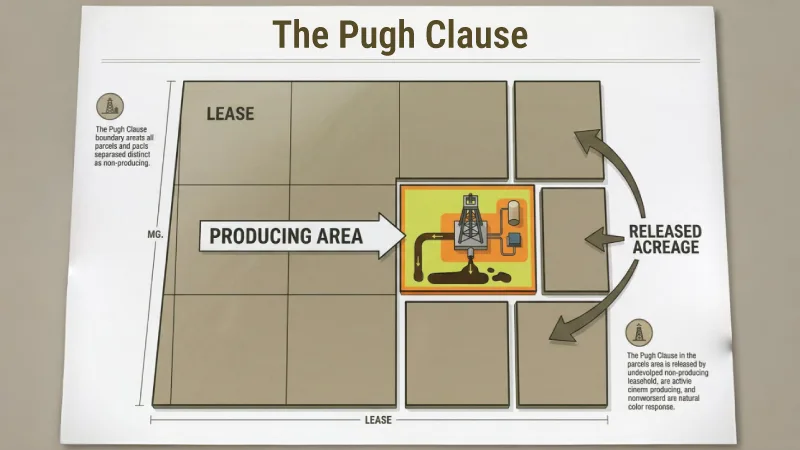
One of the biggest mistakes in learning how to negotiate an oil and gas lease is allowing a single small well to "hold" your entire property. If you own 640 acres and the company drills a well on 40 acres, you don't want the other 600 acres locked up forever.
A Pugh Clause prevents this. A Vertical Pugh Clause releases any acreage that is not included in a producing unit once the primary term expires. A "Horizontal Pugh Clause" (or Depth Severance) goes a step further, it says the company only keeps the rights to the specific depths they are actually producing from.
With modern multi-bench drilling, companies can produce oil from several underground layers at the same time. If an operator is producing from one layer, such as the Wolfcamp A, a Depth Severance clause limits their rights to only that level.
This allows you, the mineral owner, to lease other layers—like the Bone Spring above or the Ellenburger below—to different operators instead of letting one company hold rights to layers they are not using.
Pooling and Unitization
Texas follows the Rule of Capture, but the Texas Railroad Commission (RRC) enforces spacing and drilling regulations. To meet these, companies "pool" your land with your neighbors' land. You need to ensure the lease has a Pooling Limitation Clause.
This clause prevents the company from including just a tiny sliver of your land in a big pool just to keep your lease active. You should also consider negotiating Consent to Pool provisions, which allow mineral owners to approve how their acreage is combined with nearby tracts. When you understand how to negotiate an oil and gas lease, you realize that being part of a 640-acre unit is very different from being part of a 40-acre unit in terms of your monthly check.
Environmental Indemnity and Insurance
Drilling is a messy, industrial business. You need to be shielded from liability. A strong lease must include an Indemnity Clause, where the oil company agrees to "defend, indemnify, and hold harmless" the lessor from any environmental claims, spills, or lawsuits resulting from their operations.
In today’s regulatory environment, this isn't just paperwork; it’s a shield for your net worth. Demand that the company maintain adequate insurance and provide proof of coverage.
Following the 2025 Cactus Water ruling, which establishes that produced water is legally "oil and gas waste" belonging to the lessee (operator) unless explicitly reserved by the lessor.
The Warranty of Title Trap
Almost every "standard" lease includes a clause where you, the owner, "warrant and defend title." Mineral owners should carefully review or negotiate this clause to avoid unnecessary legal responsibility. The oil company has a team of landmen and title attorneys; they know more about your title than you do.
You should never be legally responsible if a long-lost cousin from 1920 shows up claiming a 2% interest. Negotiate for a 'Quitclaim' or no warranty at all, ensuring the burden of title verification remains entirely on the oil company's land department.
This is a crucial step in learning how to negotiate an oil and gas lease without taking on unnecessary legal debt.
Using Technology to Verify the Deal
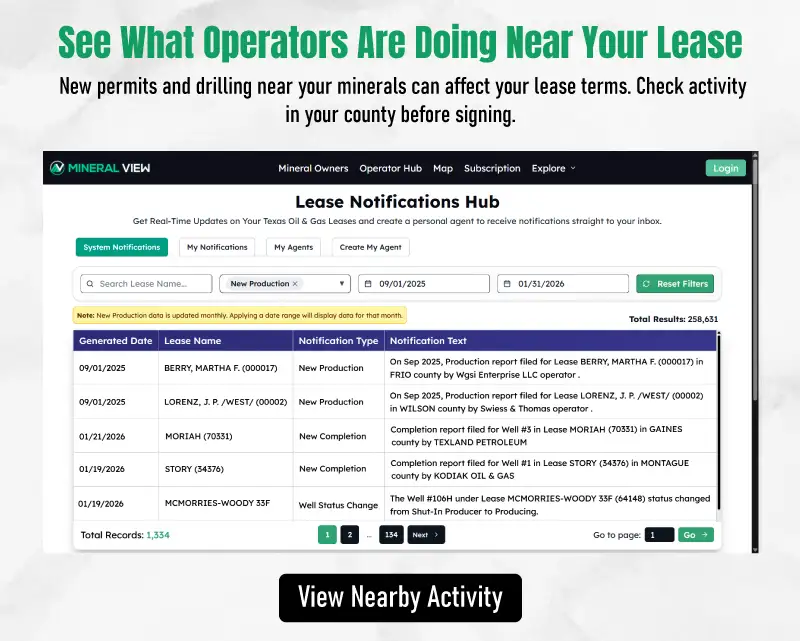
Negotiating without data often leads to accepting weaker lease terms. You need to know what the company is doing on the tracts next to yours. Are they filing for new permits? What are their production declines like in the surrounding area?
Utilizing an Operator Hub allows a lessor to verify an oil company’s historical compliance and drilling frequency before signing. This allows you to see the track record of the company you are dealing with. If they have a history of slow-paying royalties or frequent environmental violations, you might want to move on to a different bidder.
Similarly, using a high-resolution Texas Oil and Gas Map to see exactly where the "horizontal laterals" are trending in your county gives you the leverage to demand a higher bonus. If the rigs are moving your way, your price goes up.
Understanding the Market Value of Your Mineral Rights
Determining exactly what your minerals are worth is often the most difficult part of the negotiation. Prices vary wildly across the state; for example, in 2026, bonus bids range from $500 per acre in legacy gas plays to upwards of $12,500 per acre in core 'sweet spots' of the Delaware Basin, where infrastructure is already established. To truly master how to negotiate an oil and gas lease, you have to move past guesswork and use real data.
-
Market Research:
Look at recent leasing activity in your specific county to see what neighbors are receiving.
-
Geological Potential:
Consider the depth and number of productive formations (like the Wolfcamp or Bone Spring) under your land.
-
Production Trends:
Check the performance of existing wells nearby to estimate future royalty income.
- Professional Valuation:
Use independent tools to get a clear picture of your asset’s worth. For example, using the MVestimate feature offers a professional look at your mineral value based on latest production and market trends.
-
Negotiation Leverage:
Having a data-backed valuation allows you to stay firm when a landman says they have reached their "final offer."
Using these points helps you move from a place of uncertainty to a position of informed confidence. This ensures you don't leave money on the table and receive a deal that truly reflects the value of your property.

Audit Rights and Transparency
Never assume the math on your royalty check is correct. Mistakes happen, and they are rarely in the owner’s favor. Your lease should include an Audit Clause, giving you the right to inspect the company’s books and records once a year.
To make this easier, you should regularly pull a Lease Report. These reports summarize the activity on your specific tracts, ensuring that what the company is reporting to the State (via the RRC) matches what they are reporting to you.
If there is a discrepancy in the volumes produced versus the volumes you were paid for, the Lease Report is your "Exhibit A" in a demand letter.
Finalizing the Addendum
Write your changes in a separate Lease Addendum instead of editing the standard lease paragraphs. Lease Addendum is a document added to a lease agreement that modifies or adds specific terms to protect the mineral owner’s rights. It is a separate document that says, "In the event of a conflict between the printed lease and this addendum, the addendum controls."
This is where you integrate your Pugh clauses, 'No-Deduction' royalty language, and specific Produced Water disposal restrictions (regulations that limit where and how wastewater from drilling and production can be stored or injected to protect land and groundwater) to ensure the addendum takes priority over the company’s standard terms.
It keeps the deal clean and ensures your specific protections (such as fair royalty payments, limits on surface use, and protection of your mineral rights) aren't buried in fine-print "legalese."
Conducting Pre-Lease Research Before Signing

Before finalizing any oil and gas lease, mineral owners should spend some time researching important information about their property and the surrounding area. This preparation helps you understand the true value of your minerals and strengthens your negotiating position. A small amount of research before signing can prevent costly mistakes later.
Mineral owners should consider the following steps:
-
Review Recent Leasing Activity in your County:
Check what bonus payments and royalty percentages other mineral owners nearby are receiving. This helps you understand the current market value of leases in your area.
- Look at Nearby Drilling Permits and Well Activity:
Find out whether new wells are being planned or drilled close to your property. Active drilling in the area can indicate higher development interest and stronger negotiating power.
-
Research the Operator’s Reputation:
Learn about the company offering the lease. Look at their drilling history, how quickly they develop leases, and whether mineral owners have reported issues with royalty payments.
-
Understand the Geology Beneath your Land:
Identify the formations under your property, such as the Wolfcamp or Bone Spring in the Permian Basin. Properties with multiple productive formations may have higher long-term value.
-
Analyze Production from Nearby Wells:
Reviewing production data from surrounding wells can give you an idea of how productive the area is and what kind of royalties may be possible.
Taking time to complete this basic research allows mineral owners to approach lease negotiations with better information, stronger confidence, and a clearer understanding of the true value of their mineral rights.
Final Words
Learning how to negotiate an oil and gas lease is not just about short-term income but about long-term financial security. In Texas, a negotiated lease can help family targets such as education, retirement, and future investments. Mineral owners can make better decisions regarding their assets by dividing their rights between fair royalty rates, restricting unwarranted deductions, and protecting their rights.
Effective mineral owners invest in their minerals as their assets. They do not enter into leases hastily and are not easily fooled into signing deals.
The knowledge of how to negotiate an oil and gas lease can be used to make sure that once the production starts, the financial rewards actually reach the mineral owner and his family.
The process of navigating the Texas mineral rights can be hectic, but when one has the appropriate information, it becomes simpler. With the assistance of Mineral View Features, mineral owners may gain more insight into what is going on in the areas surrounding their property and make more knowledgeable decisions. Knowing the right data and insights, owners will be able to approach negotiations with more clarity and confidence and operate their mineral assets from a long-term perspective.
Important Mineral Terms and Definitions
- Accommodation Doctrine: A Texas rule requiring oil companies to reasonably avoid disrupting the surface owner’s existing land use when possible.
- Lease Addendum: A separate document attached to the lease that adds or overrides specific terms in the standard lease.
- Audit Clause: A clause that allows the mineral owner to review the company's records to verify royalty payments.
- Bonus Payment: The one-time upfront payment paid per acre to a mineral owner for signing the lease.
- Consent to Pool Provisions: A clause requiring the oil company to get the mineral owner’s permission before combining their land with nearby tracts for drilling.
- Cost-Free Royalty / Gross Proceeds: A royalty paid from the full sale value of oil or gas without deducting post-production costs.
- Depth Severance (Horizontal Pugh Clause): A clause that releases rights to underground layers the company is not producing from after the primary term.
- Fee Simple Determinable: A lease type where the company keeps mineral rights only while it meets lease conditions and continues production.
- Horizontal Lateral: The horizontal part of a well that runs through a rock layer to increase oil or gas recovery.
- Indemnity Clause: A provision where the oil company agrees to cover damages, spills, or lawsuits caused by its operations.
- Lessee: The oil or gas company that receives the right to explore and produce minerals.
- Lessor: The mineral owner who grants the lease to the company.
- Multi-Bench Drilling: A drilling method where multiple oil-bearing layers are developed from the same well location.
- Pooling Limitation Clause: A clause that limits how much of your land can be included in a drilling unit to prevent misuse.
- Primary Term: The time period (usually 3–5 years) the company has to start drilling before the lease expires.
- Pugh Clause (Vertical): A clause that returns unused acreage to the mineral owner after the primary term ends.
- Quitclaim: A way of granting mineral rights without guaranteeing perfect ownership of the title.
- Waha Hub: A major natural gas pricing point in West Texas that influences gas royalty values.
- Warrant and Defend Title: A clause where the mineral owner guarantees ownership of the minerals and agrees to defend that claim if challenged.
Disclaimer: The information in this blog is for educational purposes only and is not legal or financial advice. Oil and gas laws are complex and change frequently. Before signing any contract, we strongly recommend consulting with a qualified oil and gas attorney.