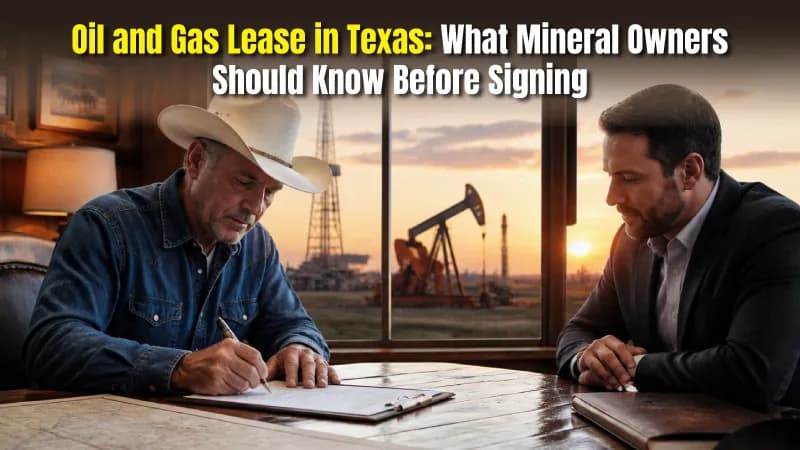
If you own minerals in Texas, you have likely received a phone call or a letter from someone claiming they want to "lease your minerals." That person is a landman. To a beginner, the oil and gas industry can feel like a labyrinth of legal jargon, county records, and complex math.
At the center of this maze stands a professional who translates the complex requirements of large-scale energy companies into clear, actionable agreements with individual asset owners.
But what is a landman in oil and gas? Far from being just a "salesperson," a landman is a hybrid of a private investigator, a legal researcher, and a business negotiator. They are the boots-on-the-ground force that makes energy production legally possible. Without them, an oil company is just a group of people with a drill and nowhere to put it.
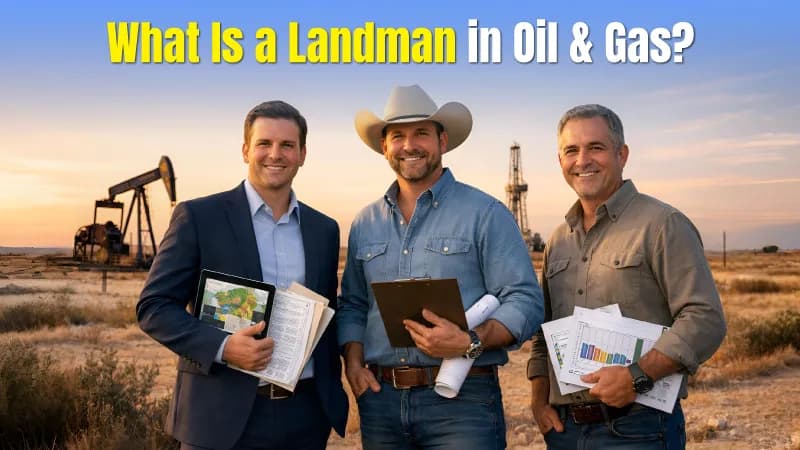
What Is a Landman in Oil and Gas? Defining the Role
To understand what is a landman in oil and gas, think of them as the legal pathfinders of the energy world. Before a company can move even a single blade of grass to build a drilling pad, a landman must "clear the legal path" to ensure the project is actually allowed to exist.
You can also consider the landman as the designer of property rights. Their role is most critical in states like Texas, where mineral rights can be separated from surface rights. This means one person might own the dirt on top, while someone else owns the oil and gas deep underground. For a deeper overview of how mineral rights work in Texas, including severed and executive rights, determining exactly who has the legal authority to sign a lease in this situation is a terribly complicated process, and that is where the landman steps in.
A petroleum landman spends their days—and often late nights—digging into what is known as the Sovereignty of the Soil. This means they meticulously track every legal action, including:
- Demise (deaths and inheritance)
- Abolishment (forfeited rights)
- Tax debt and liens
They trace these records on every acre of land starting from when it was a Spanish Land Grant or a **Republic of Texas patent *(***the first official land ownership documents given by the Spanish government or the Republic of Texas to original settlers) all the way up to the year 2026. This creates a chain of titles that forms the legal basis of the entire industry. Their role is to ensure total accuracy; if they get the title wrong, the company could face millions of dollars in a lawsuit, which is why understanding the legal aspects of oil and gas leasing in Texas is so important for mineral owners.
The Three Faces of the Profession
While the goal is always the same—acquiring and managing land rights—not all landmen wear the same hat. Understanding the different types of landmen helps you know exactly who you are dealing with across the table.
1. The In-House Landman
These are full-time employees of exploration and production (E&P) companies. They don't spend much time at the courthouse; instead, they sit in the "Land Department" at the corporate office. Their job is to manage the company's existing assets and coordinate with the legal and engineering teams. When an engineer says, "We want to drill here," the in-house landman looks at the Map and decides which leases need to be bought to make that happen.
2. The Independent Field Landman
This is the person most landowners meet. Usually hired by a "Land Broker" (a firm that provides land services to oil companies), the field landman is the one at the county clerk’s office in Midland or Pecos. They are independent contractors. They run the title, find the mineral owners, and knock on doors to negotiate leases.
3. The Land Consultant
Consultants are often senior-level landmen brought in for "Due Diligence" during massive acquisitions. If Company A is buying Company B for $5 billion, the consultants are the ones who check the paperwork to ensure those 50,000 acres are actually held by valid leases.
What are the Daily Duties of a Landman in Oil and Gas?
If you were to shadow a landman for a week, you would see a mix of high-stakes negotiation and tedious research. Their responsibilities are the "make or break" factors for any drilling project.
Title Research:
This is like detective work. In Texas, mineral rights are often shared by many family members over generations. A landman must find every person who owns a share.
To do this, the landman carefully checks old government records in the county office. They create a history of ownership that can go back many years or even hundreds of years. They check all important documents like property papers, loans, and legal claims to make sure the current owner truly has legal rights, and may even uncover unclaimed mineral rights in Texas that heirs or prior owners never realized existed.
They also check inheritance records, marriage records, and divorce records to see how ownership was passed between people. By finding every person who owns even a small share, the landman helps the oil company work with the correct owners and prevents legal problems or disputes about unpaid money later.
Lease Negotiation:
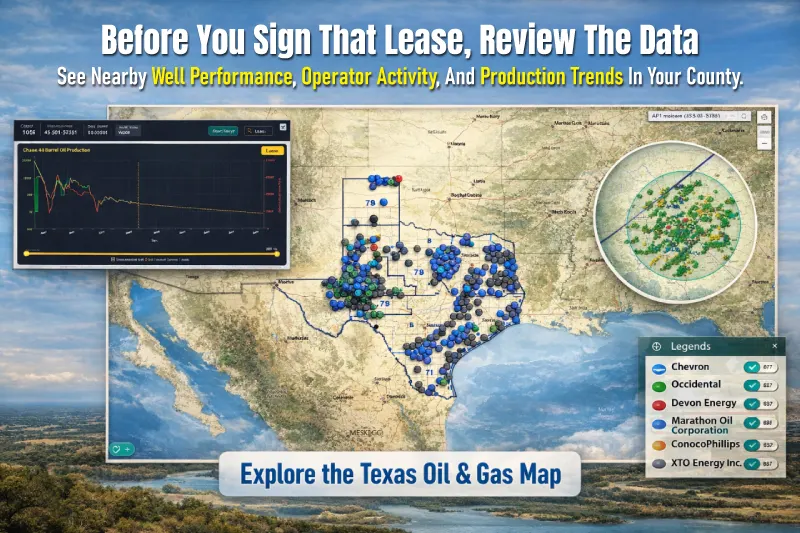
This is where the "art of the deal" comes in. A landman is responsible for convincing a landowner to sign an oil and gas lease for a specific bonus and royalty percentage, and mineral owners should follow a disciplined strategy using the best way to negotiate a lease in Texas to avoid leaving money on the table. Before signing any lease presented by a landman, a Texas mineral owner should independently verify nearby well performance, operator activity, and current bonus trends in the county.
Reviewing a detailed Lease Report, checking historical production through a Well Report, and analyzing nearby activity using the Texas Oil & Gas Map helps prevent underpricing your minerals during negotiation.
For example, imagine a landman offers a $1,000 per acre bonus with a 20% royalty. If you check nearby wells and discover two operators recently paid $1,750 per acre with a 25% royalty for similar acreage, that information changes the negotiation entirely. Understanding the fundamentals of the royalty clause in an oil and gas lease turns data and lease language into real negotiating leverage.
Curative Work:
Sometimes, the title has a "cloud"—perhaps a great-grandfather died in 1940, and his will was never probated. The landman must find the heirs and get them to sign "Affidavits of Heirship" to fix (or "cure") the legal record.
Pooling and Unitization:
In the age of horizontal drilling, a single well can be two miles long and cross five different properties. The landman organizes these into a "unit," ensuring everyone gets their fair share of the production.
Why the Landman Matters to Mineral Owners
The landman will be your first contact with the energy world where you are a mineral owner. It is they who tell you about your interest in royalty and see to the correctness of the "Division Order" (the paper that explains how the company will pay you), but you still need to understand how oil and gas royalty payments in Texas are calculated to verify that the amounts are correct.
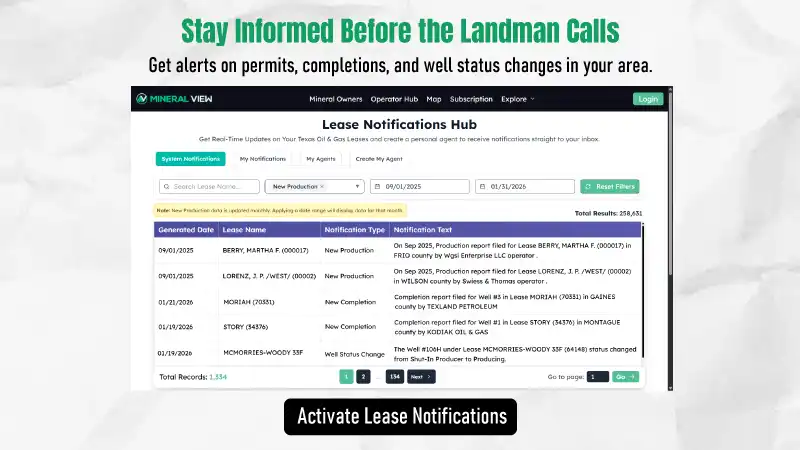
Yet, due to the fact that the landman is typically a representative of the oil company, the shrewd owners carry their own equipment to do a check on the work of the landman. Such characteristics as a Notification Agent can warn an owner about new permits before even a landman can call them. This information parity has turned the game in 2026, and the arrangement between landmen and owners is more of a partnership and less of a mystery.
Note: If you are a Texas mineral owner, remember this: a landman represents the operator, not you. Their job is to secure rights for the company. Your job is to ensure the terms protect your long-term mineral value, including understanding what happens when a lease expires. Understanding this distinction changes how you approach every conversation.
The Precision of Modern Land Management
The old-school landman, the legal pad holder in yellow, is soon going to be history in 2026. The sector has shifted to transparency based on data. For example, when a landman comes to the owner today, the owner, in most cases, already possesses his data.
The landman and the mineral owner can arrive at the table with identical facts by simply viewing an Interactive Map of a platform or by viewing Monthly Reports of the activity in the neighborhood. This reduces friction.
Tools like MVestimate by Mineral View, integrated production analytics, and dedicated oil and gas asset management software features allow owners to evaluate projected income before accepting lease bonuses. When combined with decline curve analysis and county activity trends, owners can approach lease discussions with financial clarity.
Landmen vs. Right-of-Way (ROW) Agents
It is a common mistake to use these terms interchangeably, but in Texas law, they are very different.
- Landmen focus on Mineral Rights. They want what is under the ground. Their work involves leases, royalties, and subsurface ownership.
- Right-of-Way Agents focus on Surface Rights . They want to put something on or through the ground—like a pipeline, a power line, or a road.
If a company wants to drill a well, they send a landman. If they want to build a pipeline to carry the oil from that well, they send a ROW agent. While their skills in negotiation are similar, the legal frameworks (like the Rule of Capture vs. Eminent Domain) are worlds apart.
Landmen in Renewable Energy
You may ask: as we turn to solar and wind energy, will the landman be a thing of the past? Quite the opposite. The massively spiking demand for land professionals has been brought about by the "Energy Transition”.
Large-scale energy projects like solar and wind farms require vast amounts of land. This has created a demand for the Renewable Landman. Their job is very similar to a petroleum landman, but they focus on the surface of the land rather than the minerals below.
These professionals conduct title research, negotiate deals for long-term easements, and manage surface use agreements to ensure energy infrastructure and the landowner can coexist for decades. Whether it's oil from the Permian or wind from West Texas, the fundamental question remains: Who owns the rights, and how do we legally secure them?
The Path to Becoming a Landman
It is not a job you just "fall into" anymore. It requires a specific blend of business, law, and geology.
Education:
Most top-tier landmen today hold degrees in Energy Management or PLM (Petroleum Land Management). Programs at Texas Tech or the University of Oklahoma are the "gold standard."
The AAPL:
The American Association of Professional Landmen is the governing body. They set the "Code of Ethics" that all reputable landmen follow.
Certifications:
- RL (Registered Landman): The entry level.
- RPL (Registered Professional Landman): The mid-level, requiring several years of experience and a comprehensive exam.
- CPL (Certified Professional Landman): The highest honor. This is the "Board Certified" equivalent for the land world.
The Legal and Ethical Standard
In Texas, the "Landman" is a title of respect, but it carries a heavy ethical burden. They must adhere to strict state laws regarding "notary public" duties and the unauthorized practice of law. While they draft contracts, they are not (unless they are also barred attorneys) providing legal advice. They are business agents.
Their role is to ensure that the "correlative rights" of all parties are protected. This means making sure one owner’s drilling doesn’t unfairly drain a neighbor’s oil. It is a balancing act that requires a deep understanding of the Texas Railroad Commission’s rules on well spacing and density.
Land Management in 2026
- Many professionals who hold a petroleum land management degree are now transitioning to roles where they secure rights for other energy sources, such as wind and solar.
- In this modern environment, independent land consultants are often hired on a contract basis to provide various services for exploration companies and green energy firms alike. Their daily work involves rigorous legal research to verify ownership across public and private records.
- Whether they are working on site-specific projects for a new drilling pad or a massive solar farm, these experts must conduct surface inspections and scour courthouse records to ensure absolute compliance with state regulations.
- A primary goal for any land manager ( the professional overseeing a company's lease portfolio) today is reducing title risk. This requires the ability to negotiate deals that protect the operator while being fair to the landowner.
- Often, this involves negotiating lease agreements that include complex clauses for long-term land use. If gaps in the chain of title are discovered, landmen must quickly secure the necessary curative documents to prepare the land for development.
- By successfully managing these business agreements, landmen ensure that projects involving both traditional and energy sources can move from the planning phase to active production without legal delay.

Final Words: The Future of Land Management
So, what is a landman in oil and gas? They are the essential link in the energy supply chain, evolving from the dusty courthouse basements of the 1920s to the high-tech, data-integrated world of 2026. While their core mission, solving the puzzle of ownership, remains the same, the modern landman has become a sophisticated data analyst and community liaison.
Whether navigating a carbon capture project or a horizontal well in the oil field, their ability to bridge the gap between complex legalities and human interests is what keeps the industry moving forward. If you find yourself sitting across from one, remember they aren't just there to sign a paper; they are initiating a multi-decade partnership between your land and the world’s energy needs.
Navigating this partnership is easier when you use Mineral View features to stay informed. The Operator Hub helps you see which companies are most active in your county, while Data Downloads provide survey and completion records to verify landman findings.
The Community Forum lets you connect with other owners who have worked with the same landmen or brokers; you can also ask questions directly in the Mineral View Community – mineral owners & professionals forum . This access to data strengthens your negotiation and helps protect your financial interests at every stage of the lease.