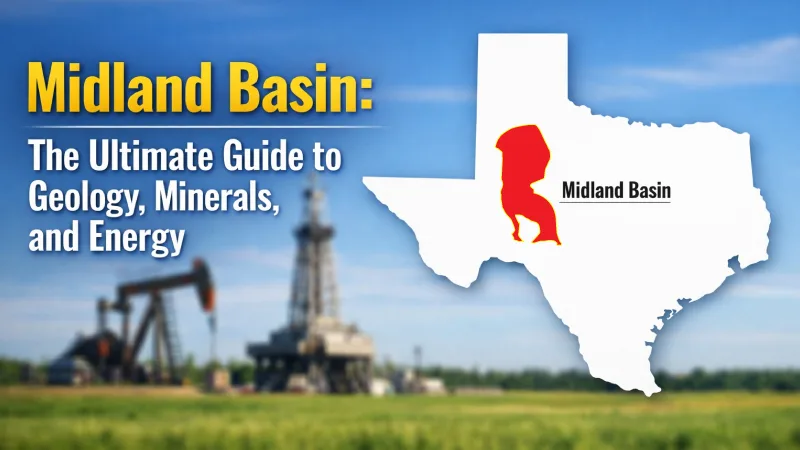
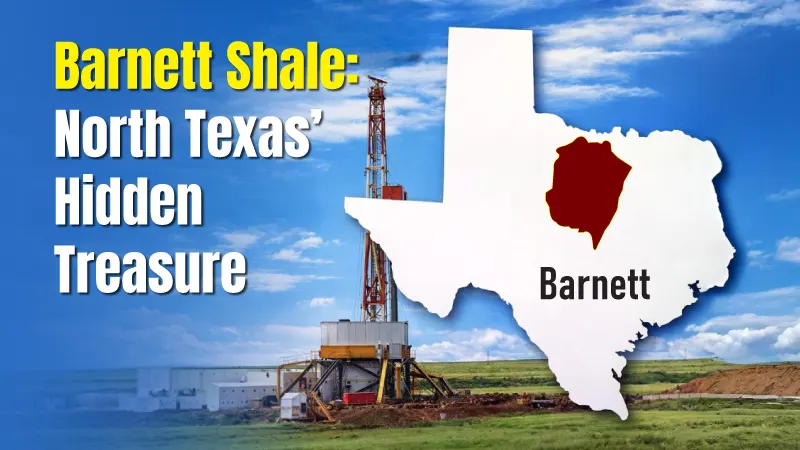
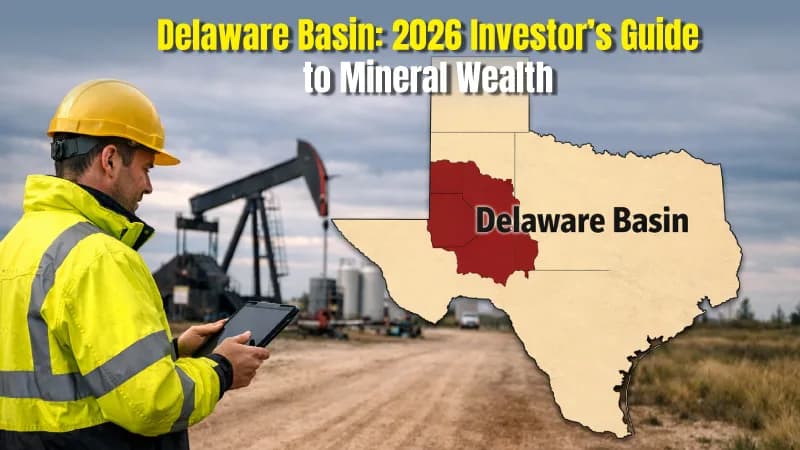
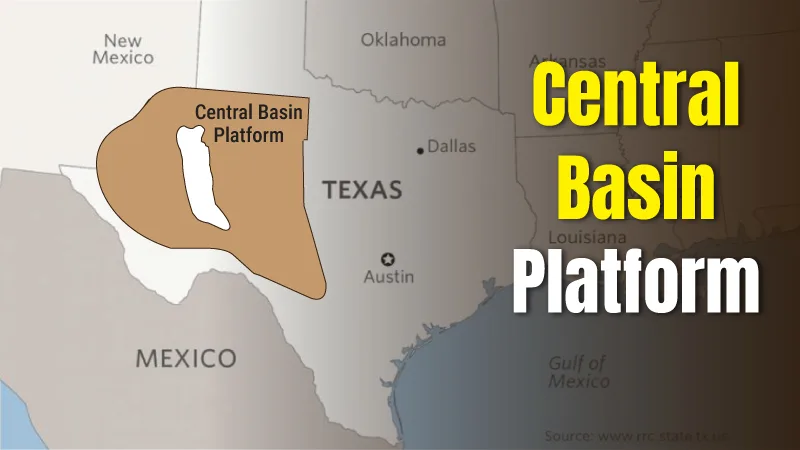
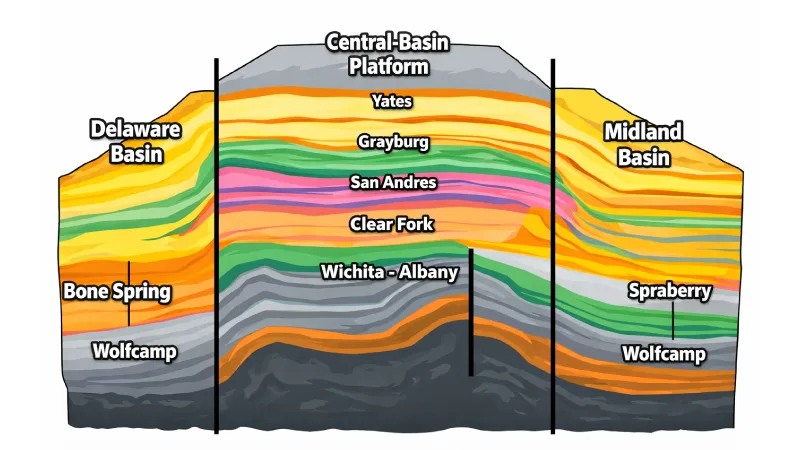
The Central Basin Platform is an uplifted block of rock in West Texas and southeastern New Mexico that splits the Permian Basin in two — the Delaware Basin to the west and the Midland Basin to the east. It covers roughly 6,400 to 7,000 square miles across eight Texas counties, and its oil sits shallow: most wells produce from 3,000 to 8,000 feet.
For many years, the Central Basin platform was the heart of Texas oil production. Even though today’s headlines often highlight deep horizontal drilling in other parts of the Permian, this region continues to quietly produce steady and reliable energy. It may not always grab attention, but it remains one of the most dependable oil-producing areas in the country.
For mineral owners, knowing where your property lies and how this region works makes a big difference. It helps you move from simply receiving royalty checks to actively understanding and managing a long-term asset that can benefit future generations.
In this informative guide, we will explore the geology, operations, and key factors that shape the Central Basin platform and what they mean for you as a mineral owner.
Why the Central Basin Platform is most Valuable Spot in Texas
To understand your mineral interest, you have to look at the "basement." Hundreds of millions of years ago, tectonic forces shoved a massive block of the earth’s crust upward. This tectonic uplift created the Central Basin Platform (CBP), a massive structural horst that bifurcates the Permian Basin into two distinct sub-basins: the deep, siliciclastic-dominated Delaware Basin to the west and the Midland Basin to the east.
Because this area was a "high," it spent eons as a shallow, sun-drenched sea, think of it as the ancient version of the Great Barrier Reef. This stable carbonate shelf environment facilitated the deposition of extensive aggradational sequences, primarily high-porosity dolostones and limestones characterized by superior reservoir quality. These rocks are highly porous, acting like a giant stone sponge that soaked up oil migrating from the deeper basins on either side.
What does this mean for you? It means the oil is often found at much shallower depths, typically between 3,000 and 8,000 feet, compared to the 10,000+ foot depths required in the basins. These shallow vertical assets offer significantly lower CAPEX and OPEX, benefiting from exceptionally low decline rates and "long-life" production profiles that often span five decades or more.
Counties That Make Up the Central Basin Platform
The Central Basin platform spans approximately 6,400 square miles. In Texas, it primarily includes the following counties:
| Andrews | Crane |
| Ector | Gaines |
| Terry | Yoakum |
| Winkler | Ward |
In New Mexico, portions of Lea and Eddy Counties also lie within the trend.
In Texas, these areas fall under Railroad Commission (RRC) Districts 8 and 8A. The city of Odessa serves as a major operational hub, supporting drilling, transportation, and refining infrastructure that makes production economically viable.
Active Operators in the Central Basin Platform
The following table highlights the key players currently driving development and production across the Platform's core counties.
| Operator Name | Strategic Focus | Primary County Activity |
|---|---|---|
| Blackbeard Operating | Horizontal redevelopment & mature field optimization | Crane, Andrews, Winkler |
| Occidental (Oxy) | Large-scale CO2 EOR & legacy production | Ector, Gaines, Yoakum |
| Chevron | Stacked pay development & infrastructure | Crane, Ector, Ward |
| Ring Energy | San Andres horizontal drilling | Andrews, Gaines |
| Elevation Resources | Conventional & Unconventional exploration | Andrews, Ector |
| Boyd & McWilliams | Mature reservoir management | Ector, Andrews |
| BTA Oil Producers | New drilling & lease acquisition | Andrews, Lea (NM) |
| Diamondback Energy | Consolidation & horizontal infill | Andrews, Ector |
Note: Above operator data is taken from the Texas Railroad Commission (RRC) and US EIA official sources. There may be a slight change in the ranking number of operators based on month-to-month activity levels. You must check valid platforms to know the exact currently active operators in the Central Basin platform.
If you want to check the specific production of any operator, you can simply visit Mineral View's Operator Hub feature.
The Footprint: Where Exactly is the Wealth?
The Central Basin platform isn't just a vague concept; it’s a 6,400-square-mile powerhouse. If your minerals are located in the following counties, you are likely part of this structural trend:
- Texas: Andrews, Crane, Ector, Gaines, Terry, Yoakum, Winkler, and Ward.
- New Mexico: Lea and Eddy (eastern portions).
In Texas, these rights fall under the jurisdiction of the Railroad Commission (RRC) Districts 8 and 8A. This is a region where the city of Odessa serves as the industrial heartbeat, providing the infrastructure that makes your minerals economically viable. Without the pipelines, service companies, and refineries centered around the Platform, the cost of getting oil to market would eat your royalties alive.
A Century of Production: The San Andres and Beyond
When you look at a check stub, you might see names like "San Andres" or "Yates." These are the legendary formations of the Central Basin platform.
- The San Andres Formation: This is the heavyweight champion. It’s a thick carbonate reservoir that has produced billions of barrels.
- The Yates Formation: Known for being even shallower, the Yates provided the "easy oil" that built Texas in the early 20th century.
- Stacked Pay: One of the greatest advantages of the Platform is "stacked pay." An operator might drill a well for the San Andres, but they are passing through the Seven Rivers, Queen, and Grayburg formations on the way down. Each of these represents a potential secondary source of income for the mineral owner.
How Modern Operations are Changing the Game
There is a common misconception that the Central Basin platform is "played out" because it consists of mature, vertical wells. This couldn't be further from the truth. The "old" oil is being revitalized by three major trends:
1. Horizontal Re-Entry: Operators are now taking old vertical wellbores and "kicking out" horizontally. This allows them to contact more of the reservoir rock than a traditional vertical well ever could.
2. CO₂ Flooding (EOR): Enhanced Oil Recovery (EOR) is a staple here. Companies inject carbon dioxide into the San Andres to "wash" the remaining oil out of the rock. This can extend the life of a lease by 20 to 30 years.
3. Residual Oil Zones (ROZs): Advancements in petrophysics have identified extensive Residual Oil Zones (ROZs) beneath the paleo-oil-water contact; these intervals are now primary targets for horizontal exploitation and CO2-EOR secondary recovery. These ROZs were once thought to be unproducible, but new technology is unlocking them, essentially creating a "New Permian" inside the old one.
Navigating the Complexity of Mineral Rights
Owning minerals on the Central Basin platform requires a different tactical approach than owning in the shale basins. Because the fields are older, the legal "paper trail" can be a mess.
Many legacy assets on the CBP are encumbered by 1940s-era leases effectively Held By Production (HBP) [A lease that stays active as long as any oil or gas is being produced, even in small amounts] in perpetuity, regardless of declining flow rates. It is critical to audit your lease for a robust Pugh Clause, specifically a Vertical Severance provision, to ensure that non-producing deep formations are released back to you rather than remaining Held By Production (HBP) by a single shallow well.
Without one, an operator could hold your entire 640-acre tract by producing from just one tiny 10-acre shallow well, preventing you from leasing the deeper rights to someone else.
On the Platform, where there are so many different productive layers, "vertical severance" is your best friend. It ensures that if a company isn't producing from the deep zones, you get those rights back.
The Vital Role of Data Transparency
In the past, mineral owners were at a massive disadvantage. The oil companies had all the maps, the engineers, and the production data, while the owners just had their mailboxes. To manage a modern mineral portfolio on the Central Basin platform, you have to bridge that information gap.
You should be looking at detailed maps that show not just where the wells are, but which formations they are tapping into. Seeing a map of the San Andres trend versus the Devonian trend can tell you if your "dry" acreage is actually sitting on an untapped goldmine.
Furthermore, knowing the "neighborhood" is key. Using an operator hub to see which companies are active nearby can tell you who might be interested in leasing your minerals next. Monitoring "offset operator" activity is vital; if a Tier-1 operator like Chevron or Oxy initiates a localized leasing campaign or files for an increased density permit nearby, the speculative value of your net mineral acres (NMA) increases significantly.
Forecasting Your Future Income
One of the hardest parts of being a mineral owner is the "guessing game" of royalty checks. Because Central Basin platform wells have such long lives, their decline curves are predictable if you have the right tools. Having access to a reliable estimate of value helps you understand the Fair Market Value of your assets.
This is crucial if you are considering selling a portion of your minerals or if you are doing estate planning for the next generation.
You also need to stay on top of the paperwork. A lease report can act as your early warning system. It helps you track whether an operator is fulfilling their obligations or if a lease is about to expire due to lack of production.
Given the mature nature of CBP fields, mineral owners must monitor for "Shut-in Royalties"; if an operator ceases production without meeting specific leasehold savings clauses, the lease may terminate by its own terms. If a well stops producing for a certain period, the lease may terminate, giving you the chance to lease the land again at a higher bonus rate.
Common Mistakes that Cost Mineral Owners
Most mistakes on the Central Basin platform happen because of passivity.
- The "HBP" Trap: Many owners think, “I’m getting a monthly check, so everything is fine.” But that can be misleading. For example, if production only comes from a shallow well in the Yates Oil Field, the operator may not be developing deeper zones like the ROZ (Residual Oil Zone) (a deeper rock layer that can still contain significant recoverable oil).
If deeper zones are not drilled, your lease stays HBP with small payments, while you could be missing out on much greater long-term income.
- Water Management Issues: This region produces a lot of water along with the oil. If your lease isn't clear about who pays for "water disposal," you might find your royalty checks being "deducted" into oblivion.
- Neglecting the RRC Filings: Operators frequently file for "permits to drill" or "unitization." If you aren't watching these filings, you won't know when a new horizontal project is about to start on your land.
Environmental and Regulatory Reality
The Central Basin platform is under more scrutiny than ever. Because the infrastructure is older, the RRC is strictly monitoring "well integrity" to prevent leaks into the Edwards-Trinity Aquifer. As an owner, you want responsible operators.
A major spill or a "plugging" liability can tie up your mineral interests in legal red tape for years. Conducting due diligence on an operator’s P-5 status and H-15 compliance with the RRC is essential to mitigate the risk of orphan well liabilities or environmental liens affecting your mineral interest.
Central Basin Platform Future
As we move toward a more carbon-conscious economy, the Central Basin platform is uniquely positioned to thrive. It is already the world leader in CO2 sequestration through the EOR process. The "old" oil fields of Ector and Andrews counties are becoming the "green" oil fields of tomorrow, where carbon is pumped back into the ground to produce the energy we still need.
For the mineral owner, this means your assets aren't going anywhere. The Central Basin platform has survived the busts of the 80s, the 90s, and 2020. It remains the most stable, predictable, and resilient part of the Texas energy landscape.
Final Thoughts
The Central Basin platform is more than just a geological feature; it is a storied piece of Texas history that continues to drive the global economy. For the mineral owner, success in this region requires a blend of historical perspective and modern vigilance. You must understand that your acreage is part of a complex, multi-layered system that requires active management.
By keeping a close eye on the "stacked" formations beneath your feet, staying informed about the shift toward horizontal drilling, and ensuring your lease terms protect your rights to every depth, you can turn a simple mineral interest into a powerful legacy. The oil is there; it has been for millions of years. Your job is to make sure you have the visibility and the knowledge to claim your fair share of it.
Managing assets in such a complex area requires professional-grade tools. Mineral View Features provide the clarity owners need to navigate the Permian landscape. By utilizing high-resolution Maps to visualize your holdings and an Operator Hub to track company movements, you stay ahead of the curve.
Whether you need an MVestimate to determine the current market value of your royalties or a detailed Lease Report to ensure compliance and catch expirations, having the right data at your fingertips is the only way to truly master the Central Basin Platform.