Well intervention is crucial to the smooth and efficient running of oil and gas activities. It includes fixing, maintaining, or improving a well to improve its performance or deal with issues. By correcting a blocked flow, improving equipment, or increasing production, well intervention ensures that wells operate as efficiently as feasible. In this in-depth article, we will look at how effective interventions boost productivity and why they are crucial to the industry.
Since it prolongs the well's life and boosts output, this process is essential to oil and gas operations. Let's examine it more closely.
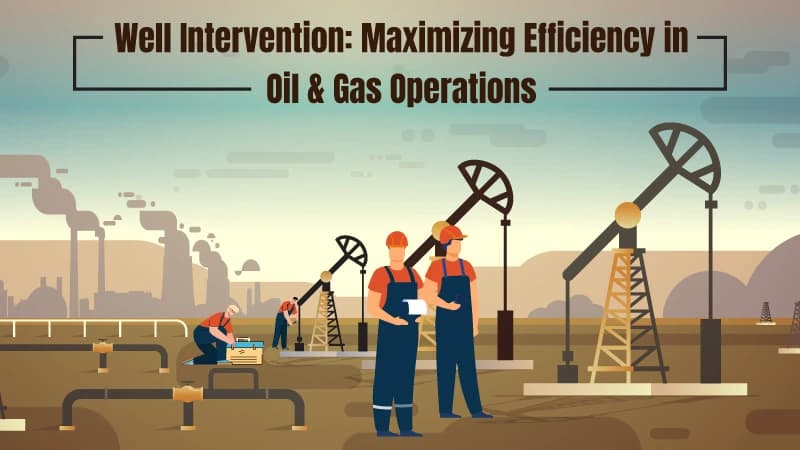
What is Well Intervention?
Well intervention is a process used in the oil and gas industry to obtain access to a well for a number of purposes, such as preserving, repairing, or enhancing its performance. Well intervention, according to various mineral specialists, is the process of gaining access to a well to repair damaged parts, maintain its condition, detect or monitor its state, replace equipment, or inject fluids to boost its production. The well's continued safe and efficient functioning depends on these tasks.
The Society of Petroleum Engineers (SPE) states that well intervention is necessary to extend the life of a well. By providing operators with access to stranded or excess hydrocarbon reserves, interventions can help boost output from a well that might otherwise be less productive. This process is crucial for reducing operating dangers, preserving security, and optimizing resource recovery overall.
Well interventions can take many different forms, from easy treatments like cleaning the wellbore to more complex procedures like fixing damaged components deep down the well. Taking all of this into account, the major objective of well intervention is to preserve the well's enhanced performance in order to ensure that hydrocarbon extraction is efficient and long-lasting. The well intervention process can be divided into two main groups.
Categories of Well Intervention
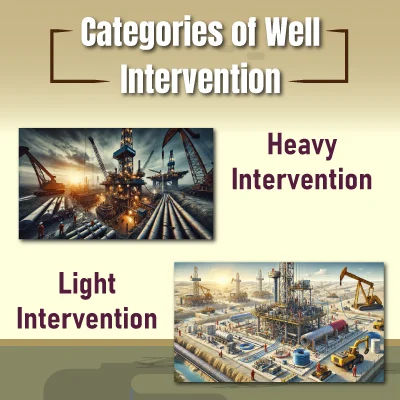
Well intervention is divided into two primary categories:
Heavy Intervention:
-
This is typically used for more expensive and complex techniques such as hydraulic workover rigs and snubbing devices. Using heavy machinery to perform more complex wellbore tasks, like drilling or recompleting a well, is one of these methods.
Light Intervention:
-
Typically, this calls for easier and less expensive techniques like slickline, coiled tubing, and wireline interventions. These methods include using specialized tools and equipment to perform a number of procedures inside the wellbore.
These two categories are used to achieve well intervention. Light well intervention is typically used for well monitoring, production enhancement, and routine maintenance. On the other hand, extensive well intervention is used for well recompletion, fishing endeavors, and well plugging and abandonment. Several strategies are employed while putting these procedures into practice.
Techniques Utilized in Well Intervention
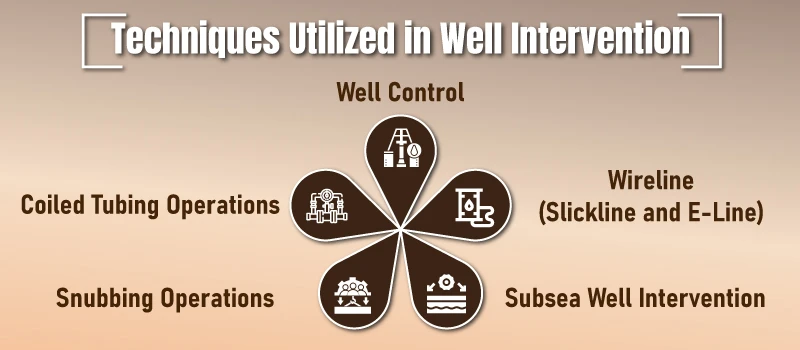
Engineers might use a number of methods to carry out the well intervention. These methods are intended to guarantee that wells remain effective and productive for the duration of their lives. By using these techniques, engineers may spot potential problems early on and take proactive measures to fix them before they worsen. The key methods used in well interventions are listed below:
Wireline (Slickline and E-Line):
Wirelines are a common well intervention technique used by oil and gas well engineers to carry out a variety of operations. Using this technique, various instruments and equipment are deployed downhole by putting a cable or wireline into the wellbore.
The original kind of wireline, called a slickline, is a single-strand wire used for simple well intervention tasks, including removing debris, placing plugs, and detecting wellbore temperature and pressure. Because it lacks an insulating or protective covering, this kind of wire is known as slickline.
An electrical current is conducted downhole by a multistranded, insulated wire in the second form, known as an electric line (E-line). It makes it possible to carry out more complex well intervention procedures, including wellbore recording and perforation.
Snubbing Operations:
Snubbing is a well intervention technique that allows operations to be carried out on pressurized wells without causing the well to die. It is helpful in handling difficult situations such as plugging and abandonment, well workovers, and live well completions.
A pipe called a Snubbing Unit is placed into the wellbore while the pressure is controlled in order to carry out snubbing operations. In order to achieve the appropriate depth, the snubbing unit often comprises several pipe sections that can be added or deleted as needed. Several well-intervention procedures can be carried out using a variety of tools and equipment after the snubbing unit has been placed.
However, safety is a top priority, and snubbing operations can be complex, requiring specialized equipment and expert workers. Strict protocols must be followed by operators to ensure that the well is always properly regulated.
Well Control:
While drilling, finishing, or producing from a well, people employ well control methods and processes to keep the well pressure constant. Although the need for well intervention may develop for reasons other than loss of well control, effective well control procedures are crucial to preventing incidents that could result in such a need.
In order to achieve well control during drilling operations, it is essential to manage the pressure of the drilling mud, a fluid that is cycled through the wellbore to remove cuttings and stabilize it.
An impact may happen if the formation's pressure is higher than the mud's, which, if left unchecked, could result in a blowout. Blowouts are avoided by using blowout preventers (BOPs), which are specialized devices that may seal the wellbore and stop the fluid escaping.
Subsea Well Intervention:
Interventions in subsea wells present a number of difficulties and necessitate careful preparation. Subsea intervention used to be frequently impracticable due to its high cost, but in the current economic environment, it is now more financially viable.
For more significant jobs like snubbing and workover drilling rigs, these interventions are usually conducted with mobile offshore drilling units (MODUs) or light/medium intervention vessels.
Light interventions, which include little changes like valve modifications, typically take place while the well is still operating. However, significant interventions usually involve stopping the well and may include replacing parts such as pumps or tubing strings or even sealing off and permanently closing the well.
Coiled Tubing Operations:
Coiled tubing can be operated without the use of traditional drill pipes. Using this technique, a continuous coil of tubing—usually composed of steel or composite material—is wound onto a sizable spool and inserted into the wellbore.
Numerous amounts of work inside the wellbore can be completed effectively with this method. Several applications of coiled tubing are preferred for acid stimulation and well cleanouts.
These are some major techniques utilized in well interventions. However, in some cases, to perform heavy operations and resolve costly issues, the workover process is utilized.
What is the Difference Between Well Intervention and Workover?
The aim and breadth of workover and well intervention vary from one another. The objective of these oilfield maintenance procedures is to maximize and maintain oil or gas output at acceptable levels. While workover usually entails significant maintenance or remedial treatments on an oil or gas well to keep it at its optimal production condition, the well intervention operations include the expenses in the well's life.
In contrast, well intervention, which might include smaller-scale operations like cleanouts, logging, or well stimulation, describes a variety of actions taken on a well to improve or restore its productivity. Well intervention deals with routine or specific actions intended to improve well performance, particularly for oil and gas wells, whereas workover handles more comprehensive difficulties.
Why is Well Intervention Crucial in Oil & Gas Operations?
Since oil and gas wells are the major sources of income for the oil and gas industries, well intervention is essential to the sector. It helps to sustain the productivity of these wells. Overlooking well conditions can result in lower production rates, which can enhance the company's financial condition for a longer time.
For wells to be lucrative and productive, early intervention is therefore critical. The well intervention procedure is now trouble-free and may be completed faster thanks to recent developments and technologies. The well intervention for oil and gas is so important as it offers numerous benefits.
Benefits of Well Intervention
The preservation or improvement of an oil or gas well's productivity is referred to as "well intervention." It is an economical way to make sure that wells function to their maximum capacity without needing to drill a new well from the beginning.
-
An important advantage of well intervention is increased output. Well interventions restore or boost the flow of gas and oil by means of methods such as clearing obstructions or clearing debris. Operators are able to sustain profitability as a result.
-
Well intervention provides an early problem discovery, which is an additional benefit. Frequent interventions lower the chance of expensive downtime or environmental harm by detecting problems like corrosion, leaks, or decreasing pressure before they occur.
-
Additionally, well intervention expands well life. Operators can optimize their investment by swiftly resolving small faults and upgrading equipment as necessary.
-
It is a more affordable option than drilling. Well interventions are more sustainable since they frequently involve less time, money, and resources than drilling a new well, which is costly and time-consuming.
Conclusion
In oil and gas operations, well intervention is an essential procedure that assures wells operate effectively and securely. By taking care of maintenance, repairs, and improvements, it helps increase output, identify problems early, and extend the lifespan of the wells.
Operators can optimize output while lowering expenses and environmental hazards by employing strategies including coiled tubing, wireline, and snubbing. Well intervention is essentially an economical means of maintaining profitability and optimizing resources in the oil and gas sector.
Looking upon the current situation of the oil and gas industry, processes like enhanced oil recovery, well intervention, workover, etc. should be understood properly to better dive into the oil and gas industry. If you are a mineral owner or interested in mineral activities, you must be aware of these methods.
People Also Ask
What is Well Intervention?
Well intervention is the process of performing maintenance or repairs on an oil or gas well to improve its production or fix issues.
What are the Categories of Well Intervention?
The main categories of well intervention are Light Well Intervention (Quick and simple tasks) and Heavy Well Intervention (More complex tasks that may require more equipment).
Which Techniques are Utilized in Well Intervention?
The techniques utilized in well intervention are Wireline (Slickline and E-Line), Coiled Tubing Operations, Snubbing Operations, Well Control and Subsea Well Intervention.
What is better, Well Intervention or Workover?
Workover is typically more complex and expensive, involving major repairs. Well intervention is usually less invasive and less costly, making it better for smaller tasks.
Is Well Intervention Crucial in Oil & Gas Operations?
Yes, well intervention is crucial because it helps maintain well productivity, fix problems, and extend the life of the well.
What are the Benefits of Well Intervention?
Benefits of well intervention are Increased Production, Reduced Downtime, Cost-Effective Repairs and Longer Well Life.