Key Takeaways
-
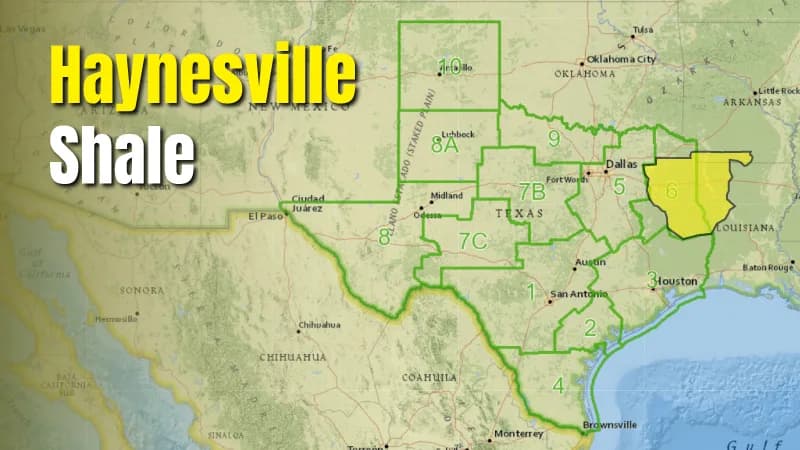
The Haynesville Shale is a Jurassic-era rock formation covering roughly 9,000 square miles across East Texas and Northwest Louisiana, with its reach extending into Southwest Arkansas. However, when it comes to actual gas production, all the action happens exclusively in Texas and Louisiana.
-
Chesapeake Energy’s 2008 breakthrough in horizontal shale drilling unlocked the modern Haynesville Shale gas play, transforming it into one of America’s most prolific sources of natural gas, with early estimates ranging as high as 200 trillion cubic feet but most modern assessments placing recoverable reserves in the 100 to 165 trillion cubic feet range.
-
Production peaked at a whopping 7.2 billion cubic feet of natural gas per day back in 2011, and the play has only grown stronger since, surging past 14 billion cubic feet per day by 2023 depending on how the basin is defined. That’s an incredible 9.3% of the entire U.S. natural gas supply coming from a single formation.
-
The Haynesville Shale benefits from a prime location near the Gulf Coast and its LNG export terminals, allowing producers to capture top dollar for their natural gas, near the Henry Hub benchmarks.
-
Pioneering completion techniques using massive amounts of proppant - upwards of 3,500 pounds per foot - and longer laterals have significantly increased well productivity - with an impressive average of 6.5 billion cubic feet of recoverable reserves per well.
Formation Overview and Geography
The Haynesville Shale represents one of the United States most important unconventional natural gas formations, stretching out across 23 counties on the Texas and Louisiana border and extending geologically into Arkansas. However, the producing Haynesville Shale play is limited entirely to Texas and Louisiana. At a massive 9,000 square miles in size, it has become a cornerstone of domestic energy production, and for good reason – it was once regarded as one of the largest natural gas fields in the contiguous United States and continues to be one of the most significant. As a result, it has played a pivotal role in shaping the nations energy landscape.
Named after the tiny town of Haynesville in Claiborne Parish, Louisiana, this formation has a fascinating history. Originally classified together with the overlying Bossier Shale, geologists eventually realized that they were actually two distinct geological units. The Haynesville formation is incredibly consistent across its geographic extent, with an average thickness of 200-300 feet and buried a staggering 10,500-13,000 feet deep below the earths surface. While the porosity varies, between 3% and 14%, it does influence the reservoir quality and gas storage capacity. If you take a look at the surrounding areas, you'll see that the formation spans across various counties and parishes, including San Augustine, Harrison and more.
Formed in the Jurassic period, some 150 million years ago, this ancient marine deposit was created when the region was covered in a shallow sea. The perfect conditions for hydrocarbon generation were created - with sediments and organic matter being deposited in restricted basins. During this time, sediments were deposited on a southward-sloping shelf, resulting in the formation of a thick layer of shale that we now see as the Haynesville. Spread across multiple parishes in Northern Louisiana and into East Texas, its a mighty impressive sight.
Located within the larger Texas-Louisiana-Mississippi Salt Basin, the Haynesville Shale has benefited from this region's long history of oil and gas exploration and production. Of course this has provided significant advantages to oil and gas operators like the existing pipeline networks, processing facilities and an experienced local workforce.
Geological Characteristics and Lithology
The Haynesville Shale formation is incredibly complex and its geological characteristics can vary across its geographic location and stratigraphic position within the basin. As a result, its a diverse range of lithological components, including silty, argillaceous and calcareous mudstones with clay content ranging from 25 to 35% and calcite comprising 5 to 30% of the total composition.
The formation's depositional environment is reflective of its marine origins, with plenty of fossil evidence, including coccoliths and bivalves, which indicate deposition in restricted marine conditions during the Late Jurassic period. These fossils provide invaluable insights into the paleoenvironmental conditions that led to the formation's exceptional organic content and subsequent natural gas generation potential.
The broader Haynesville formation includes several distinct geological members that have contributed to regional hydrocarbon production. For example, the Gilmer Limestone member is coastal and shallow marine deposits that were formed during periods of carbonate platform development. The Buckner Anhydrite member, on the other hand, consists of evaporite deposits formed in restricted marine environments with high evaporation rates.
In another informal member, the Gray sandstone, it has interfingered with the main Haynesville Shale along its northern edge. As a result of this, the Gray sandstone unit represents submarine fan deposits that carried sediments from the ancient coastline into the deeper basin areas. These submarine fans created important variations in reservoir quality and completion effectiveness across the play area - with the sand-rich layers within the Gray sandstone significantly enhancing reservoir quality and influencing hydrocarbon recovery.
The formation's production of hydrocarbons is inextricably linked to the presence of reservoirs within the Haynesville Shale where the very unique combination of organic rich mudstone and sand rich intervals provides a fantastic storage and flow capacity for extracting natural gas. Given the formation's very heterogeneous nature - with all sorts of clays and carbonates/variations in fracture systems - sophisticated geological modelling is needed to optimise where drill wells and when to complete them. To actually drill and extract gas operators have to get to grips with massive variations in clay content, carbonate cement and natural fracture networks by designing hydraulic fracturing programs and picking drilling sites appropriate for the play.
Development History and Discovery
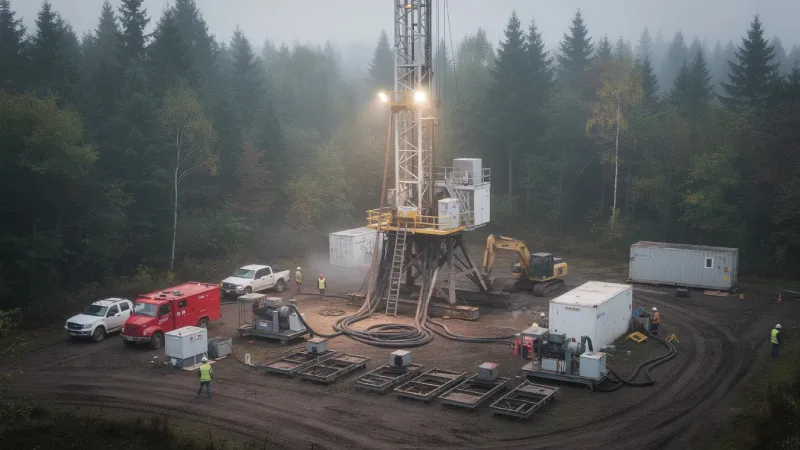
The modern Haynesville shale play really kicked off in 2008 when Chesapeake Energy came in with a game changing discovery that completely transformed the whole region's energy landscape & established the Haynesville as one of the top natural gas assets in the United States. At the time this was during a period when prices for energy were going up and the technology for drilling & completing wells was rapidly advancing - especially with hydraulic fracturing and horizontal drilling.
Before this shift to utilizing unconventional resources, the area had been developed using conventional oil and gas extraction methods with existing wells. But the initial discovery sparked an out of control leasing frenzy across the Louisiana and East Texas region with exploration companies really competing to get mineral rights from landowners. One or sometimes two companies would typically take the lead in driving forward exploration and production, using new technology and expert legal help to get the most out of the reserves & boost the local economy and landholder negotiations. This massive competition meant big cash bonuses for landowners and loads of economic activity in rural areas.
In 2009 the Railroad Commission of Texas merged the previously separate Haynesville and Bossier fields into a single entity called the Carthage (Haynesville Shale) field, reflecting the way most operators were developing the area - targeting the Haynesville and the overlying Bossier Shale together in combined completion programs.
The Haynesville shale development built on the vast history of oil and gas production in the Texas-Louisiana-Mississippi Salt Basin. This meant that the area already had loads of existing infrastructure like gathering systems, processing facilities, and transportation networks that could be easily adapted to shale gas production.
However, drilling wells in the Haynesville shale can be extremely expensive, often costing between $10 and $14 million due to the crazy depths needed to reach the formation. The construction of new pipelines and processing facilities helped support the rapid expansion of shale development in the area.
According to the Energy Information Administration the Haynesville Shale is now one of America's top producing natural gas fields, with a massive amount of recoverable reserves and strong production growth. Development really took off after the initial discovery with hundreds of wells drilled in the first few years. However the play has been subject to the same sort of boom and bust cycles experienced by other shale plays - influenced by natural gas prices, technological improvements and availability of capital. The latest growth phase started around 2017 when enhanced completion techniques and improved well productivity really took off.
Production Statistics and Reserves
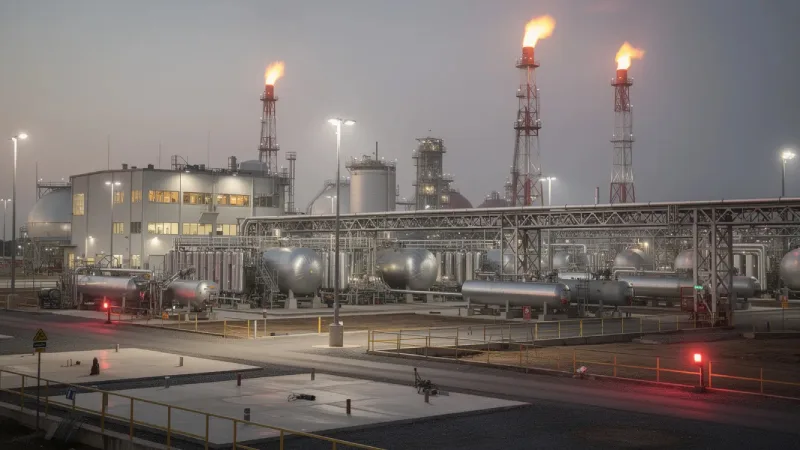
The Haynesville Shale has proven to be one of the most productive natural gas formations in the United States with some impressive production statistics that show just how crucial the formation is for the country's energy needs. The formation used to be considered the largest natural gas field in the contiguous United States - a testament to its enormous potential and the tech that's available to extract it.
Current estimates put the recoverable reserves of the formation between 100 and 165 trillion cubic feet of natural gas - a big chunk of America's unconventional gas reserves. The wide range of estimates reflects the ongoing assessment of how much gas the formation can ultimately produce as well as new areas still being developed.
Production from the Haynesville has followed a huge growth curve since development began. The play peaked at 7.2 billion cubic feet per day in 2011 at the height of the early boom period, then dipped after natural gas prices plummeted and drilling slowed. But production has really bounced back in recent years - now reaching 14 billion cubic feet per day as operators have started using advanced completion techniques and focusing on the most productive areas. Since development began, the Haynesville has produced over 25 trillion cubic feet of gas - reflecting both the highs and lows of the play's development over time.
Top Producing Oil and Gas Companies in the Haynesville Shale
The table below highlights the leading oil and gas companies actively producing in the Haynesville Shale region. These operators are key players driving natural gas production across various Texas counties, leveraging advanced drilling and completion techniques to maximize output from this prolific formation.
|
Rank |
Company Name |
Texas Producing Counties |
|---|---|---|
|
1 |
Harrison, Panola, Shelby |
|
|
2 |
Harrison, Panola |
|
|
3 |
Panola, Shelby |
|
|
4 |
Panola, Harrison |
|
|
5 |
Panola, Shelby |
The performance of individual wells shows just how productive the formation is. Many Haynesville wells deliver between 2.5 and 3.5 billion cubic feet of gas over their lifetime, while the most advanced modern long-lateral wells in the core areas can surpass 6 billion cubic feet of estimated ultimate recovery. These figures represent major improvements over earlier development phases and highlight just how far completion design and well placement have evolved.
DeSoto Parish in Louisiana is now the leading production area within the play, producing around 3.9 billion cubic feet per day in the 4th quarter of last year - representing about 24.5% of total Haynesville production and showing just where the best areas for development are. The Formation's Contribution to US Natural Gas Production
The formation's contribution to the total US natural gas production came in at approximately 9.3% as of January 2013 - and this marked a significant milestone in establishing the formation's importance as a backbone of America's energy supply. This substantial contribution really does underscore the formation's role in making US energy security less of a worry and ensuring a steady supply of domestic natural gas.
Advanced Completion Techniques
The development of completion technology has been game-changing in unlocking the Haynesville Shale's full production potential, with operators getting increasingly sophisticated at using stimulation techniques to squeeze as much gas as possible out of the super-tight rock. The modern completions in the Haynesville involve really intense stimulation programs, with operators now using over 3,500 pounds per foot of proppant - which is about the same level of intensity as what you'd see in super-productive formations like the Marcellus Shale.
They've come a long way from the earlier development phases when operators were just using relatively modest stimulation programs that didn't quite cut it in terms of accessing the formation's productive capacity. The increased proppant loading is what keeps the created fracture network open, allowing sustained gas production from the tight rock.
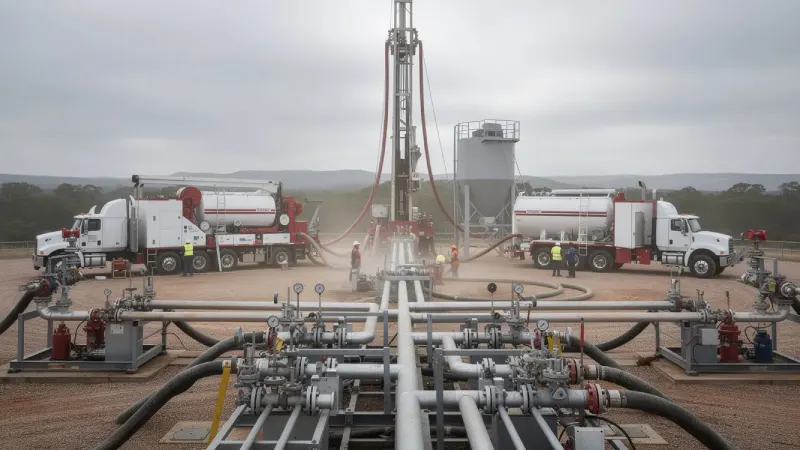
Longer lateral wells have proven to be a real game-changer, significantly boosting gas recovery rates while cutting development costs per well. Extended laterals let operators tap more reservoir volume with each well, making projects more economical and requiring less surface space. The combination of longer laterals and high-intensity completions has really proven to be a winning formula in the Haynesville's thick, continuous reservoir.
The over-pressurized characteristics of the formation itself contribute to some pretty impressive well flow rates - but only if the wells are properly stimulated. However, operators need to carefully manage this overpressure during completion operations to ensure safety and get the most out of long-term production.
The advances in technology that have been implemented since 2017 have really driven the Haynesville's production resurgence, enabling operators to achieve some real productivity gains that made development even viable during periods of pretty modest natural gas prices. And the good news is that these advances continue to evolve as operators refine their understanding of the formation's reservoir characteristics and completion response.
Market Position and Economic Advantages
The Haynesville Shale has some pretty compelling competitive advantages when it comes to its strategic location relative to key natural gas markets and infrastructure. Being close to the Gulf Coast markets lets producers capture some pretty attractive pricing opportunities near the Henry Hub benchmark - which is the primary North American natural gas pricing point.
With access to liquefied natural gas export terminals along the Gulf Coast, producers get to diversify their markets and take advantage of global LNG demand - which has grown substantially. This export infrastructure has really changed the dynamics of the market, providing a premium market that helps insulate regional producers from the ups and downs of domestic price fluctuations.
The fact that this infrastructure exists means that Haynesville producers get to tap into global market pricing - which has generally commanded a premium over domestic Henry Hub pricing. And with this premium pricing comes more revenue and real market opportunity.
The formation's 9.3% contribution to total US gas production as of January 2013 really demonstrates its critical role in the national energy supply. This means that there's real investment going into the play and a lot of interest from major energy companies that have the technical and financial resources to develop these complex resources.
The established energy infrastructure in the region is a real cost advantage over newer shale plays that often lack this - existing pipeline networks, processing facilities and support services all reduce development costs and speed up project execution. These advantages help keep the Haynesville competitive even as other shale formations get developed across North America.
Regulatory Framework and Mineral Rights
Regulating the Haynesville Shale development is a bit of a complex affair with multiple agencies involved - the Louisiana Department of Energy and Natural Resources plays a pretty central role in overseeing the technical aspects of exploration and production. The Office of Conservation handles well permitting, drilling inspections, and environmental protection measures, while the Mineral Resources office looks after government mineral leases on state and local lands throughout the region.
The Department of Energy and Natural Resources ensures that the state gets fair compensation for resources developed on public lands - through lease sales, royalty collections and compliance monitoring. But when it comes to private mineral leases and royalty payments, these are between the exploration company and individual mineral owner - with the state agencies still keeping an eye on drilling and production to ensure compliance with environmental and safety regulations.
If you are a mineral owner in Texas with oil and gas leases, Mineral View offers an excellent tool to calculate your royalty estimates for the next six years (we call it MVestimate) and provides valuable data related to your leases and royalty projections.
Unitization and forced pooling regulations make sure that production sharing within standard 640-acre drilling units is equitable, preventing waste and protecting the rights of all mineral owners. This helps resolve situations where some mineral owners are unwilling to lease their rights, enabling development while protecting everyone's interests.
The rules that govern the drill have evolved to tackle the unique challenges of unconventional development, including stiff new disclosure requirements for fracking operations, tougher environmental safeguards, and better coordination between state and federal overseers. This evolution of rules is helping to make sure that oil and gas development happens responsibly, while still keeping the economic lights on for energy projects.
Environmental Considerations
The Haynesville Shale formation, the largest natural gas field in the lower 48, has brought significant economic opportunities as well as environmental concerns, especially in East Texas and Northwest Louisiana, where all Haynesville drilling and production take place. As natural gas production in the area has really taken off, so have concerns about the environmental impacts of extracting that gas from deep down.
A big focus of environmental debate is hydraulic fracturing - the process that's unlocked all the gas in the Haynesville Shale and the Bossier Shale formation on top of it. This involves blasting high-pressure fluids into the rock layers, cracking the shale to get the gas out. While it's let operators tap into all sorts of resources, it's also raised questions about the impact on groundwater, air pollution, and local ecosystems. And things get even trickier because the Bossier Shale is right next to the Haynesville - there's a very real risk of cross-contamination that's got geologists and mineral owners up in arms.
Communities all along the salt basin in Texas, Louisiana, and other parts of the region have been voicing concerns about the impact of drilling, building wells, and expanding oil and gas infrastructure. Mineral owners and local residents are having a lot more conversations with exploration companies and producers to make sure that gas production is done responsibly. Stuff like safely getting rid of drilling fluids, cutting down on methane emissions, and keeping wildlife habitats safe are at the top of the list.
Regulatory bodies like the Department of Energy and Natural Resources have responded by slapping on some tough new requirements for well construction, monitoring, and waste management. These are designed to protect groundwater sources, keep surface disruption to a minimum, and make sure that oil and gas operations are following the best environmental practices. And when it comes to building new pipelines and processing plants to handle the growing demand for fossil energy - they're making sure that these get an environmental once over, with a focus on keeping the footprint down and keeping people safe.
Now, thanks to all the rules and stakeholder pressure, some of the operators in the Haynesville Shale are starting to use more sustainable practices. Using longer laterals and better drilling methods is making things way more efficient, and reducing the number of well sites needed and the amount of surface disruption. Some companies are even looking to integrate some renewables into their operations and get in on some waste-reducing technologies.
But even with all these efforts - the environmental impact of gas production in the Haynesville Shale is still a hot topic that's getting a lot of research and debate. Ongoing studies are taking a closer look at the long-term effects on air and water quality, as well as the cumulative impact of all the infrastructure that's getting built out there. As the industry keeps evolving - balancing out the economic benefits of gas with the need to protect the environment and public health is going to keep being a tough line to walk for operators, regulators, and communities alike.
The Haynesville Shale's role as a key part of America's energy mix makes it clear that responsible development is a big part of the picture. We need continued innovation, better stakeholder engagement, and some serious environmental oversight to make sure that the region's gas resources are developed in a way that makes life better - not worse - for both current and future generations.
Community and Stakeholder Engagement
All the energy development in the Haynesville Shale has really lit a fire under community engagement and information sharing between mineral owners, industry participants, and local stakeholders. In the aftermath of the 2008 leasing boom, online forums started popping up to help mineral owners pool their knowledge and share information with each other - even with the big energy companies.
If you’re looking for modern and modern-day community forums, be sure to check out the Mineral View Community, especially for insights on Texas oil and gas and mineral rights.
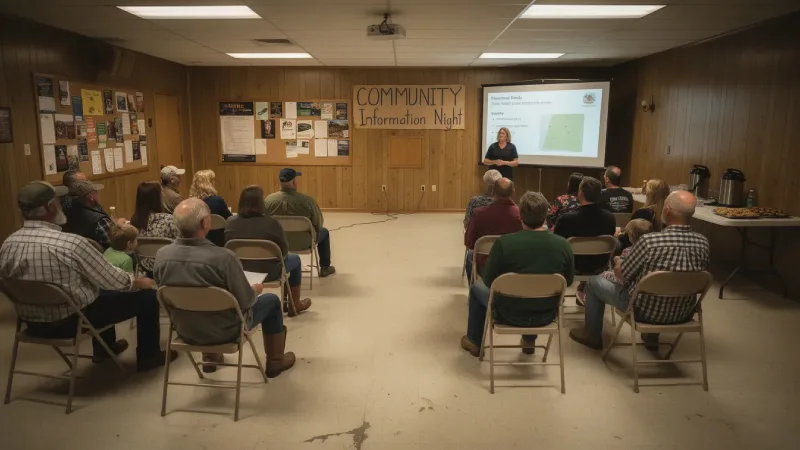
The kind of information getting shared through these platforms covers a lot of ground - leasing terms, royalty calculations, well performance data, and regulatory developments. And that collective knowledge sharing has really been a game-changer for mineral owners, helping them make sense of the really complex oil and gas production processes.
Future Outlook and Development
Looking forward, the Haynesville Shale is going to keep playing a big role in America's energy mix. And with all the rules and regulations in place, plus a lot of innovation and stakeholder engagement - it's in a good place for responsible development. But it's also going to be a challenge to keep finding that balance between economic benefits and environmental protection.
We're going to have to keep pushing for innovation, transparency, and rigorous oversight to keep this region's gas resources working for all of us. The future of the Haynesville Shale formation looks very promising, as it continues to be the anchor for US natural gas production and energy security. According to the US Energy Information Administration, the Haynesville Shale is one of the largest natural gas fields in the country, and with modern assessments placing its recoverable reserves between 100 and 165 trillion cubic feet, this region has got decades of clean-burning fossil energy in store. With that kind of potential, the Haynesville formation is bound to remain a major player for both established and up-and-coming oil and gas operators.
Development in East Texas and Northwest Louisiana is being driven by a strong demand for natural gas - both here at home and for export. And with exploration companies pouring in serious cash for advanced drilling and completion tech, including hydraulic fracturing and longer laterals, we can expect even more gas to be unlocked from the Haynesville Shale formation and the overlying Bossier Shale. These innovations aren't just helping to pump more gas, though - they're also making each individual well more efficient, which is making the whole play a lot more attractive to investors.
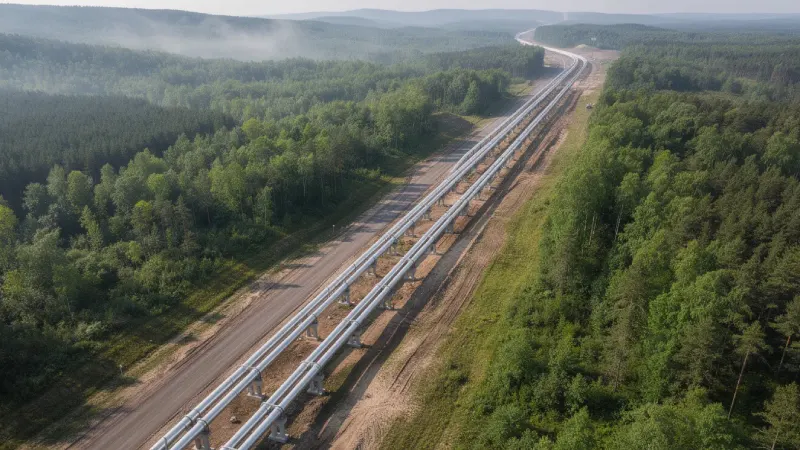
The region is also a natural hub for the oil and gas industry, thanks to its proximity to the Gulf Coast and major pipeline corridors. New pipeline construction is underway to make sure all that gas gets to where it needs to go - and fast. This means that Haynesville gas can reach both US consumers and international buyers, helping to keep prices stable and ultimately making it a more valuable commodity.
Mineral owners in the Haynesville and Bossier plays are set to play a key role in the region's ongoing development. As operators look to expand their drilling programs, the competition for mineral rights is heating up - and that's good news for mineral owners who get to negotiate for better deal and rake in some serious royalty cash. Plus, with platforms like Mineral View offering comprehensive tools such as oil and gas portfolio management, detailed cash flow statements, field reports, Texas GIS mapping, and activity notifications, mineral owners are empowered to make well-informed decisions and enhance the value of their assets.
The economic benefits of the Haynesville Shale formation don't stop with the oil and gas industry, though. Local communities in Texas and Louisiana are seeing job creation, increased tax revenues, and all sorts of infrastructure investment thanks to natural gas production. And as drilling and development activity continues to ramp up, these regions are likely to see sustained economic growth and improved public services.
Looking ahead, the Haynesville Shale formation seems set to keep cranking out 6 billion cubic feet of gas per day - and potentially even more as technology improves and new areas get developed. The key to making it all work, though, will be using data-driven decision-making, better drilling techniques, and surface operations that are as efficient as possible.
In short, the Haynesville Shale formation is going to be a major player in the US energy picture for years to come. With strong demand for natural gas, innovative tech on the horizon, and a supportive infrastructure network in place, this region is well-equipped to provide reliable, affordable energy while also delivering real benefits to mineral owners, local economies, and the industry as a whole.