As we know, the oil and gas industry is one of the paramount aspects in energy generation as well as economic growth. Although it helped shape the nation in financial terms, it includes some complex tasks like keeping an eye on drilling rigs, continuous pipeline monitoring, etc.
Now, to reduce the efforts in such tasks, the industry has welcomed the Digital Twin in oil and gas innovation. Just imagine: you are in your cabin and watching drilling rigs, pipelines, and refineries virtually just sitting inside. Not only do you just watch them, but you also understand what’s happening there and predict any defects without needing to visit the actual site.
Is it possible? Yes! With digital twin in oil and gas technology. This comprehensive piece will help you explain what digital in twin oil and gas technology is and how it works in the oil and gas industry.
What is Digital Twin in Oil and Gas?
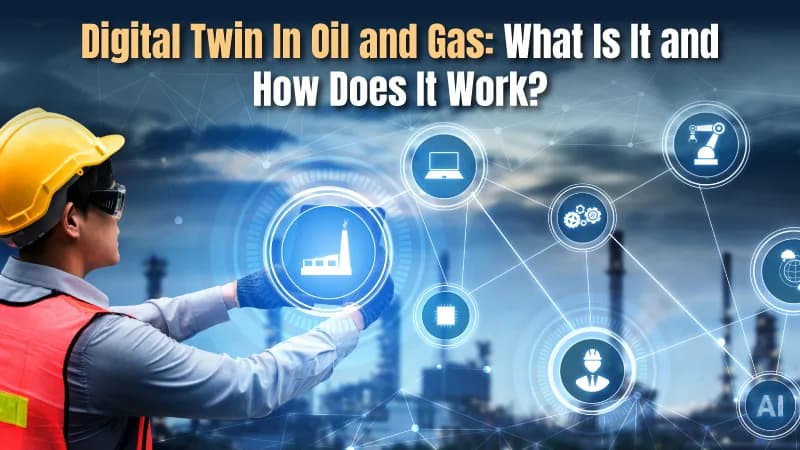
Digital twin in oil and gas technology is the advanced, modern-day tool that generates the exact, live, virtual replica of physical assets such as pipelines, drilling rigs, or refineries. This helps operators to see clearly what activity is being implemented, predict any errors, and test the solutions virtually. It not only saves their time but also reduces the physical efforts and frequent visits to the site. It contains three main components.
Components of Digital Twin
The Physical Asset (The Twin):
Here, the real-world equipment, like an LNG train, pump, or drilling rig, is outfitted with a large network of IIoT. Its primary function is to measure the physical parameters such as pressure, flow rate, temperature, and vibrations.
The Virtual Model (The Digital Twin):
This is the main high-fidelity software replica that makes a perfect digital twin. It combines the initial model of engineering CAD/3D with advanced physics-based algorithms and standard machine learning models, which control the specific behavior of assets.
The Data Bridge (The Feedback Loop):
This is the complex, continuous bidirectional synchronicity effectively managed by edge or cloud computing. The data is streamed from the physical asset to the model, and optimized commands or prediction flows back from the model to the control system.
These are the main components of digital twin technology. It precisely shows the most relevant ongoing activity in real time, differing from standard simulation.
How does it Differ from a Standard Simulation?
A standard simulation only shows a fixed snapshot and utilizes the fixed, historical data for testing. Yet, a digital twin simulates the live data. It is continuously updated by real-time data, showing the ongoing operational health of the asset and its environmental context. Due to its evolving, learning, responding, and supporting continuous optimization, it is different from standard simulations. However, digital twinning needs to acquire data from various advanced systems.
Where does it Acquire the Data from?
The twin technology acquires and processes the data from multiple advanced systems. These systems include Supervisory Control and Data Acquisition System (SCADA), Distributed Control Systems (DCS), IIot Sensors, Laser Scans (required for initial 3D geometry), and Past Maintenance Records that train the prediction models of AI failure. These advanced systems integrate properly to achieve better performance, offering numerous benefits to the oil and gas industry.
Benefits of Digital Twin in Oil and Gas Operations
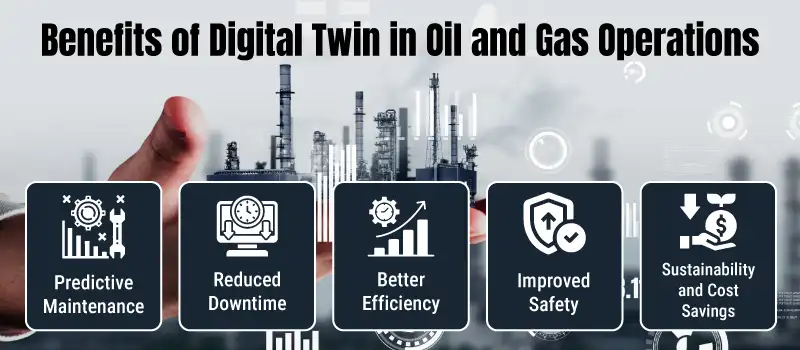
Now that we know how digital twin in oil and gas works, let’s understand why it has become such a big deal in the oil and gas world. The benefits go far beyond just virtual monitoring.
Predictive Maintenance:
Reduced Downtime:
Better Efficiency:
Improved Safety:
Sustainability and Cost Savings:
One of the biggest advantages is predicting a problem before it happens. Operators can spot early signs of wear or leaks and take preventive action instead of waiting for failure.
Because teams can fix issues before they become serious, downtime is reduced, keeping production smooth and consistent.
With constant real-time feedback, companies can optimize the performance of drilling rigs, compressors, and pipelines to get the most output using the fewest resources.
Workers don’t need to be near high-risk areas all the time. Digital twins allow them to monitor and control operations from a safe distance.
When machines run efficiently, they use less energy and produce fewer emissions. That’s a win for both the environment and the company’s budget.
These are the key benefits of digital twin in oil and gas technology for the overall oil and gas industry. As it benefits effectively, it is considered for several applications across the oil and gas chain.
Key Applications Across the Oil and Gas Chain
Digital twin technology in oil and gas is used almost everywhere in the oil and gas process—from drilling to refining.
Exploration and Drilling:
Production Operations:
Refining and Processing:
Maintenance and Asset Management:
Offshore Operations:
Engineers can create virtual replicas of drilling rigs and simulate conditions to plan better and reduce non-productive time.
Real-time monitoring of wells and pipelines helps ensure smooth flow and identify bottlenecks early.
Refineries use digital twins to test production scenarios before making real-world changes, avoiding costly shutdowns.
With every piece of equipment mirrored digitally, operators know exactly when and where maintenance is needed.
For offshore rigs, where physical access is difficult, digital twins are a game-changer, offering remote insights and control.
Integration with AI, IoT, and Cloud
Digital twin technology becomes truly powerful when combined with other modern tools.
AI (Artificial Intelligence) analyzes live data to predict failures and optimize performance.
IoT (Internet of Things) connects thousands of sensors across assets, continuously sending data about pressure, temperature, and vibrations.
Cloud Computing stores and processes massive amounts of data from different sites, making it accessible anywhere, anytime.
Together, these technologies form the backbone of Industry 4.0—a smarter, more connected way of managing industrial operations. However, it also comes with challenges and limitations we must look at.
Challenges and Limitations of Digital Twin in Oil and Gas
Like any new technology, digital twins also face a few challenges.
High Setup Cost:
Complex Implementation:
Cybersecurity Risks:
Integration with Legacy Systems:
Building and maintaining digital twin systems can be expensive in the beginning.
It takes advanced knowledge of software, sensors, and data science to make it work perfectly.
Since the system is connected to real-world assets, it needs strong security to prevent data breaches or misuse.
Many older oilfield systems were not designed for digital connectivity, which can make integration tricky.
Still, many companies are slowly overcoming these hurdles using modular systems and cloud-based platforms. The benefits clearly outweigh the initial challenges. Let’s consider a real-world example of digital twin technology.
Practical Example
To make it more practical, let’s look at an example.
A large oil producer in Texas used digital twin systems across its refining units. Within a year, the company saw a 15% drop in unplanned downtime and a 10% increase in energy efficiency. By predicting maintenance needs early, they saved millions of dollars in production losses.
This shows how digital twin technology can deliver real, measurable results in day-to-day operations, making it a future-ready tool.
The Future of Digital Twin in Oil and Gas Technology in Energy
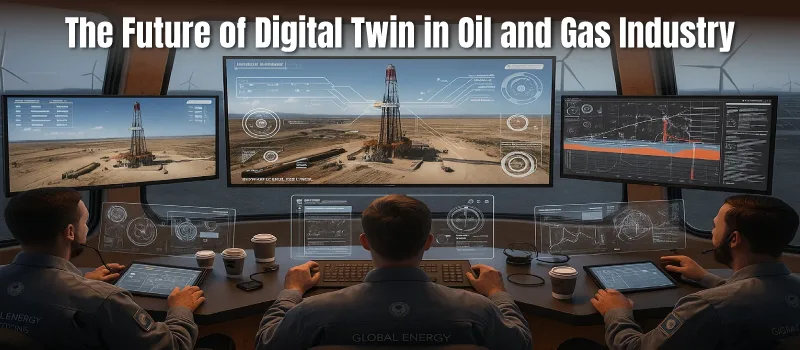
The future looks very promising. In the coming years, digital twins are expected to connect not just single machines but entire oilfields and refineries together—forming “Asset Ecosystem Twins.”
We might also see integration with Augmented Reality (AR) and Virtual Reality (VR), where engineers can walk through a refinery digitally and inspect every unit in 3D.
Moreover, as the industry shifts toward sustainability, digital twins will play a key role in optimizing Renewable Energy Systems, Carbon Capture Projects, and Energy Efficiency Programs.
In short, this technology is not just transforming oil and gas today—it’s shaping the cleaner, smarter energy systems of tomorrow.
Conclusion
Digital twin in oil and gas innovation is redefining how oil and gas companies manage their operations. From drilling to refining, it offers a safer, faster, and more efficient way to monitor and control complex systems.
As data becomes the new fuel of the energy industry, digital twins are helping companies stay competitive, cut costs, and move toward a sustainable future.
In simple words, this technology allows the oil and gas sector to see, understand, and improve everything—before anything goes wrong.
People Also Ask
What is Digital Twin Technology in Oil and Gas?
It’s a virtual replica of physical assets like pipelines or rigs that updates in real time using live data from sensors.
How does Digital Twin Technology Help in Maintenance?
It predicts problems before they happen, reducing downtime and maintenance costs.
Is Digital Twin Technology Expensive to Implement?
Initially, yes, but the long-term savings and efficiency gains usually cover the investment.
What is the Future of Digital Twin Technology?
They will expand across entire energy ecosystems and play a major role in digital transformation and sustainability.