The oil and gas industry comes with multiple stages, such as upstream, midstream, and downstream. The midstream industry among these two is a more integral part of the process, ensuring smooth transitions and operations across the value chain. Yet, most people often get a question: What is midstream oil and gas specifically?
The latest reports of AltaGas state that in May 2024, it transported around 115,108 barrels per day of LPG to Asia, where the midstream oil and gas sector plays an important role.
The midstream oil and gas stage significantly contributes to the transportation and storage of minerals. This comprehensive piece will be the perfect answer for what the midstream oil and gas sector is, educating you about midstream industries.
Let's start with the introduction of the midstream industry.
Defining What is Midstream Oil and Gas
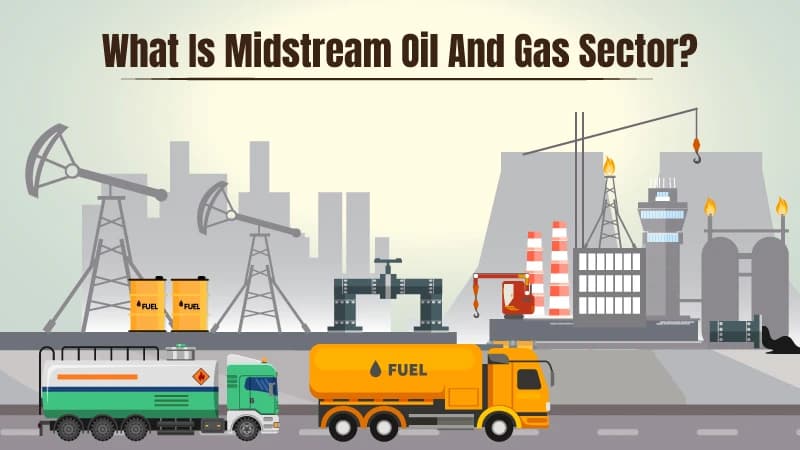
Midstream oil and gas come between upstream and downstream stages. The midstream sector plays an important role in delivering positive benefits to the oil and gas sector. The undertakings in this stage involve processing, storing, transporting, and trading the oil, gas, or other minerals.
The US's midstream sector is considered one of the top sectors worldwide as it involves large and wide privately possessed pipeline networks and storage options.
Below are some key points that underline the exact role of midstream oil and gas.
-
The midstream sector in the oil and gas production process falls between the upstream and downstream sectors.
-
Midstream activities include storage, processing, transportation, shipping, construction, and trading of minerals.
Key Components and Functions of Midstream Operations
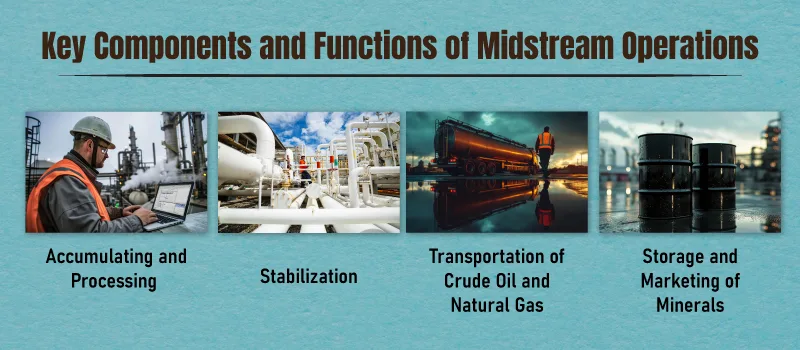
The midstream oil and gas industry comprises several important key components and functions. Some major functions are given below:
Accumulating and Processing
When the minerals are extracted from the surface, they are immense raw and can not be utilized commercially. These minerals are required to be refined and processed and then made available for commercial use. These operations come under the midstream sector. While taking out the crude oil and natural gas from the surface, they often come intertwined.
As in the upstream sector, the raw minerals are extracted together; they need to be separated. The separation of oil and natural gas begins in the midstream stage through accumulation and processing. This does not practically include the separation but refining the raw minerals and converting them into market-ready products. This stage contains one key concern, which is contamination.
For example, raw natural gas comprises the elements that may affect the pipelines and working personnel.
-
Water:
It becomes responsible for the corrosion of pipelines, impacting the quality of natural gas.
-
Hydrogen Sulfide:
It causes health issues to the working personnel and is detrimental to natural gas pipelines.
-
Volatile Organic Elements:
The volatile elements negatively influence both humans and the environment, causing environmental concerns.
Although the stage consists of the above concerns, the natural resources, such as methane and ethane, are refined and made available for commercial use, ensuring all the safety precautions.
Stabilization
Transporting crude oil to refineries often requires additional time, making it a challenging task for personnel. In order to simplify the process, there is an alternative preferred by mineral experts known as stabilization to enhance the quality and value of the transported oil.
The raw crude oil contains a mixture of various hydrocarbons, which cannot be directly put into service. With the stabilization process, lighter hydrocarbons are easily taken out of the mixture and sent for further processing.
Below are some advantages of the stabilization process:
-
Minimize the crude oil volatility, making it safer while transporting.
Prevents the spread of hazardous emissions.
-
Assures a uniform quality of oil being transported to storage areas or refineries.
Transportation of Crude Oil and Natural Gas
When it comes to transporting the minerals from the extraction site to refineries, the midstream oil and gas stage acts as a critical link in the process. It becomes an immensely challenging task when there is a longer distance between the extraction site and the refinery company.
However, based on the quantity of minerals and traveling distance, the transportation modes are selected. Below are some major modes of oil and gas transportation:
-
Pipelines:
The most commonly preferred mode of oil and gas transportation, especially for longer distances. The pipeline infrastructure is developed underground, ensuring all the safety majors.
-
Trucks:
This transportation mode is offered for shorter distances, specifically in locations where pipeline systems might be lacking. While transporting the minerals from trucks, all the safety precautions are taken to prevent oil spills.
-
Tankers:
Mostly preferred for transporting the minerals from offshore drilling sites to refineries. Tankers are also utilized to transport minerals from one nation to another at an international level.
-
Rails:
It is a spare alternative for pipelines and trucks. In areas where pipeline infrastructure cannot be built underground, oil and gas are transported by rail. It is also preferred when any terrain or geopolitical issues arise.
Storage and Marketing of Minerals
Once the oil and gas are transported to the refineries and processed, they do not immediately find a way to reach out to consumers. There is a certain time period between production and consumption. Here comes the major role of storage facilities. The oil and natural gas are stored in large tanks or reservoirs to provide the end users with uniform quality, ensuring all the safety terms.
Apart from transportation and storage, the midstream oil and gas sector also participates in the whole marketing of minerals. The midstream stage supports connecting the mineral producers with downstream firms or consumers.
These are some key components and significant features of the midstream oil and gas sector. Understanding the crucial insights of the midstream stage requires strategic planning and expertise. Although this sector comes at the middle level, it majorly supports the downstream firms, contributing to the enhancement of the economic landscape and mineral market.
Economic Impact and Market Dynamics
According to mineral experts, the midstream oil and gas market will deliver positive economic results in the forthcoming years. The worldwide midstream oil and gas market was estimated at a worth of $ 34 billion in 2023 and is expected to grow with a CAGR of 3.2% till the year 2029. The midstream oil and gas stage acts as a paramount tool in the market and energy industry’s dynamics, highlighting its major role in transportation and storage activities.
The mineral specialists and market experts inform us that the midstream oil and gas sector is flourishing worldwide due to immense energy demand in the market, geopolitical factors, and exceeding network in the expected period 2025-2029.
The latest technological advancements in storage and transportation facilities are shaping the outlook of midstream firms while ensuring enhanced safety, efficiency, and sustainability. The midstream sector will continue to deliver positive financial results in upcoming periods. However, it also comes with certain challenges and future trends.
Challenges and Future Trends
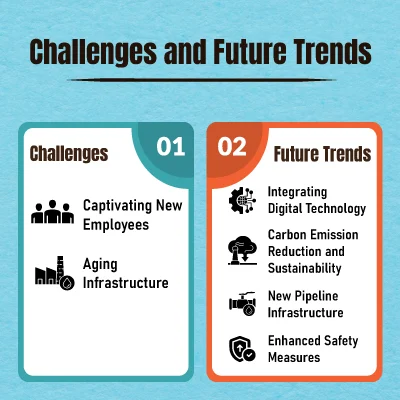
Below are some challenges and future trends associated with the midstream oil and gas sector.
Challenges
-
Captivating New Employees
Most of the younger/new hires believe working in the midstream sector comes with an unhygienic working environment, along with uncertain long lasting prospects. Additionally, as this sector involves transporting and storing at extreme levels, the newcomers believe there would be chances of additional physical work to be done.
To overcome this challenge, mineral experts can arrange informative sessions on the midstream oil and gas sector, educating new talents to make their careers in this industry.
-
Aging Infrastructure
The pipeline infrastructure built to transport the minerals is designed to offer better services for 25 years. The period of more than 25 years may be responsible for causing concerns in pipeline infrastructure, such as leakages, pipeline damage, and others.
This may result in less production output than expected. To tackle this challenge, the old pipeline structure can be replaced with new pipelines with high physical strength and able to carry a maximum amount of minerals.
These are two major challenges that affect the midstream oil and gas sector. Regardless of these challenges, the midstream industry has arrived with the latest future trends, enhancing the overall landscape of the midstream stage.
Future Trends:
Integrating Digital Technology
Integrating the latest technology, such as AI-ML and IoT smart sensors, helps enhance the operational efficiency of midstream firms. IoT smart sensors provide real-time monitoring of flow rates, temperature, and pressure, minimizing the additional time. Whereas AI ML algorithms help optimize operations, forecast maintenance requirements, and enhance safety measures.
Carbon Emission Reduction and Sustainability
Implementing the CCS (Carbon Capture and Storage) helps reduce the carbon emissions from midstream operations, reducing environmental concerns. Moreover, adding renewable energy sources like solar powered pipeline pumps and other equipment as support makes midstream operations more sustainable.
New Pipeline Infrastructure
Developing new pipeline infrastructure with advanced materials and design helps reduce oil spills and leakages, improving production output. This ultimately leads to improved economic benefits.
Enhanced Safety Measures
The utilization of the latest leakage detection systems helps prevent leakages, reducing environmental impact. Moreover, executing the cybersecurity initiatives protects the pipeline infrastructure from severe theft, strengthening the additional security of the midstream sector.
Conclusion
In summary, while discussing “What is midstream oil and gas?”, it is the transforming link that shapes the outlook of the overall oil and gas sector. It fills the gap between upstream and downstream firms, offering uniform quality of minerals to be delivered to the end consumer.
The transportation and storage of oil and gas is the foremost responsibility of the midstream stage, ensuring the raw materials are refined and ready for commercial use along with safety. This stage also involves some challenges of captivating new talents and aging infrastructure that may impact the production.
Despite such challenges, the midstream industry has now started implementing the latest technologies and innovations that help enhance safety and efficiency. The midstream industry's contribution to the oil and gas sector will continue to deliver substantial financial profits with sustainable initiatives.
Knowing what is midstream oil and gas in business will help explain its importance in ensuring a safe, uninterrupted energy flow from production to consumption.