When it comes to propelling economic growth on a worldwide scale, the oil and gas industry is indispensable. Yet, there are several operations, and each one has a unique array of challenges and dangers that could affect workers, communities, and the environment! Safety is of the utmost importance in such a vast industry, as it is crucial for protecting humans, operational plants, and the environment.
In this comprehensive draft, we will understand the significance of safety in oil and gas industry, highlighting its essential role in securing lives, protecting the environment, and performing effective operations. Let us explore why safety is so important in oil and gas.
Why is it Important to Provide Safety in Oil and Gas Industry?
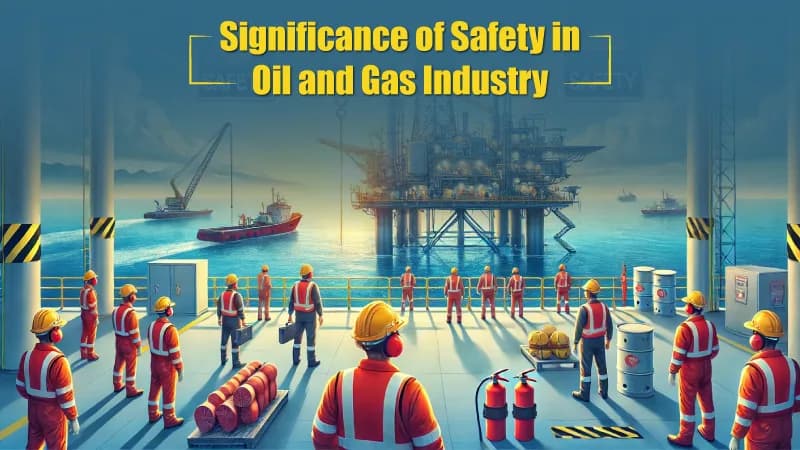
Safety is crucial in the oil and gas industry, as humans are involved in a wide range of tasks that may involve; the handling of high-pressure devices working in high-temperature areas or even dealing with hazardous chemicals, among others. These are surely risky tasks!
Additionally, safety is important to reduce environmental concerns. In some cases, events such as oil spills and leakages may strongly influence the ecosystem, wildlife, and marine life. By prioritizing safety in such situations, the oil and gas industry can contribute to environmental safety efficiently.
All things considered, the safety aspect is an effort to improve working conditions and lessen environmental problems while transforming the way the energy industry is seen. By implementing safety standards and regulations, the oil and gas industry can gain public trust, operating more efficiently.
Let's explore more the areas where safety has become paramount in the oil and gas industry.
Worker and Worksite Safety
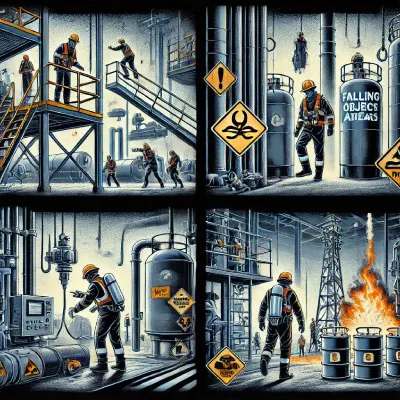
Based on the reports of the Occupational Safety and Health Administration (OSHA), workers in the oil and gas industry should require safety from the following factors.
-
Sudden Falls
Some workers perform their tasks below the elevated equipment or in the upper area of the plant. This may include the risk of a sudden slip or fall of any object on the workers that may cause serious damage to their bodies. Despite being diligent in their work, there is still a risk of workers falling and sustaining severe injuries. To avoid these conditions, safety precautions should be taken.
-
Confined Areas
Some workers are compelled to work in confined areas like: like storage tanks, pipelines, vessels, and sumps for inspection, maintenance, and repairs.. Such areas consist of hazardous chemicals and gasses. Working in such areas may cause suffocation to the workers, affecting their physical conditions. Also, there is a risk of workers getting in contact with harsh and toxic chemicals and gasses that may cause respiratory issues. To prevent this, safety standards must be maintained.
-
Machinery and Equipment
The oil and gas industry includes various machinery and equipment. Workers need to work in the area surrounded by machines. In some cases, workers may get cuts, burns, and other injuries due to improper handling of machines. Sometimes, failure of equipment can crush people, leading to deadly incidents. To avoid such events, safety precautions are necessary. All the equipment and machinery should be maintained regularly.
-
Fire Events and Explosions
In confined areas, the excessive storage of ignition or flammable gasses results in fire events or explosions, which may damage the worksite and affect workers. Sometimes, continuous running of equipment causes frictional heat, resulting in sudden fire occurrence. The high pressure lines may also get leaked or bursted if proper maintenance can not be implemented.
These are some factors from which workers and worksites should get safety. However, safety can be achieved by executing the following alternatives.
Utilizing Process Safety Perspectives.
Establishment of Better Safety Culture and Safety Terms.
Getting in Touch with Emergency Response Organizations.
Utilizing the Digitization and Automation Techniques.
Preparing Appropriate Maintenance Schedules and Arranging Safety Training Programmes.
Onshore and Offshore Safety
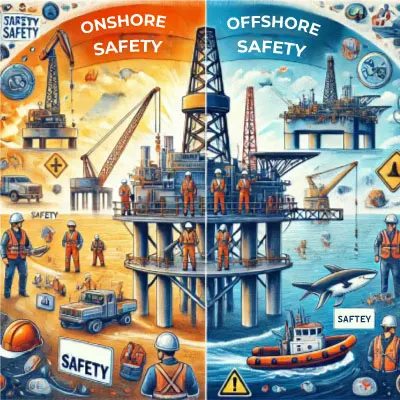
In the oil and gas industry drilling practices are carried out onshore as well as offshore. Therefore, in both types of drilling, safety standards are diverse to each other. However, it is common in both drilling types to provide safety to the oil rigs assembled at onshore and offshore areas, and workers belong to that.
Recently, the National Institute for Occupational Safety and Health (NIOSH) has contemplated the reports on fatal incidents. After carefully evaluating the report, it was discovered that the vast majority of fatal accidents, around 70%, are caused by intricate safety hazards. These hazards include fire lines, bypassing safety control, operating heavy machinery, working in confined areas, and isolating energy.
These factors impacted both workers and rigs assembled on that land. In order to provide safety in the onshore field, “Live Saving Actions” can be executed. It helps provide safety to workers through appropriate training programs, awareness of safety regulations and knowledge transfer.
Moreover, when it comes to offshore drilling fields, events like leakages, oil spills, and frequent drilling noise may affect marine life. Therefore, safety measures are needed in this area. The oil and gas firms can offer safety in offshore fields by following the API steps. They can engage in Prevention-Oriented steps and standards to effectively implement better approaches to enhance the safety of offshore fields.
Transportation and Pipeline Safety
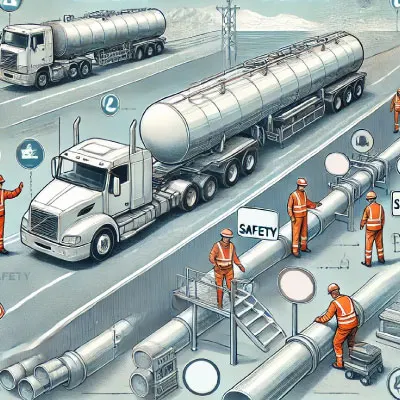
At least in one instance, you might have encountered news regarding an oil-carrying tanker truck that had a severe accident, causing a large oil spill. Such incidents often result in a waste of resources and major injuries to the driver or any human involved in the accident. Therefore, transportation accidents create a crucial challenge for the oil and gas industry.
To overcome such challenges safety must be included on prior basis. The transportational safety can be achieved by tracking accurate roads for transport, selecting proper mode of transport and choosing expert drivers for respected transportation vehicles. Moreover, connecting with safety organizations can also strengthen the safety terms and reduce safety issues.
Along with transportation, pipeline safety is also mandatory. According to the 2020 Oil and Gas pipeline reports, pipeline accidents in the US totaled 578, primarily due to unexpected explosions and fires causing the deaths of many workers.
Therefore to avoid such incidents and protect pipelines from leakages and getting damaged, it is obligatory to provide safety. The oil and gas industry can offer safety to the pipeline by engaging in safety measures such as pipeline safety excellence. It ensures secured pipeline operations and enhances the safety standards.
Community Safety
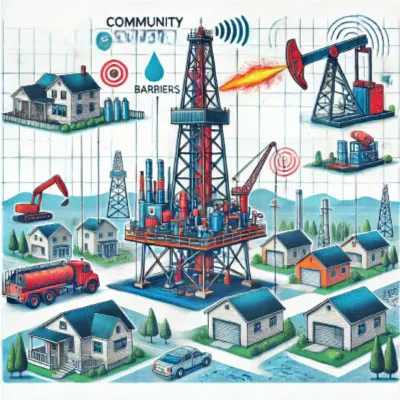
In the oil and gas industry, prolonged drilling noise and gas developed during drilling may impact nearby communities. Also, if any accident occurs, it may directly or indirectly harm the living community. Therefore, offering safety to such communities is the foremost initiative associated with safety in oil and gas industry.
Ensuring the safety of the community includes:
Implementing Regulatory Compliance.
Community Engagement.
Technological Advancements.
Sustainable Drilling Practices.
Technologies Contributing to Safety in Oil and Gas Industry
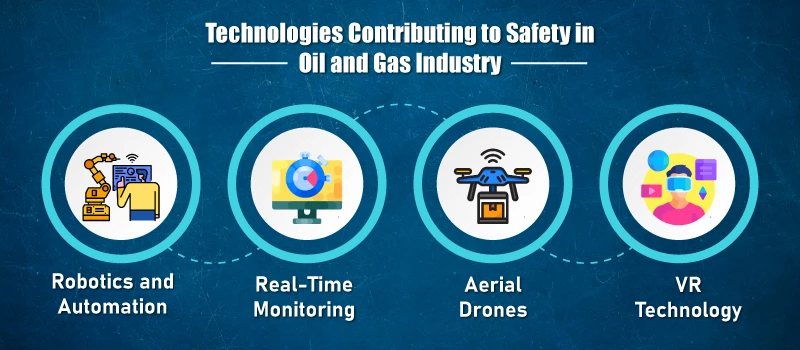
In the early days, when there was a lack of technology in the oil and gas industry, it consumed a lot of time to implement safety standards and regulations. However, today, the oil and gas industry is flourishing with the help of technology. Technology has significantly influenced the oil and gas industry in a positive way, delivering quick safety standards.
Below are some of the latest key technologies that provide enhanced safety to the oil and gas industry.
Robotics and Automation
Robotics and automation plays the pivotal role in offering safety in the oil gas industry. The latest programmed robots are able monitor and control the drill bits effectively that reduces human interference, ultimately offering safety to the humans. It also reduces errors, enhancing the overall productivity of the oil and gas industry.
Real-Time Monitoring
The multiple digital systems in the oil and gas industry have now arrived that offer real time monitoring. Systems including Artificial Intelligence, Internet of Things, and Cloud Computing are able to provide real time data, reducing errors. By observing real time data operators can effortlessly spot any malfunction, minimizing further damage and offering safety to the plant.
Aerial Drones
Oil and gas industry started implementing drones to achieve better safety. Drones are utilized to monitor the pipelines. If any leakages or spills occur, it is easily detected by drones, preventing pipeline damage and offering enhanced pipeline safety.
VR Technology
VR (Virtual Reality) technology is the fastest-growing technology within every industry, involving the oil and gas industry. VR technology addresses the unique safety training requirements of the oil and gas industry and offers better alternatives of safety.
It provides the practical options to numerous workers in realistic simulations of pipelines, machineries, equipment, rigs and other crucial facets of oil and gas industry, allowing them to handle those equipment virtually and improving their skill sets without real world risk. This approach results in skilled workers, enhancing safety standards, reduces accidents and ultimately saves human lives.
VR technology can be utilized in following oil and gas safety training programs.
Evacuation Drills and Emergency Response.
Assessment of Risks and Detecting the Hazards.
Training for Equipment and Machine Handling.
Soft Skill Development.
These key technologies are supporting the oil and gas industry to attain enhanced safety standards, transforming the landscape of the entire mineral sector. Along with these technologies, the latest VR technology is also adding its attempts in obtaining better safety in oil and gas industry.
Conclusion
As the oil and gas industry moves ahead of the curve, safety standards within the industry cannot be neglected. Being a crucial facet of the global economy, the oil and gas industry often faces safety challenges that may affect workers, the working site, and other assets belonging to the industry. Therefore, it is the foremost aspect to offer safety in oil and gas industry along with safety to the community.
Today, the implementation of the latest technologies have restructured the safety terms and regulations of the oil and gas industry. The latest VR safety technology trains workers to handle equipment properly, reducing accidental risks and offering safety.
By prioritizing safety in oil and gas industry, it is possible to attain better production results, enhancing the state's economic development.