Colorado is renowned for its vast mountain landscapes, evergreen forests, rivers, and breathtaking scenery. With such a naturally preserved environment, the state attracts tourists, which helps the state's economy to grow. This is not only due to geological sites but also the Colorado oil and gas sector.
Stakeholders ranging from mineral industry professionals and legislators to concerned residents are keen to grasp the complexities of Colorado's oil and gas resources. This guide offers a concise overview of Colorado's oil and gas reserves.
Colorado has achieved significant economic growth in recent years due to the oil and gas sector. Environmentalists have raised concerns about the state's drilling practices. There are some concerns, but do we neglect the profit received from the oil and gas sector? The oil and gas sector in Colorado has contributed approximately $14.5 billion to the state's GDP.
To overcome the environmental concerns, the Colorado officials are implementing comprehensive plans. The state government is now focusing on sustainable and efficient drilling operations in Colorado. Let's dive deeper.
About Colorado Oil and Gas
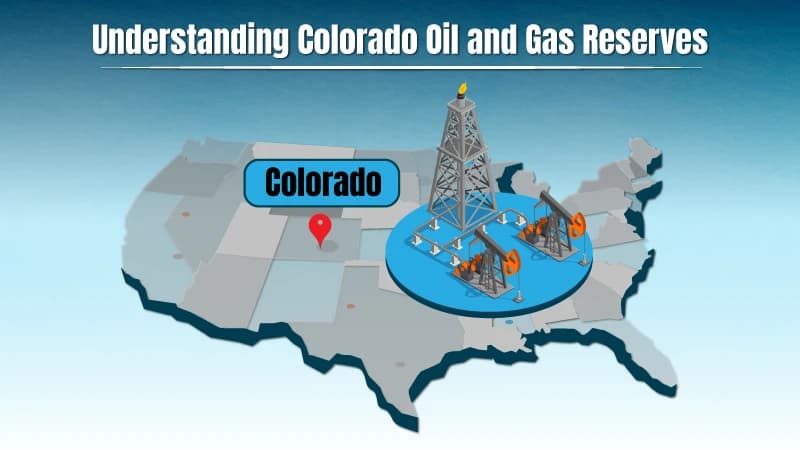
The Colorado oil and gas sector is mainly spread throughout the state. It holds the distinction of being ranked fifth in the US for oil and natural gas production. Its rank has been decided based on the barrels of oil equivalent produced. Amongst the nation’s high-potential natural gas fields, Colorado holds 11 of them. It also includes some of the large producing basins.
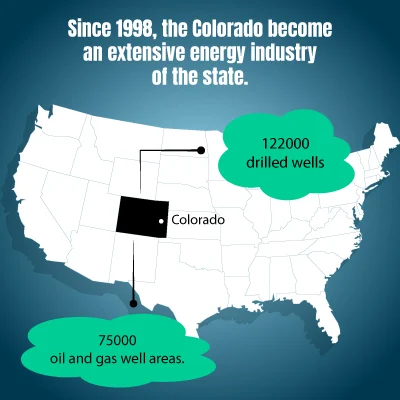
The west side, Piceance Basin, and northeast side Denver-Julesburg Basin are major basins that produce natural gas. Since 1998, the Colorado oil and gas industry has become an extensive energy industry in the state. It involves more than 122,000 drilled wells and around 75,000 oil and gas well areas. With thousands in drilling and exploration operations, Weld and Garfield counties account for several active wells.
However, the industry’s energy development scenario has raised a few concerns. The state’s regulatory agency consists of two significant missions: to promote and regulate industry growth. Their primary focus is on conducting drilling operations in areas with high potential. It has been seen that communities belonging to such areas face health issues due to frequent drilling operations.
Moreover, spilling toxic gasses and oil has become a common problem, causing safety and health issues for nearby residents. By observing such conditions, the environment experts suggested Senate Bill 181, “Protect Public Welfare Oil and Gas Operations.” This bill has brought relief to communities and offered some hope for transformation.
It provides the appropriate balance between public welfare along industry interest. The Colorado oil and gas sector prioritizes the protection of the community and environment, although it encompasses a few concerns.
History of Colorado Oil and Gas
-
1862:
The initial discovery of oil occurred in Fremont County, Colorado. It was in the Florence oil field. It was not the beginning of major commercial oil production.
-
1881:
Commercial oil production started in the same Florence field. While drilling for water, Cassidy and Isaac found the oil at a depth of 1,445 feet underground.
-
1890:
Colorado’s first natural gas well was drilled in the western reaches, specifically in Rio Blanco County. The gas in the well proved non-commercial.
-
1901-1902:
Oil discoveries continued in Rangely and Boulder. The Boulder oil field found vital growth in the Denver Basin.
-
March 1902:
Savannah Oil, Coal, and Gas Company issued a stock certificate in Wyoming. It later got involved in Boulder, Colorado, for oilfield discoveries.
-
1902:
Through dowsing, Isaac Canfield discovered the first producing McKenzie oil well near Boulder.
-
1924:
During the middle of the year, around 50 rigs were drilling in about 16 Counties of Colorado. It was an indication of the petroleum province’s importance.
-
1924-1950:
The exploration of oil and gas extended to Colorado’s Western region. It involved major basins such as the San Juan Basin, Piceance Basin, and Paradox Basin. The Paradox Valley and Rangely areas went through significant discoveries
-
1951:
“The Colorado Oil and Gas Conservation Commission” (COGCC) was established. It regulates oil and gas development considering environmental aspects.
-
In the late 20s:
Advanced drilling techniques were introduced. Hydraulic fracking and horizontal drilling put their efforts into flourishing Colorado’s oil and gas sector, specifically in the Denver-Julesburg Basin.
-
Early 21st:
The Shale revolution began. It brought a drastic improvement in Colorado oil and gas drilling activities.
Today, Colorado’s oil and gas sector is evolving with the integration of advanced technologies.
Colorado Oil and Gas Basin
Below are the top three oil and gas basins that play an important role in shaping the state's economic landscape. The rich geography of the basins makes them one of the leading sources of minerals in Colorado.
Denver Basin
Denver Basin, one of the top high potential basins in Colorado, achieved the production of 516 MBPD crude oil last year. It is also referred to as Julesburg Basin or D-J basin. It is the mineral rich geological formation spread over the eastern region of Colorado, exceeding into parts of Nebraska, Kansas, and Wyoming.
This geological marvel formed about 300 million years ago during Colorado's orogeny period. Notably, it boasts remarkable rock formations like the Fountain Formation. At the time of the Cretaceous era, this basin was immersed under the interior seaway, conserving the dinosaur fossils.
The basin submerged deeply during the orogeny of Laramide with extreme pressure of rockies causing it to descend further. Due to deeper submersion the sediment from the Rockies filled the basin, and today we know it as ‘Denver Basin’. The geological properties and burial of above materials makes the basin, a high potential, mineral rich basin.
Paradox Basin
The Paradox Basin, with its dominant mineral reserves, has spread over the lands of Colorado, Utah, New Mexico, and Arizona. It is a foreland basin believed to have been formed in the late Paleozoic Period. The basin consists of thick sediment layers, some of which exceed the thickness of 15000 feet.
Unlike several rocky mountain basins, this is an exceptional formation with high potential shallow water and deep marine sediments, heavily inveigled by tectonics of salt. In 2022, the drillers discovered the relatively young water within the deeper region of the basin.
It is proclaimed that the water came into existence here due to natural aquifers, snowmelt, and rainfall around 400,000 and 1.1 million years ago. Since the Pennsylvanian carbon deposits and the latest oil findings in the Cane Creek Shale of Paradox basin, it has delivered vast reserves of petroleum, uranium, potash, and copper. It's such factors and geology make it the leading source of minerals.
San Juan Basin
The San Juan Basin, one of the earliest basins in Colorado, has covered the space of the Southwestern region of the United States, extending its reserves to Utah, Arizona, and Mexico. It has an area of 90 miles wide and 100 miles long.
The basin holds two major mineral parts: Chaco Canyon and Chacra Mesa. Since the early 20th century, the extraction of minerals has been carried out in the basin, with 300 oil fields and 40,000 plus wells. Its primary mineral source, coal bed methane makes the basin one of the largest gas reserves at global level.
At an early age, it was included in the Laurentia continent. During the late Mississippian period, the collision between the Gondawa continent and basin created the supercontinent Pangea. As a result, mountains such as the Ancestral Rockies have come to rise, making the basin mineral-rich.
Positive Aspects of Colorado Oil and Gas
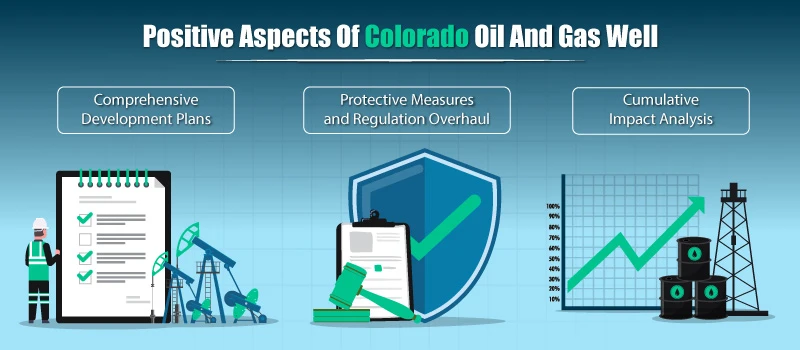
The Colorado oil and gas well has brought a significant change in the overall state. The oil and gas well permits follow the newly implemented Senate Bill 181 in 2019. The implementation of this bill has shifted the industry’s positive approach towards oil and gas production.
The bill primarily focuses on more secure and comprehensive drilling operations, considering the security, welfare, environment, and health of residents. This legislative transformation has yielded safer and more environmentally friendly oil and gas production. The Colorado oil and gas well highlights some of the following positive aspects:
Comprehensive Development Plans
-
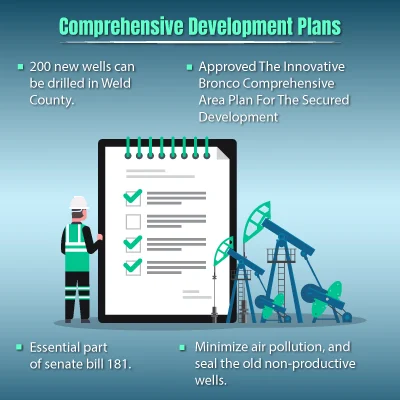
Colorado State regulators recently Approved the innovative Bronco Comprehensive Area Plan for the secured development of oil and gas.
-
The Occidental Petroleum Corp. Subsidiary and Kerr-McGee have put forward this Plan. According to the plan, over 200 new wells can be drilled in Weld County.
-
Comprehensive Area Plans (CAPs) are considered an essential part of Senate Bill 181. It aims to manage and estimate the cumulative drilling impacts.
-
The primary objective of CAPs is to uplift a holistic perspective towards development. It encourages improved planning for the state, operators, and communities.
-
The oil and gas commissioners censured some written statements of the CAPs. To resolve the commissioners’ concerns, slight changes were made to CAP’s statement.
-
The revisions of commissioners are to implement drilling rigs operated by natural gas, minimize air pollution, and seal the old nonproductive wells.
Protective Measures and Regulation Overhaul
-
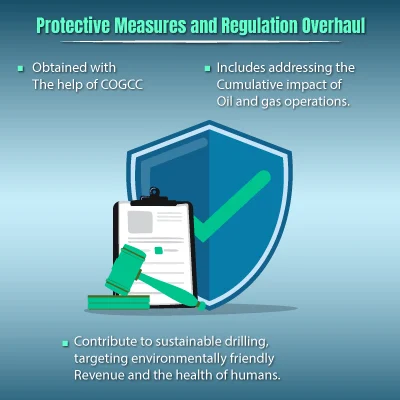
Senate Bill 181 informed some protective measures and regulation overhaul. It was obtained with the help of the Colorado Oil and Gas Conservation Commission (COGCC).
-
The key purpose of the overhaul is to align the regulations with the newly introduced mandate of Senate Bill 181.
-
The protective measures are implemented to execute drilling operations in alternative areas. The drilling practices are to be carried out far from educational institutes and residential areas.
-
Another protective measure includes addressing the cumulative impact of oil and gas operations.
-
These protective measures and regulation overhauls contribute to sustainable drilling, targeting environmentally friendly revenue and the health of humans.
Cumulative Impact Analysis
-
Colorado has suggested cumulative impact analysis in order to protect the environment and human health conditions.
-
The analysis holds detailed investigations of cumulative impacts to enhance drilling operations.
-
It also includes the broader effects of drilling wells on community health as well as the environment.
The positive aspects of the Colorado oil and gas sector are encapsulated within the new regulatory framework. It reflects a strenuous trial to clarify that oil and gas development is carried out in a sophisticated manner. It primarily focuses on the environment and human health conditions. The positive aspects include a crucial balance between Colorado’s economic growth and assessing the cumulative impacts of the oil and gas industry.
Colorado Oil and Gas Permits
The table below lists the specifics of Colorado's oil and gas permits from 2017.
| Year | No. of Oil and Gas Permits |
|---|---|
| 2017 | 496 |
| 2018 | 2306 |
| 2019 | 898 |
| 2020 | 350 |
| 2021 | 256 |
| 2022 | 302 |
| 2023 | 351 |
| 2024 | 90 |
Major Oil and Gas Operators in Colorado
The following table will help you understand the major oil and gas operators in Colorado, along with current production and the dates on file.
| Names of the Top Oil and Gas Operators in Colorado | Latest Oil Production | Latest Gas Production | Production Dates on File |
|---|---|---|---|
| Noble Energy Inc. | 2,628,238 BBLs | 18,011,916 MCF | Jan 1997 - Feb 2024 |
| Evergreen Natural Resources LLC | - | 2,195,456 MCF | Dec 2018 - Feb 2024 |
| Locin Oil Corp. | 441 BBLs | 66,374 MCF | Jun 2000 - Feb 2024 |
| Colorado Interstate Gas Company LLC | 732 BBLs | - | Jan 1999 - Feb 2024 |
| Grand Mesa Operating Co. | 3,511 BBLs | 153 MCF | Jan 1999 - Feb 2024 |
| Kerr McGee Oil and Gas Onshore LP | 2,241,361 BBLs | 20,026,873 MCF | Jan 1999 - Feb 2024 |
| Kinder Morgan Co2 Co LP | 225 BBLs | 23,305,131 MCF | Apr 2000 - Feb 2024 |
| PDC Energy Inc. | 2,474,183 BBLs | 26,316,158 | Dec 1999 - Feb 2024 |
| WPX Energy Rocky Mountain LLC | 55,009 BBLs | 15,313,645 MCF | May 2001 - Feb 2024 |
| Crestone Peak Resources Operating LLC | 1,260,238 BBLs | 7,499,363 MCF | Aug 2016 - Feb 2024 |
| Caerus Piceance LLC | 26,752 BBLs | 12,084,935 MCF | Jul 2013 - Feb 2024 |
| Extraction Oil and Gas LLC | 713,712 BBLs | 6,862,758 MCF | Jul 2013 - Feb 2024 |
Colorado Oil and Gas Production
The graph below shows the production records from 2014 to the current year.
Conclusion
Colorado has achieved the 5th rank in oil and gas production in the country. The Colorado oil and gas sector plays a vital role in achieving strong economic growth while facing some concerns associated with the environment and community.
By observing such challenges, the state has introduced the legislative initiative ‘Senate Bill 181.’ The bill transformed drilling operations into a more sustainable way, considering public welfare and environmental protection.
The state is now prioritizing the Comprehensive Area Plans (CAPs) for enhanced drilling practices with less ecological harm. With such perspectives, Colorado is striving towards a future where oil and gas production exists with sustainable drilling practices and a focus on the environment and human security.
To better comprehend the state's continuous oil and gas production, you can refer to the county statistics. MineralView is a leading oil and gas data analysis company that provides the latest data for several counties. We currently offer comprehensive oil and gas county data for the state of Texas. However, we will soon provide the data for all the major counties in the United States.
So stay tuned for in-depth data and figures on oil and gas wells, including operators, play types, lease numbers, and much more.
FAQ’s
How many oil and gas wells are there in Colorado?
Colorado State ranked in 5th position, holding around 53,000 active wells.
Who is Colorado's biggest oil producer?
For the last ten years, Kerr-McGee oil and gas onshore, a Houston-based Subsidiary of Occidental Petroleum Corporation, has been one of the biggest oil producers in Colorado.
How much does the oil and gas industry contribute to the Colorado GDP?
As per the reports, in 2021, the oil and gas industry contributed 3.3% to Colorado's GDP.