Introduction
Oil and gas is deeply rooted in the global, especially Texan economy, blending nature's bounty and human endeavor. Despite facing geopolitical and environmental hurdles, the sector has displayed remarkable resilience. In this dynamic process, innovation and adaptation intertwine as challenges are consistently met with practical solutions. This article covers the numerous aspects of the industry, from upstream exploration to downstream refinement, as well as the impact on Texas, a significant player in this energy landscape due to its oil field.
Renewable energy is carving its niche amid the world's enduring need for these resources. Each breakthrough and adaptation in this arena isn't just an industrial advancement but a human story, marking our collective journey in energy exploration and utilization.
History of the
Oil and Gas Sector
in Texas
History of the Oil and Gas Sector in Texas
Long before the arrival of Europeans, the native inhabitants of Texas were aware of oil seeps, marking an ancient recognition of the state's oil and gas reserves. It wasn’t until 1543 that the Spaniard Luis de Moscoso Alvarado documented the sight of oil on the waters of Galveston Bay, recording the area’s first known oil discovery.
The journey of Texas into the world of oil and gas extraction was progressive. A significant chapter began in 1894 with the discovery of oil in Navarro County, propelling Texas into the petroleum age. The state’s lawmakers quickly responded, establishing the first set of legal guidelines for the burgeoning industry in 1899.
The year 1901 marked a milestone with the Spindletop discovery in Jefferson County. This well-catalyzed investment and innovation positioned Texas as a formidable force in the oil sector. By the mid-1920s, Navarro wells were churning out millions of barrels of oil annually, setting a precedent for future exploration.
Interestingly, the development of the railroad in the late 19th century was initially a boon for agriculture. However, the flourishing petroleum industry soon became a prominent customer. Railroads adapted and, by the 1920s, were instrumental in transporting oil and gas to refineries, a role they still maintain.
Legal governance has been a constant companion of the oil and gas industry. Over the years, the state has tightened regulations, imposing substantial fines on companies that neglect environmental restoration post-drilling.
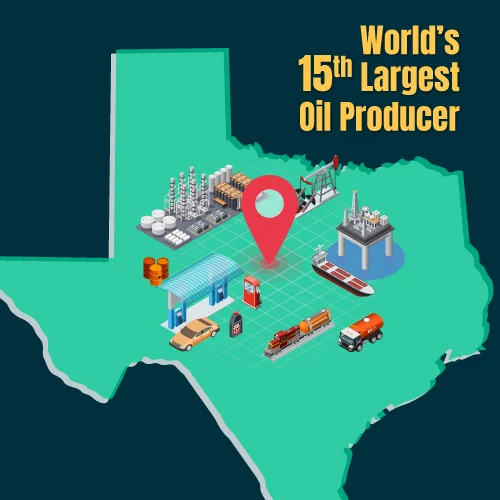
From a macroeconomic perspective, Texas's oil and gas sector is a titan. The turning point can be traced back to Spindletop, where the transition from an agrarian-based economy to one fueled by oil and gas began. Presently, Texas stands proud as the world’s 15th-largest oil producer. The surge in production, especially noted between 2009 and 2013, can be attributed to innovations in hydraulic fracturing and horizontal drilling techniques, with the Permian Basin and Eagle Ford Shale being notable contributors.
Long before the arrival of Europeans, the native inhabitants of Texas were aware of oil seeps, marking an ancient recognition of the state's oil and gas reserves. It wasn’t until 1543 that the Spaniard Luis de Moscoso Alvarado documented the sight of oil on the waters of Galveston Bay, recording the area’s first known oil discovery.
Texas is a powerhouse in natural gas, boasting about 23% of the United States’ total reserves. The industry is a substantial employer, offering jobs to over 300,000 Texans and contributing nearly 15% to the state’s GDP.
The narrative of oil and gas in Texas is one of transformation and influence. From the days of oil seeps known to the indigenous people through early discoveries by European explorers to the modern era of technological advancement, black gold has been a constant character, weaving itself indelibly into the tapestry of Texas' history and economy. In this intricate tale, mineral owners have played an essential part in developing and utilizing these rich resources through their mineral rights in Texas.
Different Types of Oil and Gas Sector
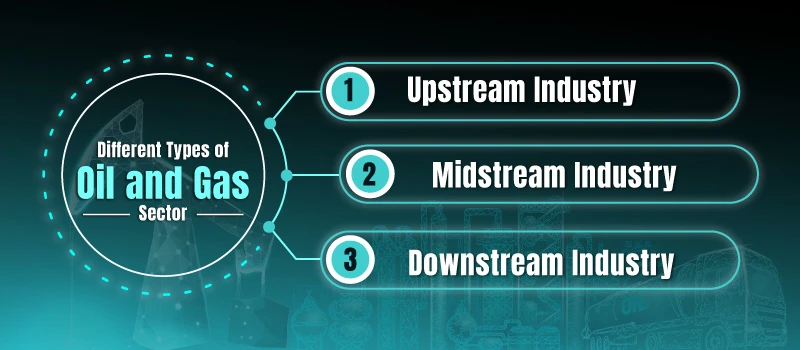
The oil and gas sector, a global economic powerhouse, plays a pivotal role on national and international scales, employing hundreds of thousands of individuals and contributing substantially to the worldwide economy. This robust industry comprises three fundamental segments: Upstream, Midstream, and Downstream.
Upstream
The upstream field, also referred to as exploration and production (E&P), encompasses activities such as exploring and drilling for natural gas and crude oil reserves located underwater or underground. It also refers to the early stages of the oil and gas industry, which are located farthest from the end-user consumer in the supply chain. This phase includes discovering oil and gas fields, drilling exploration wells, and extracting resources from existing wells.
Midstream
Midstream is the logistical backbone of the industry, focusing on the transportation, storage, and processing of oil and gas. After extraction, these valuable resources must be efficiently transported to refineries, often in disparate geographical regions. This transportation can take various forms, from tanker ships to extensive pipeline networks and trucking fleets.
Midstream is one of three stages of oil and gas operations, along with upstream and downstream. The worldwide oil and gas business sometimes includes midstream activities with other procedures. Integrating upstream, midstream, and downstream processes makes numerous oil and gas firms interconnected.
The US and Canada have more midstream oil business designations than other nations due to the presence of privately owned pipelines and storage facilities.
Downstream
Downstream, the final segment, is responsible for refining crude oil and purifying natural gas, transforming them into a myriad of end products, such as natural gas, diesel oil, gasoline, lubricants, kerosene, jet fuel, asphalt, heating oil, and LPG (liquefied petroleum gas). Moreover, downstream encompasses the marketing and distribution of these products to consumers worldwide.
The difficult process of processing crude oil into profitable end products is part of downstream activities. Downstream purifies and processes raw natural gas for numerous purposes. Downstream purifies and processes raw natural gas for multiple purposes.
Downstream operations turn crude oil and natural gas into valuable products for companies and consumers. The downstream sector's responsibility is to bring quality and safe commodities to customers and businesses.
What is the Economic Impact on the Oil and Gas Sector?
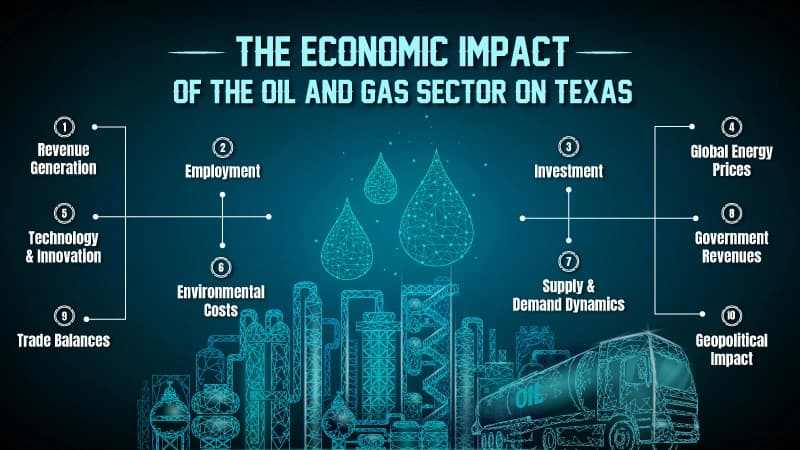
Let's break down the economic impact in the oil and gas sector into key points:
Revenue Generation:
The oil and gas sector is a significant source of revenue for governments through taxes, royalties, and the sale of energy resources.
Employment:
It provides a substantial number of jobs, from engineers and technicians to support staff, contributing to local and national economies.
Investment:
Oil and gas companies invest substantially in exploration, production, and infrastructure, stimulating economic growth.
Global Energy Prices:
Price fluctuations in the oil and gas markets impact the cost of living and business operations globally.
Technology and Innovation:
The sector drives technological advancements and innovations that often spill over into other industries.
Environmental Costs:
Negative impacts include ecological costs, such as pollution and climate change, leading to economic consequences.
Supply and Demand Dynamics:
Fluctuations in supply and demand for oil and gas can result in price volatility and energy security concerns.
Government Revenues:
Governments rely on the sector's taxes and royalties to fund public services and infrastructure development.
Trade Balances:
Nations involved in the oil and gas trade can experience significant impacts on their trade balances.
Geopolitical Impact:
The industry's control over energy resources can influence international relations and may lead to geopolitical tensions and conflicts.
The economic impact in the oil and gas sector is a complex interplay of revenue generation, job creation, technological advancement, and geopolitical considerations. It is a vital component of the global economy, with far-reaching consequences.
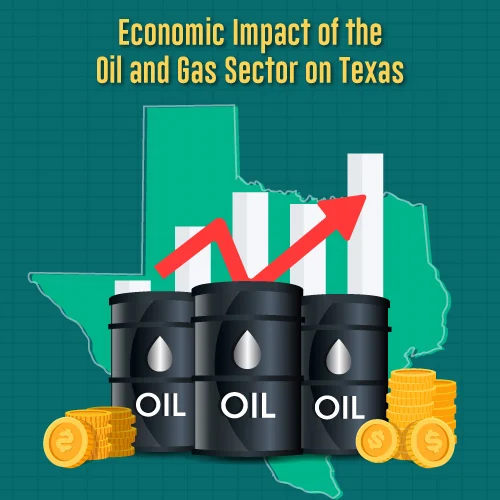
Economic Impact of the Oil and Gas Sector on Texas
The Texas Independent Producers and Royalty Owners Association (TIPRO) recently unveiled its eighth edition of the "2023 State of Energy Report," a comprehensive analysis of the economic impact of the oil and natural gas sector on the Lone Star State in 2022. Despite formidable challenges faced by the industry, including supply chain disruptions and inflation, the Texas oil and gas sector displayed remarkable resilience and economic vitality.
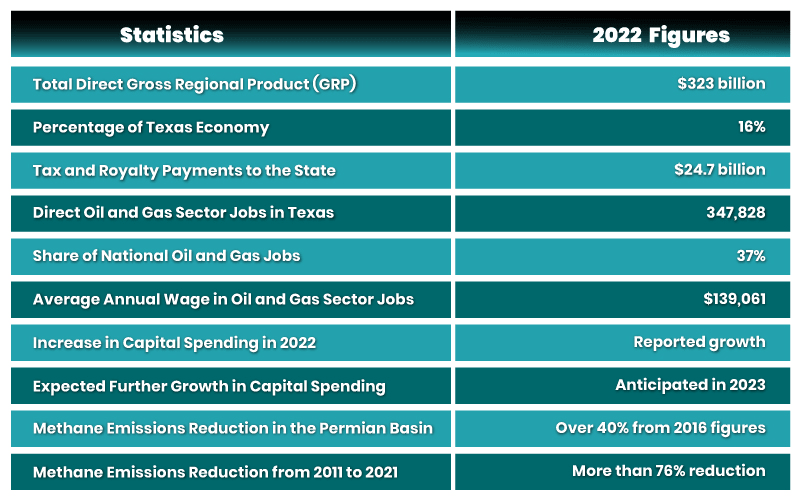
In the heart of Texas, the oil and gas industry is not just an economic sector but the state's lifeblood. In 2022, it was evident more than ever. The industry didn’t just exist; it thrived, pulsating with energy that touched every corner of the Lone Star State.
Thanks to the oil and gas sector, 16% of the Texas economy is breathing, moving, and growing. $323 billion in Gross Regional Product was not just a statistic; it was jobs, homes, and opportunities. And let’s not forget the $24.7 billion that flowed into state coffers, fortifying the Economic Stabilization Fund and the State Highway Fund, the bedrock of Texas schools and infrastructures.
Speaking of jobs, Texas was where dreams took flight for 347,828 individuals employed directly in the oil and gas sector, many of whom played a vital role in managing mineral rights in Texas. Earning an average annual wage of $139,061, these Texans weren’t just working; they were building lives and creating futures.
The Federal Reserve Bank of Dallas painted a picture of an industry on the ascent. Capital spending wasn’t just on the rise; it was soaring. And with this upward trajectory, Texas was not just witnessing economic growth but was in the throes of an economic renaissance.
However, despite the prosperity, the Texas oil and gas industry, collaborating with mineral owners, was not ignorant to the pressing need for sustainability. In the expansive stretches of the Permian Basin, methane emissions intensity plummeted by over 40% from 2016, even as production scales towered. This was not an accident but a testimony to an industry committed to balancing prosperity and the planet.
Ed Longanecker, the voice of TIPRO and Texans for Natural Gas, said it best, "The Texas oil and natural gas industry is the cornerstone of the state's economy and a beacon of energy security for the nation and its allies.
But beyond the echoing chambers of economics and politics, the industry is etching a legacy of environmental stewardship, proving that in Texas, black gold and green earth are not just coexistent but coevolving.
To summarize
As the sun sets against the vast Texan skies, casting long shadows over rigs and refineries, know this: The oil and gas sector is not just drilling into the earth but is anchoring the very soul of Texas, blending prosperity with responsibility, today, tomorrow, and beyond.