One of the most concerning environmental challenges in today’s world is oil spill disasters. These occurrences pose serious threats to human health and the economy in addition to polluting our oceans and endangering marine life and ecosystems. In this draft, we will examine the main reasons behind oil spills as well as the terrible consequences they have on the environment and human society.
Preventing such future tragedies and safeguarding our delicate ecosystem depend on our ability to comprehend the reasons behind these spills and the long-lasting effects they have on our world. Let's understand what an oil spill is.
What is an Oil Spill?
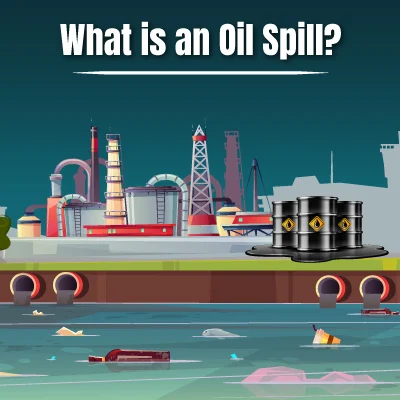
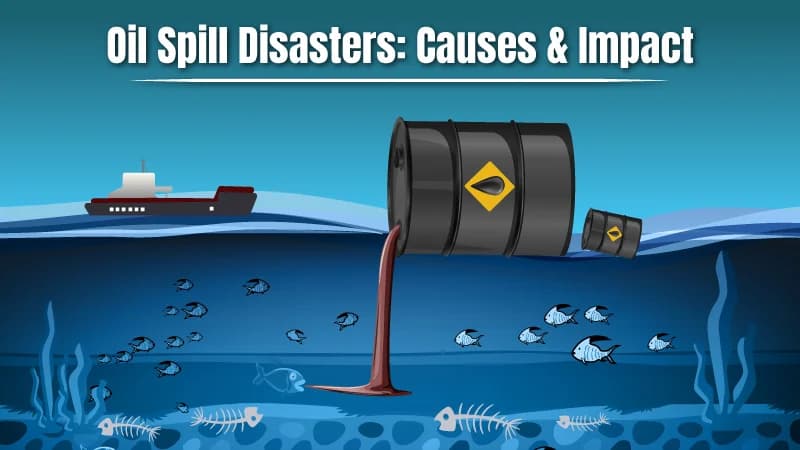
Oil spill disasters are one of the severe issues that may significantly influence both the environmental and the economic landscape. Oil spills occur on land and often in oceans. While transporting petroleum liquids from offshore platforms to processing facilities, if any vessel gets crashed or damaged or any other issue arises, the oil gets released in the ocean/land, causing an oil spill.
Such undesirable oil spills are responsible for affecting marine and coastal ecosystems. In addition, the ocean tides, uneven weather, and tidal currents further affect the oil spill movement, making them unpredictable.
To spot such oil spills on water bodies, radar data with satellites is put into service. Although radar data detects the oil spills, it is still challenging to find relatively small patches of oil in wide-spread oceans.
But once a specific oil spill that requires observation is located, satellites can be helpful in identifying the source, determining the amount, and determining the potential cause of the oil spill.
What Causes Oil Spill Disasters?
Oil spills cause major harm to the environment, impacting ecosystems, wildlife, economies, as well as human health. The release of oil, especially in water bodies, can have catastrophic effects, particularly without the right emergency response measures. Understanding the causes of oil spills can help companies and governments prepare and reduce the likelihood of future incidents.
| Category | Cause | Details |
|---|---|---|
| Natural Causes | Seepage from the Seafloor | Hydrocarbons migrate from subterranean reservoirs to the water's surface. Seepage occurs through fractures caused by earthquakes or other geological events, typically in deep-sea environments, and rarely results in large oil spills. |
| Volcanic Activity | Underwater volcanic eruptions can release gas and oil, causing oil slicks. Above-ground volcanic activity can produce tarballs or tar mats, which can wash ashore and affect coastal ecosystems. Prevalent near active volcanoes. | |
| Natural Disasters | Extreme weather events like storms, hurricanes, and tsunamis can damage oil infrastructure, leading to oil spills. Rough seas, high winds, and strong currents can destroy storage tanks, burst pipelines, and ground vessels. | |
| Accidental Spills | Shipping and Tanker Accidents | Collisions between vessels or vessels running aground can rupture hulls, causing oil spills. Aging or poorly maintained vessels are also prone to structural failures, leading to leaks or spills. |
| Offshore Drilling Accidents | Blowouts, or wellhead failures, during drilling operations can result in uncontrolled oil and gas releases. These accidents can lead to significant oil spills and pose serious safety risks. | |
| Pipeline Storage Tank Failures | Corrosion, inadequate maintenance, and equipment failures (valves, pumps) in pipelines or storage tanks can lead to leaks. Observing equipment over time is critical to preventing spills. | |
| Accidents During Oil Transfer Operations | Equipment failures, human error, or cargo shifts during the transfer of oil between vessels or between vessels and storage facilities can result in spills. Ruptures in pipelines during transfer also cause oil spills. | |
| Deliberate Spills | Illegal Dumping Discharge | Companies or individuals may intentionally dump oil to avoid disposal costs or regulations. An example is Petrobras in Brazil, where millions of liters of oil were illegally discharged over several years. |
| Sabotage Acts of War | Terrorists or military actions targeting oil infrastructure can cause oil spills. During conflicts, deliberate spills may occur as a strategy to disrupt enemy operations or cause environmental damage. |
Biggest 9 Oil Spill Disasters
Below is the list of the top 9 oil spill disasters in history:
| Rank | Oil Spill Name | Year | Location | Cause | Volume of Oil Spilled | Environmental Impact | Compensation/Notes |
|---|---|---|---|---|---|---|---|
| 1 | Persian Gulf War Oil Spill | 1991 | Persian Gulf | Deliberate release by Iraqi forces. | 380-520 million | Hundreds of miles of coastline polluted, massive loss of marine life. | Largest oil spill in history. |
| 2 | Deepwater Horizon Oil Spill | 2010 | Gulf of Mexico | Explosion on oil rig caused by gas surge | 134-206 million | 1,300 miles of the U.S. Gulf Coast polluted, causing loss of tourism, marine life, and livelihoods. | BP paid $65 billion in compensation. |
| 3 | Ixtoc 1 Oil Spill | 1979 | Bay of Campeche, Gulf of Mexico | Explosion caused by drilling mud failure | 126-140 million | The Southern Gulf of Mexico was affected, causing major impact on tourism and fishing. | Long recovery time for affected industries. |
| 4 | Atlantic Empress Oil Spill | 1979 | Atlantic Ocean, near Trinidad | Collision between two VLCCs during a tropical storm | 90 million | Minimal environmental damage as winds pushed oil out to sea. | 27 sailors died during the accident. |
| 5 | Mingbulak (Fergana Valley) Oil Spill | 1992 | Fergana Valley, Uzbekistan | Blowout at oil well | 88 million | Oil burned for two months, causing massive environmental damage. | Largest land-based oil spill in history. |
| 6 | Kolva River Oil Spill | 1994 | Kolva River, Russian Arctic | Corroded pipeline breach | 84 million | 186 square km of tundra and wetlands affected, continued leakage from pipelines. | Oil pollution worsened over time. |
| 7 | Nowruz Oil Field Incidents | 1983 | Persian Gulf | Collision with oil platform, followed by helicopter attacks | 80 million | Two incidents caused massive oil pollution, with two-thirds of the oil sinking to the seafloor as tar balls. | Iran’s efforts to cap the well occurred under fire, 20 people died. |
| 8 | Castillo de Bellver Oil Spill | 1983 | South Atlantic Ocean, near Cape Town | Fire aboard tanker causing it to capsize | 53.5-79 million | Minimal environmental damage due to Benguela Current dispersing oil. | The forward section of the tanker was sunk with explosives. |
| 9 | Amoco Cadiz Oil Spill | 1978 | Brittany, France | VLCC ran aground on rocks. | 69 million | 200 miles of French coast polluted, millions of invertebrates, and 20,000 birds killed, oyster beds contaminated | Amoco Corporation paid $155 million in compensation. |
The above list indicates the severe impact of oil spills on the environment, affecting ecosystems and damaging pipelines. Furthermore, this disaster may also affect humans.
Impact of Oil Spill Disasters
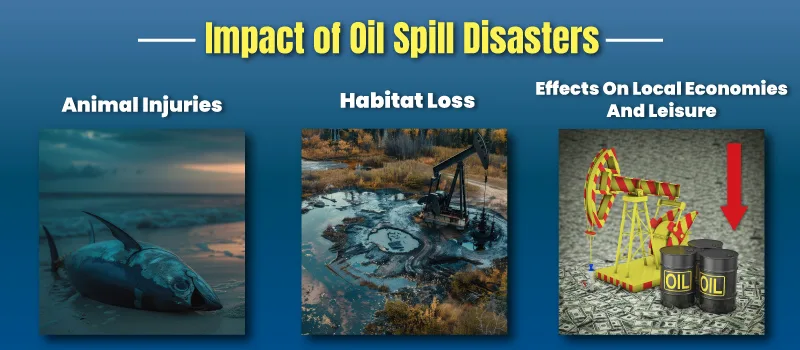
Oil spill disasters impact both humans and the environment in the following ways:
Environmental Impacts
Anywhere that oil is extracted, transported, or stored has the potential to encounter oil spills. Numerous variables, such as the type and quantity of oil spilled, its location, the time of year, the weather, and the efforts made to clean it up, affect how much damage a spill does. Here are a few instances of typical effects:
Animal Injuries
-
Both exterior and internal exposure—from consuming or breathing in oil—can cause harm to animals. Since most oils float, animals that inhabit shoreline habitats or areas near the sea's surface are frequently the ones most impacted by oil. If oil seeps below the surface or becomes mixed with the water column, fish and shellfish may suffer consequences.
Habitat Loss
-
When oil is released into the environment, it can damage areas like wetlands and oyster reefs. Loss of habitat can cause animals' life cycles to be disturbed, migratory patterns to change, and shorelines to erode.
Effects on Local Economies and Leisure
-
Beaches, parks, rivers, and commercial and recreational fishing may close as a result of an oil spill. Additionally, boating and hunting may be prohibited. The local economy may thus suffer significant short- and long-term effects.
Human Impacts
An oil spill can have immediate detrimental impacts on human health, including harm to the immune system, liver, and reproductive and respiratory systems. Supplies of drinking water can potentially get contaminated by oil spills. The tourism and marine resource extraction businesses may be negatively impacted financially by contamination. For instance, the Gulf Coast's beach tourism and fishing were harmed by the Deepwater Horizon oil disaster, and the responsible parties were required to compensate economic victims.
The daily lives of people are also impacted by oil spills, which can lead to a decrease in the future oil supply and the possible closure of parks, beaches, fisheries, and areas where fires are a concern. Respiratory distress was induced by air pollution resulting from the oil fires in Kuwait. Eleven oil rig workers lost their lives in the Deepwater Horizon accident. The Lac-Mégantic disaster caused a fire that destroyed half of the town center and claimed 47 lives.
These are some potential impacts of oil spill disasters on humans and the environment. Humans at times cannot stop such tragedies, yet these spills can be controlled from more damage to the environment to secure the future.
Who Cleans Up an Oil Spill—and How?
Oil spill cleanup is primarily the responsibility of the US Coast Guard, with scientific backing from NOAA (National Oceanic and Atmospheric Administration) scientists helping decision-makers protect people and the environment. When an oil spill occurs, skilled professionals can contain or remove the oil from the environment utilizing multiple tools and techniques such as radar data, satellites, etc.
Booms are physical barriers that float in place to retain oil and keep it out of vulnerable regions such as wetlands, mangroves, and beaches. Oil can be "skimmed" from the sea surface using skimmers, which are used off boats. Oil spills at sea can be burned away by in situ burning, and chemical dispersants can break up oil spills from the surface.
However, authorities must take care to ensure that their actions don't result in more harm because cleanup efforts will never completely eliminate the oil that has been released. Scientists discovered that the oil spilled in 1989 from the Exxon Valdez caused greater harm than the oil itself, even though the beaches were cleaned using high-pressure, hot water hoses. When cleaning up an oil spill, sensitive habitats need to be given special attention.
Wrapping Up
Oil spill disasters are some of the major environmental issues that can severely influence ecosystems, marine life, and human beings. These disasters may occur while extracting, storing, and transporting oil, often due to natural causes, undesired accidents, and deliberate actions.
To secure the environment and human health, such disasters must be minimized. The Oil Pollution Act of 1990 is the foremost law in the US that regulates oil spill prevention and response. The integration of this law helps reduce the oil spill disasters while driving towards sustainable oil recovery in the coming period.