Are you searching for an investment opportunity with the potential for substantial returns? Seeking remarkable benefits sounds ideal, right? So, if you've been thinking about ‘How to Invest in Oil Wells’, now may be the time. If so, you've come to the right place.
Countless investors have already entered this market, making significant returns from oil well investments. Now, it’s your turn to profit from untapped resources like oil wells. This post will help you understand the details of how to invest in oil wells, especially in Texas.
Texas consistently ranks among the top states for oil production. Recent advances in drilling technology and shale formation development have fueled the expansion of oil well projects in the US.
The US has made significant advancements in the oil and gas sector, particularly with the shale revolution. Oil wells contribute significantly to strengthening the country's economic stability. So, let's take a closer look at what Texas oil wells are all about.

What are Oil Wells?
An oil well is a borehole drilled deep into the earth to extract petroleum oil and hydrocarbons. Wells drilled for oil reserves are often equipped with machinery known as a pumpjack. It helps to extract the oil from reservoirs easily.
Producing a new oil well can be costly, often requiring hundreds of thousands of dollars to establish a full oil production facility. The drilling expenses may rise when they are in complex areas.
Newly introduced drilling techniques like directional drilling, horizontal drilling, and hydraulic fracturing significantly enhance oil productivity. These technologies contribute to the sustainable development of oil wells.
Oil wells are leased or purchased from time to time by several oil companies. As demand for oil rises, oil wells become economically lucrative. However, a drop in oil prices can render oil wells unprofitable.
When discussing oil wells, it is worth noting that Texas is among the states in the United States with the highest number of oil wells. The first oil well in Texas was drilled near Nacogdoches at Oil Springs. This well brought a significant change to the Texas oil exploration industry.
Following the drilling of this first well, Texas continued expanding its drilling activities and quickly became a major player in oil exploration. Today, the state is utilizing modern-day tools for drilling purposes.
Below are some of the Top Active and High-Potential Oil Wells in Texas based on 2019 Data:
| Company | Lease | Well | County | Region |
|---|---|---|---|---|
| Concho Resources | Pegasus Field Unit 3 | 1406LH | Upton | Permian Basin |
| Henry Resources | Melinda | 251WB | Upton | Permian Basin |
| Chevron | Hay Bowen 29/32 | 0041WC | Culberson | Permian Basin |
| Exxon Mobil | Irvin Minerals South | G 8H | La Salle | Eagle Ford Shale |
| Noble Energy | Jersey Lilly 17-7 Unit B | 11H | Reeves | Permian Basin |
| ConocoPhillips | Yellowfin Tuna WC | 4701H | Reeves | Permian Basin |
| Henry Resources | Gwendolyn | 2646 MS | Midland | Permian Basin |
| EOG Resources | Blanc Unit | 102H | Karnes | Eagle Ford Shale |
| Concho Resources | Mabee 240A Unit | 4406AH | Andrews | Permian Basin |
| Henry Resources | Gwendolyn | 2636WA | Midland | Permian Basin |
History of Oil Wells
Oil exploration dates back to ancient times. Early oil extraction practices took place in China during the Han Dynasty, around 347 AD. People drilled shallow wells mainly for natural gas extraction to be used as fuel and lighting. Bamboo pipelines transported oil during this era.
In the Medieval Era, oil wells were drilled using percussion methods in Persia, in the Middle East. They were drilled for lighting and medicinal purposes. Modern day oil well drilling started in the 19th century.
Edwin Drake is credited with drilling the first practical oil well in 1859, which was located in Titusville, Pennsylvania, USA. Later, the rapid oil well drilling practices began in Texas.
Here's an overview of the chronological history of Texas oil wells:
-
1866:
The first oil well in Texas was drilled near Nacogdoches at Oil Springs.
-
1894:
An early practical oil well was found near Corsicana.
-
1895:
The Baker Brothers used the rotary method for drilling an oil well in Navarro, Texas.
-
1898:
First Oil Refinery was introduced in Corsicana, Texas.
-
1901:
Spindletop Oil Boom occurred.
-
1929:
Horizontal Drilling came to rise. The first horizontal oil well was drilled near Texon, Texas.
-
1950:
Hydraulic Fracturing was commercially utilized successfully.
-
1960
The modern Directional Drilling method of oil wells came into practice.
-
2000:
Sustainable oil drilling practices carried out with the latest innovations.
The drilling and exploration of Texas oil wells continue to grow and enhance the oil sector to this day.
How to Invest in Oil Well?
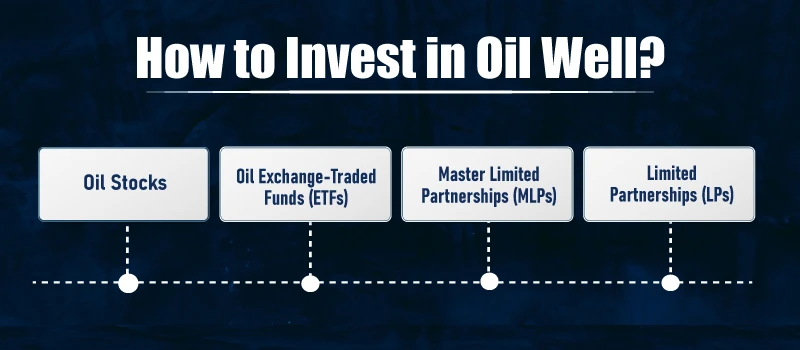
Oil well investment can offer desirable returns. Many investors prioritize oil wells because of their high production potential. Below are three important ways to understand how to invest in oil wells.
Oil Stocks
Several investors prefer investing in oil stocks. This offers a better opportunity to exploit the performance of companies involved in oil exploration, production, and trading.
Investors can select companies from well known multinational corporations to small scale industries. Investors should also consider the associated risks, tolerance, and investment goals before investing in any firm.
Oil Exchange-Traded Funds (ETFs)
As an investor, you may also invest in Oil ETFs. This permits investors to access oil exposure without actually purchasing single stocks. Several energy funds track the whole sector, whereas specialized oil ETFs target intensively on oil and gas firms or even commodities themselves.
Such funds offer diversification and can be a sophisticated way to build a diversified portfolio. When buying ETFs, investors should carefully examine management fees, underlying investments, historical performance, and investment policies to ensure they align with their investment goals.
Some prominent oil ETFs are United States Oil Fund (USO), iShares US Oil and Gas Exploration and Production ETF (IEO), SPDR S&P Oil & Gas Exploration and Production ETF (XOP) and so on.
Master Limited Partnerships (MLPs) and Limited Partnerships (LPs)
Investors can enter into oil well investment through LPs and MLPs. MLPs give investors an opportunity to invest in the infrastructure of oil and gas, including storage facilities and pipelines.
These partnerships are designed to distribute maximum earnings to shareholders, consistently providing significant dividend income. This can be one of the most convenient options for investing in oil wells. Yet, investors must understand some key factors before investing in oil wells.
Key Factors to Consider Before Oil Well Investment
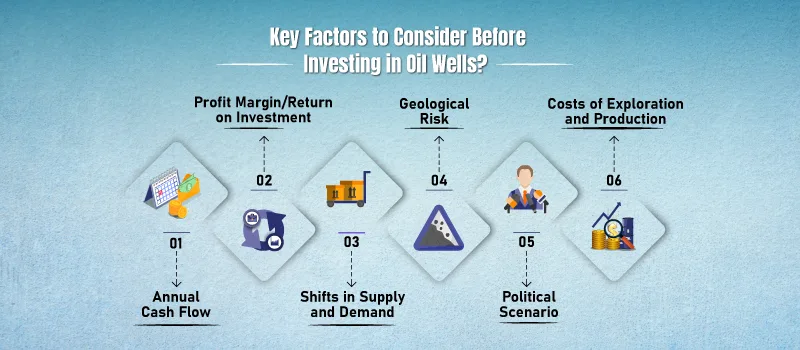
Here are some important key factors you should consider when you decide to invest in oil wells:
Annual Cash Flow:
Investors should focus on annual cash flow before oil well investment. The bulk of cash generated by oil well activity during a certain time, generally twelve months, is known as annual cash flow. It indicates the inflow and outflow of cash associated with oil well activities. Cash flow consists of several parameters, such as oil costs, capital charges, operating expenditures, and production volume. The annual cash flow is usually evaluated by deducting the oil well expenditures.
It includes capital charges and operating expenses from the cash generated by oil selling. Investors consider cash flow when analyzing the profit and loss statement from oil well activity. Positive cash flow means the project generates a profit beyond the initial investment. Whereas negative cash flow shows the project is not generating the profit to achieve the investment amount. In the oil well project, many investors claim to earn a good return on investment.
Profit Margin/Return on Investment (ROI):
Almost every investor expects a good profit from their respective investment. Before investing in an oil well, investors should familiarize themselves with the concepts of profit margin and return on investment. Profit margin informs the amount of profit generated by an oil well project, subtracting all the other charges.
Moreover, return on investment aims to indicate the amount of cash generated after investment. The detailed inspection of ROI and profit margin delivers the essential intuition. It helps investors clarify informed decisions and minimizes the financial risk of oil well projects.
Shifts in Supply and Demand:
Oil prices fluctuate as per the demand in the market. With the increment in oil demand, ultimately, cost increases. Consumers purchase the oil at any existing prices. The enhanced demand and supply shift the curve to the right.
However, the reduction in oil demand causes the curve to shift left. It simultaneously reduces the supply, quantity, and oil prices. The shift in the supply curve may also occur due to production expenses and innovations. This factor educates the investor about the demand and supply chain of oil in the market. Such a rise and down of demand and supply contributes to oil price fluctuation.
Geological Risk:
Before planning to invest in oil wells, the geological risks must be addressed. It represents the uncertainties belonging to subsurface geo-conditions of the oil wells. The geological risk includes the intricacy and big-budget exploration projects. Well, drilling near deepwater sources may contribute to geological risks like rock fracturing and voids in the land.
Also, the drilling costs in such deepwater areas may be greater as compared to shallow water wells. Investors can get advice from geologists to reduce geological risk. Geologists examine the formations of underground rocks to forecast the presence of oil. An oil well with favorable geology typically yields a higher return on investment. Whereas, poor geological conditions may yield passive results.
Political Scenario:
It's crucial to stay informed about the political climate before investing in oil wells. Directing the crucial scenario of the oil market needs environmental aspects, risk management, and geopolitical factors to be understood deeply. It is pivotal to hold attention to political events worldwide. Along with it, sanctions, conflicts, and trade markets may somehow distract the oil markets and supply chains. The relationship between the US, OPEC, and other nations has a major role in the overall oil pricing scenario.
The onboarded government may adopt a cautious approach toward exploration projects to manage geological risks and environmental issues. Understanding the importance of trade dynamics and energy security helps identify the latest market trends. Therefore, investors should analyze the ongoing political scenarios before investing.
Production and Exploration Prices:
Oil production and exploration costs depend on various factors, such as drilling location, well depth, and the complexity of the exploration process. These prices may affect investors' profitability and revenue. Before investing in oil wells, production and exploration costs should be considered.
Conclusion
Oil well drilling has become one of the leading endeavors that have driven growth in the oil sector. As the demand for energy rapidly increases, oil wells play a vital role in shaping the state's energy sector. Investors should consider all aspects of investing in oil wells. This will educate the investor on his expected return on investment.
Investment in oil wells offers multiple benefits to investors. This includes robust profits, tax deductions, and much more. Although oil investing comes with its challenges, investors should focus on the long-term benefits of oil well investments. To maximize returns, investors should follow specific steps before investing in oil wells.
Given today's energy demands, oil well investments are poised to take off. MineralView.com will assist you in maximizing your profits whether you are an investor or mineral owner now or are just thinking about how to invest in oil wells. We offer Cash Flow Analysis, Mineral Evaluation, Value Analysis including PV-10, and a variety of additional features for all your oil wells investing needs.
FAQ's
Are Oil Wells a Good Investment?
The flourishing view of the energy sector refashions oil well investment into a fascinating revenue. It is advantageous, especially for those looking for diversification options, good returns, and tax benefits for their investment portfolio.
How much Money can you make from an Oil Well?
The global oil and gas exploration and production sector achieved a significant growth of 71.8% as per the recent stats, with further increments expected. If you are thinking of royalties, your 25% of investment in oil wells results in 8% of royalty.
Let us consider an example: if each well produces an average initial production of 250 barrels of oil per day, it is the average for this area. If you have invested 100k, you would be eligible to receive a check of approximately $9,700 monthly.
What are Oil and gas Investment Tax Benefits?
Investing in oil wells helps you subtract all the costs associated with drilling. It includes labor costs and fuel expenses from your tax. These expenses usually cover most of the well’s costs, and you can deduct them from your taxable income in the same year.