
Loading article
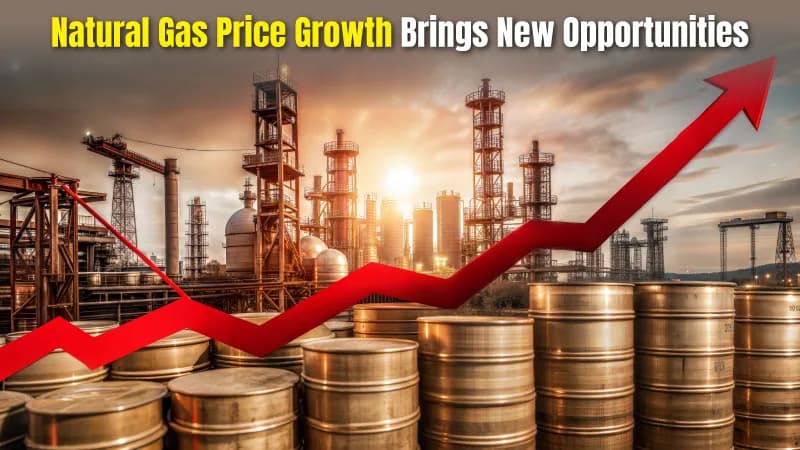
The U.S. natural gas sector is entering a transformative phase—and for anyone involved in oil & gas investments or owning mineral rights, this is a window of opportunity.
Let’s unpack why the Energy Information Administration (EIA) models a sharp rise in U.S. demand, how Asia’s hunger for liquefied natural gas (LNG) is reshaping global flows, and most importantly for you, how natural gas price trends may affect returns.
Here’s what’s driving the acceleration:
Record power demand in the U.S. led by data centers (AI, cloud, computing)—power needs are climbing faster than in past decades.
The U.S. is already the world’s largest LNG exporter—and nameplate capacity is expected to reach about 115 million tonnes per annum (MTPA) this year.
The rebound in natural gas price after last year’s dip, combined with long-term contracts and increased Asian interest, keeps global buyers active.
M&A and asset-sale activity: In the first nine months of 2025 U.S. gas/LNG deal value climbed to around US$30 billion, up from US$22.5 billion a year earlier.
“2025 is an inflection year,” said the CEO of a major gas producer in the U.S., highlighting expectations for 4-6% annual growth in U.S. gas demand through 2030, driven by LNG and power.
So for investors and mineral owners (especially in key shale basins), the message is clear: the gas sector is active, capital is moving, and the natural gas price outlook is supportive.
Here are some of the key metrics and trends for the natural gas price:
| Indicator | What it shows | Implication |
|---|---|---|
| Average gas price up ~26 % in Q3 vs year-earlier | Indicates demand rebound and tighter supply. | Better margins for producers & stronger cash flow for mineral owners. |
| U.S. production quarterly record (9.73 trillion cubic feet in Q2) | Supply is high. | But big exports and demand may soak up production. |
| Weekly spot data: working gas stocks ~5 % above five-year average in U.S. | Some storage buildup may cap upside. | Watch for colder weather or an export boost to force drawdowns. |
| Global LNG supply growth & Asian demand focus | Tight fundamentals globally support natural gas prices. | Gives upside in the long term. |
While storage and production are high, the shifting demand dynamics (AI, LNG exports, and Asian buyers) are tilting the outlook positive for the natural gas price for the next few years. That’s good news if you’re in upstream or midstream or hold mineral rights.
Most of the recent headlines focus on Europe, but Asia is quietly becoming the powerhouse for gas demand growth. Here’s how that matters:
Asia’s demand for gas is expected to grow at ~5 % annually through 2030 — faster than Europe or the U.S.
Many Asian countries are expanding their LNG import infrastructure, making U.S. payloads more attractive.
For the U.S., that means increased feed-gas demand for export terminals, which pulls on domestic supply and supports the natural gas price.
A key note: Asian firms are bidding into U.S. shale basins like the Haynesville Basin, outbidding domestic producers for feedstock.
If feed-gas demand rises for LNG exports, upstream producers in shale basins (where you might hold mineral rights) can benefit from higher realizations, more drilling, and a rising natural gas price outlook. In addition, midstream infrastructure & services tend to lean positively when export volumes climb. Export-linked projects often require long-term contracts, which reduce risk.
Here’s what’s happening behind the scenes:
More than US$28 billion in U.S. gas and LNG assets are currently up for sale.
Companies are Reorganizing: major players such as Ascent Resources, BP, GeoSouthern, Williams and NextDecade (Rio Grande project) are in or eyed for deals.
In the first nine months of 2025 deal value reached ~US$30 billion, up from ~US$22.5 billion a year earlier.
Reasons for the Uptick: stronger export outlook, higher natural gas price expectations, power-demand tailwinds (AI, data centers), and global capital seeking energy-transition-adjacent assets.
For investors and mineral owners, that means increased liquidity in the oil & gas sector, potential for asset-value realization, and more competition for quality acreage. If you hold minerals, this could mean interest from operators increasing.
Here are a few zones and themes with promising potential:
Shale basins feeding LNG terminals—areas in the U.S. where export pipelines, liquefaction capacity or feed-gas access are strong.
Midstream infrastructure—pipelines, processing plants, and terminals that support export and domestic demand. These tend to benefit when natural gas prices and volumes rise.
Mineral-rich lands—Timing matters: if you hold minerals in a basin where the operator is expanding or being acquired, you may see enhanced drilling, meaning royalty flow could increase.
Emerging markets for Asian imports—If Asian demand continues to ramp, U.S. upstream and export-linked assets may benefit disproportionately.
While the outlook is broadly positive, prudent investors & mineral owners know the downside scenarios too. Keep an eye on:
If U.S. production or storage builds too high, and if export ramp-up is delayed, the natural gas price could weaken.
Hot summers or mild winters alter consumption significantly.
Some Asian buyers face tariffs, regulatory uncertainty or slower economic growth.
The gas sector is under scrutiny as the world shifts to renewables; a slowdown in new projects or stricter regulations could dampen momentum.
In Asia and elsewhere, cheaper renewables could reduce demand growth for gas.
Here’s why you should feel upbeat:
With natural gas price momentum, upstream companies may generate stronger cash-flows, pay higher dividends, or engage in value-creating M&A — all of which can benefit royalty-holding mineral owners.
Rising deal activity improves exit/liquidity options—both for operators and possibly for mineral holders via lease-bonus or operator buy-outs.
Investors who pick upstream or midstream companies tied to LNG/export infrastructure may capture both domestic growth (power demand, AI/data centers) and global growth (Asia).
For mineral owners: being in the “right basin” at the right time matters. If your acreage lies in a basin feeding export or power demand, you’re better positioned for upside.
The U.S. gas sector is benefiting from rising demand (AI/data centers & power), strong export growth (especially LNG to Asia), and a rebound in natural gas price. Deal activity is strong, and for investors and mineral owners, this means potential upside both upstream and midstream.
While risks remain (oversupply, regulatory shifts, competition from renewables), the tailwinds are strong enough to merit attention. Positioning in basins with export or power-demand linkage is especially smart right now.
If you’re an investor in the oil & gas space or a mineral owner, now is the time to ask:
Is your asset located in a basin feeding export infrastructure or near power-demand growth?
Do you understand how natural gas price dynamics (domestic + export) affect your cash flows or royalty streams?
Are you aligned with operators or midstream firms that can capitalize on rising demand and LNG exports?
Are you tracking the deal flow (M&A) in your region and the premium being paid for high-quality assets?
Ultimately, the green light for action lies in aligning with structural trends. The surge in U.S. natural-gas deal-making is not just a cyclical blip—it reflects deeper demand shifts and export-driven growth. For those positioned well, the natural gas price rebound offers real upside.
Informational only — not legal, tax, or investment advice.