Texas has emerged as a dominant leader in the U.S. offshore drilling sector, setting competitive benchmarks. For offshore drilling, the surface is to be drilled deeper, which may affect the coastal and marine habitats. Texas' offshore drilling approach is based on environmental factors plus the state's economic development. This stance shapes the trajectory and continuance of offshore drilling activities. This analysis provides an in-depth exploration of the significance of Texas's stand on economic growth and the environment.
Earlier, in 1990, President George H.W. Bush enacted an executive mandate limiting offshore drilling operations. Later, in 2008, his son, President George W. Bush, reissued the order, establishing Texas' position on offshore drilling. This stance has spawned a debate, which is still unfolding. According to the debate, banning offshore drilling reduces environmental impacts and lessens job opportunities and the state's economy.
Historical Evolution of Offshore Drilling in Texas:
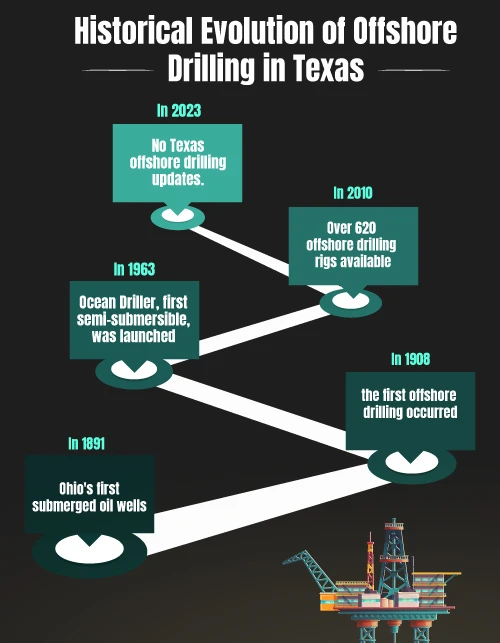
Offshore drilling had a turning point in Texas’s economic improvement and industrial development. In 1891, oil wells were drilled on pile-built platforms in Grand Lake in St. Marys, Ohio. The small companies of that time, like Bryson, Riley Oil, German-American, and banker’s oil, took instrumental in the development of drilling early wells.
In Texas, offshore drilling rigs started oil and gas drilling for the first time in the 1930s. This phase encompassed drilling in shallow offshore waters. The first successful offshore well was the Freeport Sulphur #6 and was drilled in 1938.
The offshore drilling ventures yielded substantial profits, and drilling work continued to explore the oil and gas. In the gulf of Mexico, the period of the 1950's is said to be the golden era of offshore drilling. In this period, a number of wells were drilled, and over time, this drilling work generated immense profits. This demand led to the invention of advanced drilling equipment and drilling under deeper water. The exploration of oil and gas by offshore drilling rigs introduced dynamically positioned drillships, which contributed to the growth of the drilling industry and provided economic growth in Texas in the 1970s.
In 2010, a deepwater oil spill occurred, one of the most impactful environmental disasters in the Gulf of Mexico. This incident caused a major change in the safety and security of the drilling sector. After this, the security in offshore drilling has improved substantially. After the spill, environmental experts focused on safety, environmental factors, and regulatory oversight. Considering all the safety parameters, offshore drilling is still active for the exploration of oil and gas, along with advanced technology and safety measures.
Offshore drilling in Texas has a rich history, with several key milestones and developments. Here are some important points in the history of offshore drilling in Texas:
-
- In 1891
Ohio's first submerged oil wells were drilled from platforms built on piles in the fresh waters of Grand Lake St. Marys (also known as Mercer County Reservoir). The wells were developed by small local companies such as Bryson, Riley Oil, German-American, and Banker’s Oil.
-
- In 1937
Pure Oil (now Chevron) and its partner Superior Oil (now ExxonMobil) used a fixed platform to develop a field 1 mile offshore of Calcasieu Parish, Louisiana, in 14 feet of water.
-
- In 1946
Magnolia Petroleum (now ExxonMobil) drilled at a site 18 miles off the coast, erecting a platform in 18 feet of water off St. Mary Parish, Louisiana.
-
- In 1947
Superior Oil erected a drilling and production platform in 20 feet of water some 18 miles off Vermilion Parish, La. However, Kerr-McGee Oil Industries (now Anadarko Petroleum), as operator for partners Phillips Petroleum (ConocoPhillips) and Stanolind Oil & Gas (BP), completed its historic Ship Shoal Block 32 well in October 1947, months before Superior actually drilled a discovery from their Vermilion platform farther offshore. This discovery made Kerr-McGee’s first oil well drilled out of sight of the land.
-
- In the early 1960s
Fixed platform rigs were built as drilling moved into deeper waters of up to 100 feet. The first jack-up rigs began appearing from specialized offshore drilling contractors such as ENSCO International.
-
- In 1961
An accident occurred with the Blue Water Rig No.1 in the Gulf of Mexico for Shell Oil Company. As the pontoons were not sufficiently buoyant to support the weight of the rig and its consumables, it was towed between locations at a draught mid-way between the top of the pontoons and the underside of the deck. It was observed that the motions at this draught were very small, and Blue Water Drilling and Shell jointly decided that the rig could be operated in the floating mode.
-
- In 1963
The first purpose-built drilling semi-submersible Ocean Driller was launched. Since then, many semi-submersibles have been purpose-designed for the drilling industry's mobile offshore fleet.
-
- In June 2010
Over 620 mobile offshore drilling rigs (Jackups, semisubs, drillships, barges) were available for service in the competitive rig fleet.
-
- Dec 2023:
December 2023 did not see any Texas offshore drilling updates. Nevertheless, the Biden administration's five-year offshore drilling leasing plan for federal waters issued in September 2023 includes three Gulf of Mexico lease sales. November 2023 saw 639 original drilling permits from the Texas Railroad Commission.
The Economic Upsides of Offshore Drilling:
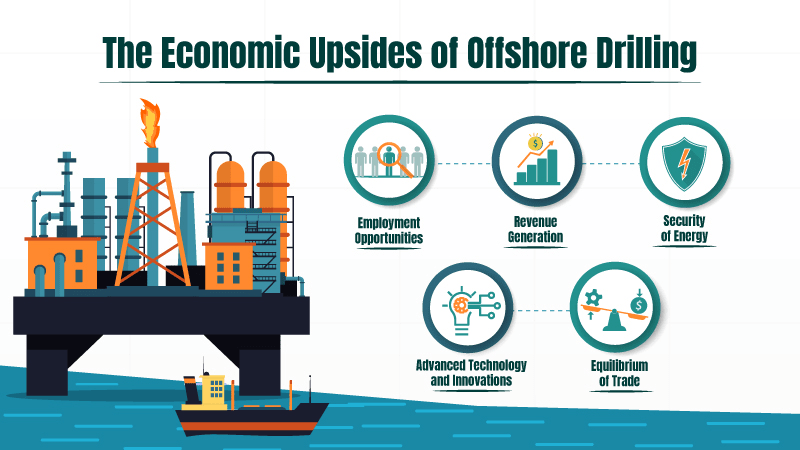
Offshore drilling has become a dependable way to fulfill the energy demands in the energy development sector. It is not only an energy efficient way but it also helps in the developing economy of Texas. Due to the increasing demand for energy, offshore drilling has become an excellent choice for increasing supply and helping to meet ongoing demand. The following are some developmental impacts that offshore drilling has had on the economy.
Employment Opportunities:
Offshore drilling projects involve several activities such as drilling, constructing, transporting, etc. Numerous midstream and downstream sectors play a pivotal role in such activities. The involvement of these industries increased work opportunities, which helped develop state employment opportunities. Now, as per the latest updates, experts suggest that unemployment numbers in the offshore drilling sector will continue to decrease because of an increased energy demand.
Based on the US Census Bureau and Texas Workforce Commission,- “primary oil and natural gas employment in Texas rose 8.1% y/y from 445,222 in Q1 2022 to 482,557 in Q1 2023.” In May 2023, the Texas upstream oil and natural gas sectors added 6,900 jobs, bringing the total to over 200,000 for the first time.
Revenue Generation:
Offshore drilling significantly adds to the government coffers through tax revenue generation. Therefore, tax and other fees can be applied on electricity and power consumption, which may result in an improved economy in Texas. The taxes generated from the energy sector are used for infrastructure development, public services, and community service projects.
Security of Energy:
Offshore drilling will improve the security of the energy. The continuation of drilling for the exploration of oil and gas will minimize the dependency on other countries for fossil fuels, which will ultimately enhance economic growth.
Advanced Technology and Innovations:
Offshore drilling has advanced with contemporary drilling technologies. That includes dynamically positioned drillships, automatic drilling, and robotics. The involvement of such devices can lead to technological innovations and the growth of a highly skilled workforce in the same industry.
Equilibrium of Trade
Offshore drilling can contribute to the improvement of a nation's trade balance by supplying an essential commodity for global commerce. This could build favorable economic conditions and reinforce a strong monetary policy.
Environmental Concerns and Conservation Efforts:
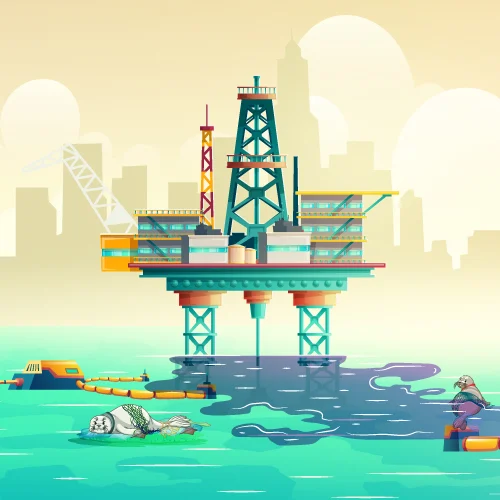
The oil and gas industry proved vital for Texas' economic development. Despite the fact that it provides affordable energy services and financial improvements to the state, researchers have identified some environmental concerns. The major environmental problems include habitat destruction, air and water pollution, climate change, and harm to biodiversity.
Habitat Destruction and Pollution of Air and Water:
While offshore drilling for oil, some wells may have environmental spills. Oil may be spilled in pipelines, on the platforms, and from tankers. Several barrels of oil get spilled every year. The primary causes of oil spills include accidents, unwanted human interference, equipment failure, and natural disasters. The economic impact of such oil spills may be comparatively limited, but it can cause a severe impact on marine species.
Offshore drilling involves long-term drilling in water as well. During this process, the pollutants get immersed in the water as well as in the air. Absorbing these pollutants in air and water may adversely affect marine and terrestrial environments
Air emissions involving greenhouse gasses are responsible for the impure air. Moreover, water pollution may cause harmful effects on marine life and may also affect the quality of the water. It can become a main reason to cause habitat destruction of many species and may also cause long-term environmental damage.
Climate Change and Biodiversity Harm:
Drilling offshore includes several air pollutants, such as greenhouse gasses, which may produce air quality concerns. When the air becomes polluted, it can cause sudden climate changes that may cause temperature changes and can affect marine life. Also, while drilling, the underwater noise level is increased, which may cause harm to many water species, and drilling can be responsible for biodiversity harm. Following safe and standard practices can help reduce the harm offshore drilling may impose on the environment.
By considering the above environmental concerns, Texas’s government has taken important decisions on offshore drilling. They also concluded that many offshore drilling companies should include environmental mitigation techniques like habitat restoration and conservation efforts.
Following are some major sustainable efforts that have been considered to reduce environmental harm.
Advancement in Technology:
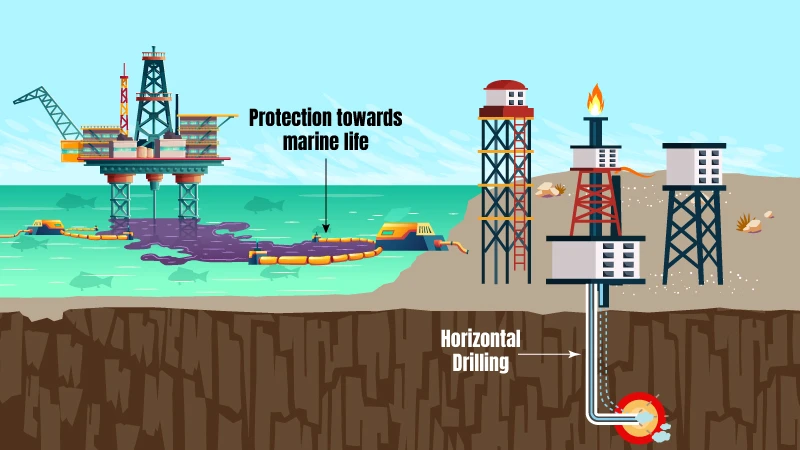
As offshore drilling assumes a critical role in the energy sector, multiple technologies have been introduced in drilling activity. Recent technological advancements in drilling, such as Hydrothermal Spallation and Horizontal Drilling, minimize the chances of an oil spill that may cause less harm to marine life and the environment, as well as improve the efficiency of the oil and gas extraction process. Their effectiveness and sustainability depend on careful implementation, ongoing monitoring, and a broader consideration of the energy landscape.
Establishing Protected Areas and Marine Reserves:
By considering the environmental concerns, the government has started developing protected areas and marine reserves where marine life can not be affected. At offshore drilling areas, the marine animals associated with that area can be transferred to marine reserves that may help preserve marine species and habitats. Transitioning to cleaner energy sources remains crucial to addressing environmental concerns associated with oil and gas extraction.
Policy and Regulatory Framework:
Policy and regulatory frameworks are being implemented in multiple segments of the mineral sector. The energy production industries in Texas generally take necessary steps for the environment during energy generation. To mitigate adverse environmental impacts, many policies and regulations are introduced. The main objectives of regulation are protecting the environment, improving air and water quality, protecting marine life, considering the safety of workers and the health of citizens, and minimizing waste resources. Presently, two critical policy and regulatory framework initiatives stand out that are introduced by Texas’s government.
Environmental Regulations:
Many areas must conduct ‘Environmental Impact Assessments’ (EIAs) before implementing an offshore drilling activity. This assessment has included the potential environmental impacts of offshore drilling projects and considered the safety measures to reduce ecosystem harm. In this regulation, there is another prevention step, the prevention of marine pollution. Marine pollution prevention helps develop healthy and secure marine life to maintain the ecosystem.
Regulations of License and Permission:
Offshore drilling provides much profit in the energy sector. Some lease owners may perform offshore drilling activity without a license to earn profit. For such illegal activities this regulation has been introduced. Now, offshore drilling companies are looking for standard procedures for drilling. They require a government license to execute drilling work in a particular location.
In Texas, the Texas Railroad Commission regulates oil and gas operations, including drilling, operating, or producing any oil, gas, geothermal resource, brine mining injection, fluid injection, or oil and gas waste disposal well.
Texas regulates oil and gas operations like the rest of the USA. The EPA (Environmental Protection Agency) regulates environmental issues, while the FERC (Federal Energy Regulatory Commission) regulates oil and gas transportation. Each of the 33 oil- and gas-producing states—including Texas—has its own drilling and extraction regulations. Pioneer Natural Resources, Chevron, and Crownquest Operating are among the many Texas oil and gas companies. Texas has government agencies and commissions that regulate oil and gas.
The Texas Administrative Code includes oil and gas drilling regulations, including casing, cementing, drilling, well control, and completion requirements.
Future Prospects and Renewable Energy Transition:
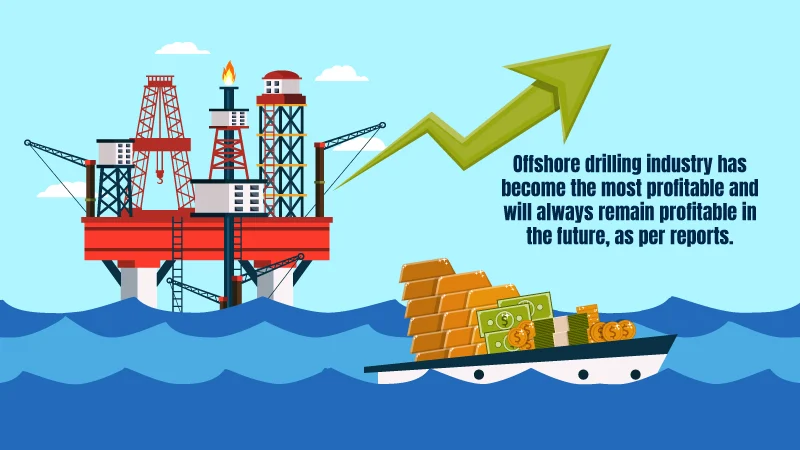
After considering the environmental concerns the regulatory framework has been carried out in Texas. In the oil and gas industry, very few factors may harm the environment. After the conservation efforts, the offshore drilling industry has become the most profitable and will always remain profitable in the future, as per reports.
Looking at these environmental issues, the state has the potential to become a renewable energy producer with high reliability and profit margins. It also involves reasonable prices, technological interference, and mineral rights to people. Following are some considerable future prospects that may help develop the energy sector and transition to renewable energy.
Implementing Renewable Energy:
Offshore drilling activities have exponentially focused on oil and gas exploration and production. The government of Texas and major companies have taken a decision to involve renewable energy in offshore drilling. Because drilling rigs use combustion engines, which spread hazardous gases into the air, impure air and sudden climate changes are possible.
If combustion engines are replaced with renewable energy-powered engines, they will produce zero emissions and save the environment. These engines can be powered by using renewable energy like solar and wind. It is a strategic move by the Texas government to focus on transitioning to renewable energy and subtracting the environmental concerns.
Technological Development:
Technology advancements and development would result in increased revenue for offshore drilling rigs. Innovations in drilling technology can include, automatic drilling techniques, robotics, and automation, which provide improved efficiency, low costs, and increased security in traditional as well as renewable energy methods.
Implementation of Hybrid Energy Production:
Depending on either the traditional way or renewable energy, the energy production process may slow down in offshore drilling. Experts discovered the best revenue-generating energy production strategy by considering this factor: combining renewable sources with traditional fossil fuels. This combination may result in a more profitable, reliable, stable, and safe energy supply, especially in remote offshore areas.
Conclusion
Texas’s stand on offshore drilling has mainly been taken after considering the negative environmental effects. In recent years, using renewable energy sources has started helping to improve economic growth in Texas. Hybrid energy generation has also started combining traditional fossil fuels and renewable energy sources. This combination provides safe and affordable energy services. After considering environmental factors and technological advancements, offshore drilling will be a growing sector in the energy industry in the future.
According to the Railroad Commission of Texas, Texas recently issued 639 original offshore drilling permits in November 2023. The Biden administration has granted three offshore oil and gas lease sales until 2029, the fewest in a decade. The administration's move has been criticized for not going sufficient ways to address the climate crisis and reduce fossil fuel use.
Texas's energy future depends on the oil and natural gas sector, and the offshore drilling debate will persist. It's a tricky balance for Texas as it figures out its energy future.