Earth, our most habitable planet, is rich with valuable resources beneath its surface. One of the most valuable of these resources is "black gold," or oil, essential for various industries worldwide. The extraction of minerals like oil and gas significantly contributes to the global economy.
In this captivating realm of extraction, oil and gas drilling plays a crucial role in shaping the progress of the energy industry. Understanding the basics of oil and gas drilling is paramount for industry professionals and investors. This informative guide will help you understand the fundamentals of oil and gas drilling. Let's take a closer look.
Introduction to Oil and Gas Drilling
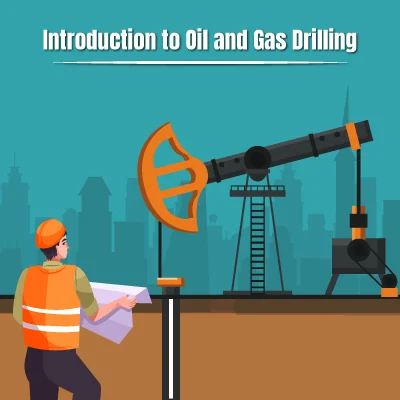
Drilling involves the process of constructing cylindrical boreholes using excavation methods with a drilling rig. The following steps must be taken simultaneously to drill a well (the drilling process):
-
Breaking through rock resistance and crushing it into millimeter-sized particles.
-
Removing the rock particles while continuing to act on new material.
Maintaining the stability of the hole’s walls.
-
Preventing the fluids found in the drilled formations from entering the well.
When it comes to the US drilling sector, the first essential step in any drilling project is the granting of drilling permits by the state's government, such as Texas. After obtaining permits, the well drilling procedure can begin, pushing a diligently organized series of steps. On the other hand, it is critical for those involved in the sector to keep up with the latest developments on drilling permits.
Mineral View is a reliable source for accurate data on drilling permits. We utilize cutting edge technology to offer the latest data on drilling permits. You can access the drilling permit data at your convenience with us.
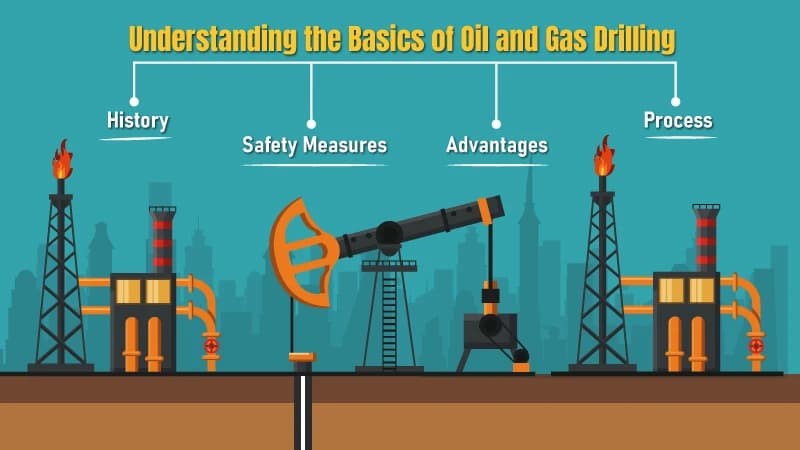
History of Oil and Gas Drilling
Below is the short timeline history of oil and gas drilling:
-
Ancient Era:
People in ancient times used natural gas seeps for lighting, medicine, and waterproofing. Countries like India, China, and Egypt were the foremost countries to use such natural gas seeps in that era.
-
347 AD:
Very first oil wells drilled in China. These early wells had a depth of around 240 meters. Chinese people used to drill a well with the bits connected to bamboo poles.
-
1800s Era:
Commercial drilling for oil and gas has started.
-
1847:
James Young, the Scottish Chemist, detected the seeping of natural petroleum in a coal mine. These natural seepings resulted in the formation of Kerosine. The arrival of kerosene quickly replaced whale oil.
-
1859:
The first practical oil well was drilled in Titusville, Pennsylvania, USA. Edwin Drake was credited for this. This practical well was the beginning of modern drilling for oil and gas.
-
1901:
Oil boom incident in Spindletop caused massive drilling demand for oil and gas. After this incident, drillers started drilling the oil and gas wells at extreme levels.
-
Late 90s:
Several modern drilling techniques, such as horizontal drilling and hydraulic fracturing, came into the drilling sector. These methods caused the improvement in drilling activities, extracting more oil and supporting the state's economic growth.
-
Early 20’s:
The combination of horizontal drilling and hydraulic fracturing sparked the Shale Revolution, expanding mineral exploration in shale plays and basins.
-
Present Day:
With the latest innovations in drilling practices, oil and gas exploration is thriving on a global level.
Different Types of Oil and Gas Drilling
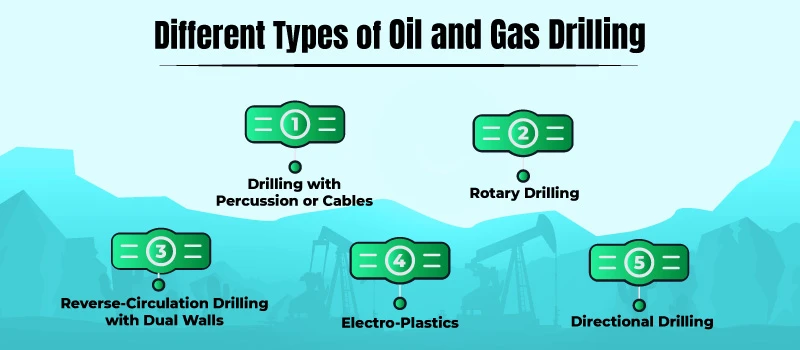
Oil and gas exploration uses several techniques and platforms for drilling. Various factors, such as geographical location, soil type, and formations, determine these methods. The following are five of the most frequently used drilling methods when extracting oil and gas:
Drilling with Percussion or Cables
In percussion drilling, a popular manual method with the help of a drilling rig, a long cable with a hammering bit attached is lowered into a large hole. The technique, sometimes called “cable drilling,” involves the driller supporting the tools with a tripod. Sand, silt, sandstone, and even gravel are unconsolidated, and consolidated formations are ideal for this drilling. About 25 meters can be reached with manual percussion.
Rotary Drilling
Companies frequently use rotary drilling techniques for production and exploratory wells at depths greater than five miles below the surface. This technique involves drilling low-depth wells on land using lightweight drills. Rotary mobile drills and various-sized floating drills are then used for exploratory wells.
Reverse Circulation Drilling with Dual Walls
Two concentric drill pipes are used in dual wall reverse circulation, a form of rotary drilling, to create a regulated flow. After pumping through an outer swivel to the bit’s bottom, drilling fluid ricochets upward and into the main pipe./p>
Electric Motors
With this approach, electric motors power rotary tables, winches, and similar devices, improving operational flexibility and opening the door to remote controlled drilling. These are more recent techniques for exploring oil and gas. Connecting the motor above the bit and below the hole gives the drill bit more direct power.
Directional Drilling
In actuality, rotary drilling is expanded upon by directional drilling. The drill is guided on a curved path by operators as the hole gets deeper. Oil explorers can access deposits with directional drilling that are inaccessible with vertical drilling. Drilling companies save money with this method because multiple wells can originate from a single platform. This also makes it possible to access submerged reservoirs without connecting and disconnecting sections using computers to direct the automated drilling equipment.
Process of Oil and Gas Drilling
-
Exploration:
The first phase of the process is called exploration, during which geologists and other industry professionals look for rock formations or locations where oil and gas are frequently found. Following selection, a site will be built and made ready for the drilling process.
-
Drilling:
The duration and specific methods of well drilling vary based on the employed techniques and equipment. An offshore well can be drilled in two to four weeks, but it can take longer.
While drilling for gas and oil has typically been done by drilling a vertical wellbore, the shale resource plays now require thousands of feet to be drilled horizontally in order to effectively produce the reserves.
Aside from the shale resource plays, there are several advantages to utilizing more modern technologies, such as the possibility of time savings, reduced operating expenses, and a reduced detrimental effect of drilling on land on the environment.
Innovative drilling techniques include complex paths, extended reach, and multilateral and horizontal drilling.
-
Testing and Casing:
A specially blended cement is pumped downhole to anchor and secure the casing strings, which are lowered and set into the wellbore.
-
Production:
It is well-known how to extract natural gas and conventional oil from wells and underground reservoirs.
-
Processing:
During processing, natural gas and oil are separated, with the former sent to processing facilities for the removal of non-hydrocarbon gasses and other impurities.
-
Storage:
To meet domestic and international demand, avoid supply shortages and disparities, and guarantee the safety of all employees and industry participants, products must be stored properly.
In contrast to above ground tanks, typically used to store refined, crude, and finished oil products, natural gasses are usually stored in underground areas like depleted reservoirs.
-
Transportation:
The transportation phase in the oil and gas industry is multifaceted and crucial. The process begins with extracting and transporting oil and gas to processing facilities. The transportation process might use existing pipelines, trucks, trains, or tankers.
The use of existing pipelines is the preferred and environmentally less impactful method of transportation. This reduces the potential negative environmental impact that a transportation accident might have on the environment.
It is distributed to enterprises and businesses domestically and internationally, and lastly, it is consumed by the general public or significant consumers.
-
Refining:
The refining process transforms crude hydrocarbons into a variety of refined petroleum products used for various applications. These products include kerosene, asphalt and road oils, transportation and power fuels, and raw materials for producing synthetic and plastic materials.
Oil refining also involves multiple processes depending on the desired final product. Units of distillation, cracking, coking, reforming, and post-treatment are frequently used in this process.
-
Distribution:
As the name implies, distribution is the last stage in the process, during which the completed petroleum products are moved and supplied to companies, governmental organizations, and the general public.
Safety Measures in Oil and Gas Drilling
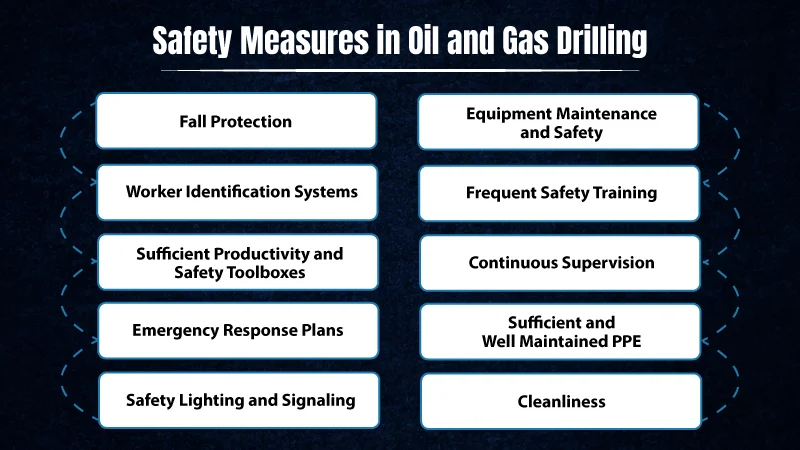
Although oil and gas drilling offers numerous benefits, workers, and industries must follow the following safety measures.
Fall Protection
It's not just about having the right equipment; it’s about regular drills and understanding the terrain. A noteworthy example is the adoption of enhanced fall protection measures after a close call on a rig in South Texas, where proactive safety training and terrain awareness prevented a serious accident.
Worker Identification Systems
Worker identification systems are also key, ensuring that every person on-site is known and accounted for, enhancing overall site safety.
Sufficient Productivity and Safety Toolboxes
Having the right tools on hand is crucial, but what does it really mean in an emergency? It means being able to act swiftly and effectively. A case in point occurred a few years ago on a rig off the coast, where quick access to specific tools prevented a minor issue from escalating into a significant problem. That’s why tool accessibility is not just a convenience; it’s a necessity.
Emergency Response Plans
This can mean the difference between property damage and death. To handle blowouts, have the appropriate equipment and training. Modern sensors are necessary to detect fires, gas leaks, and smoke to prevent explosions. Before these risks worsen, drilling operations need to be aware of them.
Safety Lighting and Signaling
Why are lighting and signage so important in drilling operations? It’s simple: they save lives. Effective lighting and clear signage prevent accidents by providing visibility and guidance, especially in complex drilling environments.
Equipment Maintenance and Safety
Regular maintenance and safety training might seem like standard producers, but they are much more. They are the backbone of operational safety. A well maintained piece of equipment or a well trained employee can be the difference between a normal day and a day marked by accidents and near misses.
Frequent Safety Training
Every drilling crew member needs to learn the value of safety. It covers handling equipment and materials, emergency evacuation protocols, and appropriate stance and gait (particularly on slick surfaces or heights).
Continuous Supervision
The significance of continuous supervision in drilling operations can not be overstated, given the inherent risks associated with such activities. The presence of experienced supervisors is fundamental in mitigating the possibility of human error, thereby enhancing overall safety.
Sufficient and Well Maintained PPE
In terms of personal protective equipment (PPE), its comprehensive application is non-negotiable for ensuring the safety of personnel. Essential gear such as goggles, gloves, hard hats, and specialized footwear is mandated, along with flame-resistant and waterproof clothing and adequate respiratory and auditory protection.
Cleanliness
Cleanliness and order on a rig might not grab headlines, but they are unsung heroes in maintaining safety. A clean and organized workspace reduces hazards and increases efficiency, something we have seen time and again in operations across nations.
Advantages of Oil and Gas Drilling
The oil and gas industry boosts a nation's economy in numerous ways. This industry centers mostly around oil and gas drilling, which supports economic development, creation of employment, and wealth.
Economic Development
The drilling and exploration at high potential areas support the state's economy through infrastructure, taxes, and employment opportunities etc. These increased levels of production due to drilling in high potential areas can lead to healthier economic development.
Energy Independence
The widespread mineral reserves provide an immense amount of oil and gas. The high amount of production minimizes the reliance on external energy sources, thereby improving energy security.
Revenue Creation
Oil and gas drilling creates significant revenue for the state government through various taxes, royalties and lease transactions. These amounts get utilized in multiple public services and infrastructure activities including transportation, education and healthcare.
Technological Advancements
There are various technologies that have arrived in drilling practices. Technologies like horizontal drilling, hydraulic fracturing, autonomous drilling, AI ML algorithms, and so on are transforming the landscape of drilling activity. These technologies are being adopted globally to obtain sustainable production while reducing environmental impact.
Employment Opportunities
The oil and gas drilling provides an employment opportunity for a wide range of individuals, involving geologists, engineers, technicians, and laborers. It also offers employment for software engineers to handle the AI ML algorithms. The industry's crucial job market helps individuals and maintain financial profitability in different communities.
Conclusion
Oil and gas drilling has evolved significantly over decades, from its submissive beginning in the 18th century to modern day innovative drilling techniques. Amongst other energy generation sectors, the energy generated by oil and gas is still prioritized worldwide.
Due to the latest oil and gas drilling methods like directional drilling along with the cutting edge technology, the mineral sector continues to meet the growing demands of the nation. Understanding current oil and gas production insights, drilling for oil and gas will continue to be the dominant process supporting economic growth regionally and globally in the coming years.
Mineral View offers all of the well data, especially of Texas, you could ever want—drilling permits, 24-hour test data, the total number of producing wells, operator details, lease numbers, and much more—all available with a single tap!