
Loading article
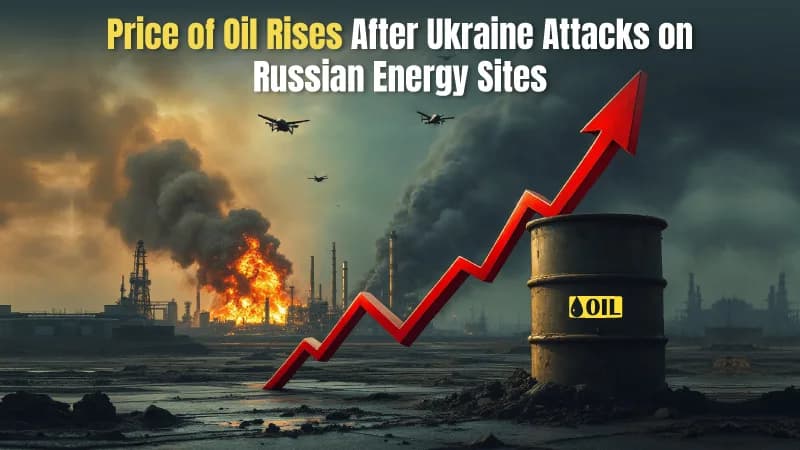
Price of Oil has seen an upward move as the global energy market has once again been shaken by geopolitical tensions. Over the past week, the price of oil has climbed after a series of Ukrainian drone strikes targeted Russian energy infrastructure. These attacks have sparked concerns about the stability of Russian oil exports and raised fresh questions about the security of global supply.
For investors and mineral owners, keeping track of such shifts is easier with reliable mineral data, which provides deeper insights into how global events impact energy markets and future opportunities
At the same time, optimism has grown in the financial markets as expectations of a U.S. interest rate cut have improved investor sentiment. Together, these two developments are creating a wave of renewed energy across the oil and gas sector. For investors and mineral owners, this moment presents both challenges and opportunities.
In this blog, we’ll break down what happened, how the price of oil today has reacted, and what the future could look like for the industry. We’ll also highlight why this may be a positive time for those who hold mineral rights or are invested in oil and gas projects.
On Sunday, Ukraine launched a powerful drone attack on Russian territory, hitting critical energy sites.
One strike forced a sharp fall in the capacity of a reactor at one of Russia’s largest nuclear power plants.
Another created a massive fire at the Ust-Luga fuel export terminal, a vital hub for Russia’s oil exports.
Meanwhile, Russia’s Novoshakhtinsk refinery — which produces around 100,000 barrels of fuel per day — continued to burn for four days straight following repeated drone strikes.
These incidents highlight how fragile Russian energy operations have become under continued attacks. With every new disruption, the world is reminded of how much global energy flows depend on the stability of Russia’s oil infrastructure.
For traders and investors, this adds a new layer of risk — and in markets, risk often translates into rising prices.
Early Monday trading reflected the growing concerns.
| Oil Benchmark | Latest Price | Change |
|---|---|---|
| Brent Crude | $67.76 | +$0.03 (0.04%) |
| WTI Crude | $63.73 | +$0.07 (0.11%) |
Even though the moves may look small in percentage terms, they carry strong symbolic weight. Any escalation in Ukraine that affects Russian exports is bound to support the price of crude oil today and keep markets on edge.
Why prices edged higher:
Russia’s refining and export facilities face new threats, limiting future oil flows.
Uncertainty in Europe feeds into higher barrel of oil price benchmarks.
The Federal Reserve hinted at a rate cut, which is good news for economic growth and energy demand.
While Ukraine ramps up its offensive, the U.S. has also stepped up its involvement.
Vice President JD Vance suggested that Russia has made “significant concessions” in peace talks, recognizing that a puppet regime in Kyiv is no longer realistic.
President Donald Trump, however, issued a stern warning, threatening new sanctions against Russia if peace negotiations stall within two weeks.
Sanctions are always a double-edged sword. They tighten pressure on Russia, but they also risk creating further constraints on oil supply. For global investors, this often means a firmer floor under the price of oil per barrel today.
One of the biggest market drivers last week came not from battlefields but from Washington. Federal Reserve Chair Jerome Powell signaled that an interest rate cut could be announced at the next central bank meeting.
Lower interest rates boost borrowing, investment, and consumer spending.
Stronger economic activity lifts fuel demand — from cars to planes to factories.
Higher demand supports a stronger price of oil over time.
For mineral owners and energy investors, this is an important signal. A growing economy paired with tighter supply is usually a recipe for profitable returns.
Here’s why this week’s events matter if you’re an investor or mineral rights owner:
Every disruption in Russian supply helps support stronger oil prices globally.
A more active economy means more oil consumption, creating upward pressure on the price of crude oil today.
If sanctions tighten, Russia will struggle to maintain exports, and this could benefit U.S. producers.
Higher oil prices mean better royalties for mineral rights owners.
Even though the world has seen rapid swings in the energy market over the past two years, the fundamentals remain supportive.
The war in Ukraine continues to create ripple effects.
Emerging economies and the push for industrial growth keep oil consumption steady.
U.S. shale producers and mineral owners are well-positioned to benefit from higher prices.
Uncertainty can be frightening to many investors. However, it frequently presents opportunities in the oil and gas industry. Here’s how:
Higher royalty checks for mineral owners when the price of oil today rises.
Energy stocks often benefit when the barrel of oil price strengthens.
Infrastructure investments (pipelines, storage, LNG) gain more value in times of high demand.
Quick Investor Tip Box
Track geopolitical news closely — it often moves oil markets faster than economic data.
Pay attention to what the Federal decides: Energy demand is directly impacted by monetary policy.
Consider the long term: Despite the growth of green energy, oil will continue to be essential for years to come.
Looking ahead, three important events could shape the price of oil in the coming weeks:
Peace Progress in Ukraine - Even if demand growth continues, oil prices may moderately decline.
Deeper Sanctions on Russia - Oil supply could tighten further, lifting the price of crude oil today.
Global Economic Recovery - A rate reduction would increase demand and provide additional support for the price of oil per barrel today.
Even though the headlines can seem concerning—drone strikes, fires, and sanctions —there is a bright side to the main picture for oil and gas investors.. Every disruption in Russian energy adds support to the global price of oil, and with economic growth showing signs of life, the demand picture looks brighter.
This can end up in increased royalties for owners of mineral rights. It is an indication of potential for investors in drilling projects, energy stocks, and associated businesses.
The road ahead will certainly have bumps, but in times like these, the energy market has historically rewarded those who stayed invested.
Oil prices are at around $63.7 per barrel for WTI crude and $67.8 per barrel for Brent crude as of August 25, 2025. These prices are bolstered by supply concerns stemming from Ukrainian attacks on Russian energy assets and anticipations of U.S. interest rate reduction that could increase demand worldwide.
Due to supply concerns resulting from Ukraine's attacks on Russian energy sites and a more optimistic forecast for global demand, the price of oil is rising today, with WTI trading close to $63.7 per barrel and Brent around $67.9 per barrel.

Informational only — not legal, tax, or investment advice.