
Loading article
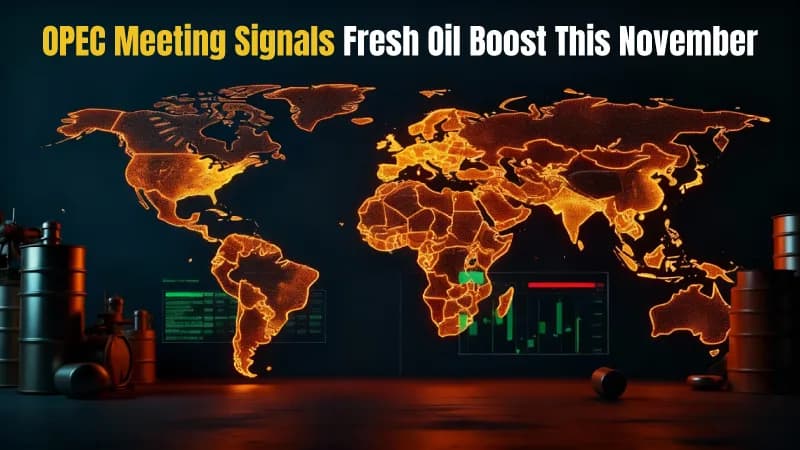
The world oil market is about to witness another big moment as OPEC + gears up to its next OPEC Meeting on October 5. According to the various people privy to the discussions, the group is expected to sanction an increment of at least 137,000 barrels per day (bpd) of output in November. This move was reached after months of changing strategic policy, escalating geopolitical tensions and growing need to secure energy markets.
This project demonstrates a promising future and strength of mineral rights owners and oil and gas investors in a market that has become turbulent since the beginning of the year 2023. A November OPEC Meeting will probably be a significant occurrence that could influence local royalty payouts as well as international supply networks, since the past and upcoming prices of oil have been steadily rising.
During its best, OPEC+ was attempting to maintain oil prices by removing around 5.85 million barrels per day from the world market. That reduction was structured in three layers:
Voluntary cuts by eight members: 2.2 million bpd
Additional member-specific cuts: 1.65 million bpd
Group-wide cuts: 2.0 million bpd (lasting until 2026)
Since April, however, OPEC+ has reversed course. It has already restored over 2.5 million bpd of supply, which amounts to 2.4% of the world's oil demand. The November increase under discussion will continue this gradual unwinding of cuts.
For investors, more production means:
Higher market share for OPEC+ producers
Greater liquidity in global energy trade
Crucial for stable revenue growth in upstream oil and gas projects
Oil prices keep increasing and decreasing in 2025. At the start of the year, crude traded aboveb $80 per barrel, only to dip into the $60-$70 range once production hikes began in April.
Yet, the latest activities are raising the oil prices again:
Ukrainian drone strikes on Russian refineries disrupted one of the world’s top energy exporters.
Traders expect higher seasonal demand heading into winter.
Supply discipline from non-OPEC producers has been weaker than expected.
On September 27, prices briefly surged past $70 per barrel, their highest level since early August. This rally the value of the forthcoming OPEC Meeting, which carries so much weight—depending on how strict the new quotas are, it may either maintain progress or reduce interest.
| Month | Average Price ($/bbl) | Key Drivers |
|---|---|---|
| January | $82 | Tight supply, winter demand |
| April | $68 | OPEC+ starts output hikes |
| July | $65 | Global slowdown concerns |
| September | $71 | Geopolitical tensions, Ukraine crisis |
Expected Output Increase:
At least 137,000 bpd for November (similar to October’s hike).
Meeting Format:
Online conference of eight core producers.
Policy Direction:
Gradual unwinding of earlier voluntary and member-specific cuts.
Long-Term Plan:
The third and largest group-wide cut of 2 million bpd remains in place until 2026.
This meeting agenda is designed to give OPEC+ flexibility while protecting oil prices from sudden oversupply shocks.
Energy analysts keep in mind that the increase in production has consistently fallen short of pledges. The reason is simple: most OPEC+ members are already pumping near maximum capacity.
Saudi Arabia and UAE are carrying much of the load, with the UAE receiving special approval earlier this year to boost output by 300,000 bpd between April and September.
Russia, under pressure from sanctions and infrastructure attacks, is struggling to keep pace.
Capacity constraints prevent African producers like Nigeria and Angola from rapidly scaling up.
Even with quota increases, actual production growth may be slower. These changes may help OPEC oil prices by preventing a supply glut while still signaling a market-friendly stance.
The November OPEC Meeting will be the headline event with real financial implications:
Effective entrances and exits are made possible by price fluctuations between $60 and $70 per barrel.
With breakeven costs averaging $40-$50, producers continue to generate strong margins.
Major oil companies have indicated confidence in sustaining shareholder payouts despite market ups and downs.
Higher production quotas mean more wells coming online, translating into potential royalty growth.
Stronger oil prices lift the appraised value of mineral assets.
Lease extensions and renewals may come with better terms as operators compete for acreage.
If oil prices stabilize above $70 while OPEC+ steadily increases supply, both investors and mineral owners benefit from higher cash flow and stronger asset valuations.
Despite worries about oversupply, OPEC+ has shown discipline in limiting the pace of output rises. The group guarantees the following by involving the little hikes of 137,000 bpd per month:
No sudden collapse in OPEC oil prices
Room for geopolitical disruptions to be absorbed
Investor confidence that the market will not spiral into a glut
For oil and gas markets, stability is usually more important than short-term price spikes. A predictable policy environment means companies can plan long-term investments with greater certainty.
November output hike also comes against a fall in worldwide uncertainties:
Saudi Arabia continues to balance its role as a market stabilizer while facing the problems of domestic energy diversification.
Washington has repeatedly pressured the group to prevent price increase, especially ahead of the U.S. election cycle.
With Russian supplies under threat, OPEC+ remains a crucial alternative supplier.
All of these factors make the OPEC Meeting a crucial occasion for both the oil markets and international geopolitics.
In the upcoming weeks, markets will closely track:
The exact quota numbers will be announced after October 5.
Compliance levels among other member states.
Geopolitical influence of disruptions, especially in Russia and the Middle East.
Seasonal demand trends as winter approaches.
With prices hovering near $70 and supply growth constrained, the balance of risks tilts toward upside potential for oil and gas investors.
The impending OPEC Meeting is not merely another meeting, it is an intentional move to alter the dynamics of the supply of oil in the world. OPEC+ demonstrates its belief in the rebirth of the demand and its desire to regain its market share by at least 137,000 barrels per day of production in November.
The consequences are favorable to investors and mineral owners: the stability of royalty, strong dividends, and a market architecture putting a long-term stability over a period of short-term pandemonium.
The trend is seemingly turning towards the side of those that are in the energy industry as the oil prices solidify at over 70. OPEC+ is balancing between supply and the price level in small steps, which may bring lucrative outcomes to the observers of the oil market.
Yes, OPEC+ announced gradual oil production increases in 2025. For November, the OPEC Meeting is expected to approve another hike of at least 137,000 barrels per day, continuing its plan to unwind earlier cuts.
The OPEC oil prediction suggests steady demand and moderate price support. OPEC expects global oil demand to rise through 2025, with OPEC oil prices staying mostly in the $60–$70 per barrel range.
No, instead of extending cuts, OPEC+ is adding supply. The group has already restored more than 2.5 million barrels per day since April and plans another increase of about 137,000 barrels per day for November.
OPEC is the Organization of the Petroleum Exporting Countries, working with allies like Russia as OPEC+. Recently, OPEC oil prices have moved between $60 and $70 per barrel, rising above $70 after supply disruptions and geopolitical tensions.
Informational only — not legal, tax, or investment advice.