
Loading article
The U.S. oil industry is showing strength through smart adjustments as the price of oil per barrel remains around $60. Instead of pushing for rapid growth, companies are now focused on stability, efficiency, and long-term planning.
This new direction is helping the industry stay strong during uncertain times and prepare for future opportunities. Many recent updates in crude oil news highlight how U.S. oil producers are using their experience to make careful, strategic decisions.
The current price of oil per barrel may not be at its highest, but that’s leading companies to become more efficient. By improving operations and reducing waste, oil producers are protecting their profits and preparing for future growth.
Here’s why the industry is in a good position:
U.S. companies are adjusting quickly to market changes. They are focusing on areas with lower costs and better returns.
Instead of rushing forward, producers are carefully watching economic trends and supply chain developments to make wise choices.
Having faced ups and downs before, companies are now stronger and better prepared to handle changing conditions.
The current global outlook has encouraged oil producers to think long term. This shift is helping the U.S. energy sector stay resilient.
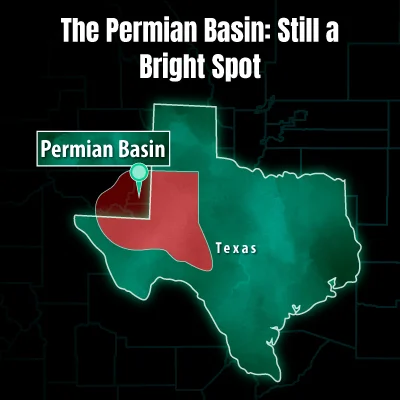
Among all U.S. shale basins, the Permian Basin continues to be a standout. It still has room to grow and remains the most active oil-producing region in the country.
While other basins like Bakken and Eagle Ford are steadying, the Permian’s strong performance offers hope and balance for U.S. output.
According to recent crude oil news, companies are carefully managing activity in the Permian to ensure steady returns rather than chasing short-term gains.
Top oil company leaders are sharing their confidence in the future:
Vicki Hollub, CEO of Occidental Petroleum (Oxy), believes that although growth is slower, the industry is moving in a smart direction. She says the Permian may still grow, just at a more sustainable pace.
Ryan Lance, CEO of ConocoPhillips, agrees that smart planning is key. He explained that companies are focused on managing their portfolios wisely, even with the price of oil per barrel at $60.
Diamondback Energy and Liberty Energy are both adjusting strategies to match today’s market, focusing on efficiency and long-term value.
This cautious but confident approach shows how strong leadership is guiding the oil sector through uncertain times with optimism.
Industry experts are now updating their forecasts to reflect steady progress instead of rapid growth. According to energy data firm Kpler, U.S. oil production is still rising—just more slowly.
Kpler slightly lowered its U.S. supply forecast by 120,000 to 170,000 barrels per day for 2025 and 2026, reflecting market conditions. But they also pointed out that this is not a drop, just a more realistic path forward.
The new goal is to keep output stable and healthy, rather than risking overproduction. Even if growth slows, the U.S. oil industry remains one of the most productive and flexible in the world.
Experts agree that U.S. oil production is heading toward a long, stable plateau. This means production levels may not increase quickly, but they will stay high for years.
At the same time, the U.S. Gulf of Mexico is expected to see more growth. Offshore oil platforms are set to add new barrels, helping keep national supply strong.
This mix of steady shale output and growing offshore production is great news for the U.S. energy outlook.
The phrase “Drill, Baby, Drill” once symbolized fast growth in U.S. oil. Today, the new motto is “Hold, Baby, Hold.” This updated message shows that the industry is choosing smart planning over risky expansion.
With the price of oil per barrel around $60, many companies are keeping a strong position by focusing on quality over quantity. They are investing in reliable fields, cutting extra costs, and avoiding unnecessary risks.
Top oil producers like ExxonMobil, Chevron, and ConocoPhillips are staying focused. They’re continuing business without panic, knowing that markets will eventually improve.
As ConocoPhillips CEO Ryan Lance wisely said, “Don’t overreact, but don’t put your head in the sand either.”
Even though the price of oil per barrel is not very high, it is still supporting a healthy industry. Most companies can continue operating profitably at $60 oil, and balance sheets across the sector are much stronger than during past downturns.
Prices like the WTI crude oil price and Brent oil price are closely watched by the industry. They help guide smart business decisions, and today’s levels still allow many firms to grow in key areas.
As long as demand stays steady and inflation is controlled, the current crude oil prices provide a solid base for continued investment and energy security.
Looking ahead, the U.S. oil industry has many reasons to stay positive:
Steady Output in Key Regions
Growth Potential in Offshore Areas
Smart Cost Management and Spending
Better Technology and Stronger Leadership
Even if we reach the peak of U.S. oil production sooner than expected, it won’t mean the end of progress. Instead, it marks the beginning of a smarter, more stable chapter in the U.S. energy story.
As the world moves through economic and geopolitical shifts, the U.S. oil sector is proving that strength doesn’t always mean growing fast—it can also mean growing right.
Today’s price of oil per barrel is shaping a more thoughtful and focused oil industry. Companies are showing resilience, making smart adjustments, and positioning themselves for future success.
While some regions have slowed down, the Permian Basin still has growth ahead. Offshore projects will support national supply, and expert leadership is guiding the industry with care and wisdom.
Recent crude oil news shows that the U.S. remains a major force in global energy. With a steady WTI crude oil price, a stable Brent oil price, and encouraging current crude oil prices, the future looks strong.
In today’s environment, “Hold, Baby, Hold” isn’t a sign of slowing down—it’s a sign of growing stronger the smart way.
Informational only — not legal, tax, or investment advice.