
Loading article
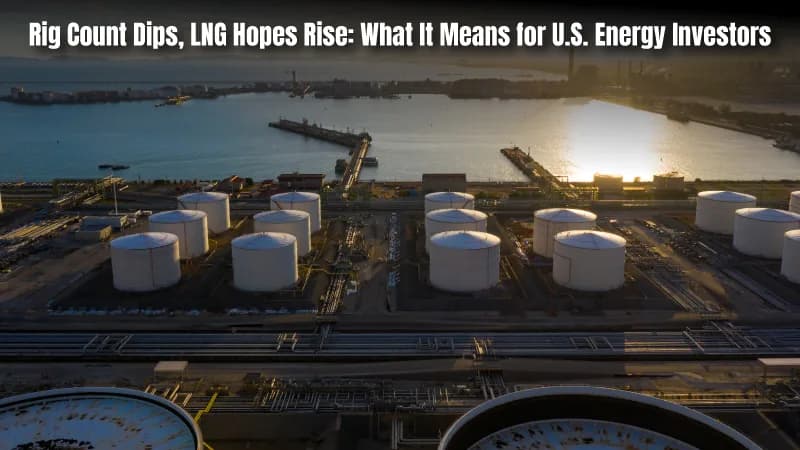
The U.S. oil and gas industry just saw two major updates this week. First, oil and gas drilling rigs across the country have dropped again. Second, the U.S. might be heading into a big LNG joint venture with Japan, which could open new export doors. For energy investors and mineral owners, these two updates are worth watching closely.
Let’s break down what’s happening and why these changes might actually bring good opportunities.
Every week, Baker Hughes puts out the U.S. rig count numbers. These numbers show how many drilling rigs are active in the country. The rig count helps us understand how busy oil and gas companies are. This week, the total rig count dropped by 2, marking the 12th drop in 13 weeks.
Here are the latest numbers:
Total Rigs: 542 (down from 544)
Oil Rigs: 415 (down by 3)
Gas Rigs: 122 (up by 1)
So yes, the rig count is down again. But it’s not all bad.
Several reasons:
Companies are being careful with spending.
Oil prices are not high enough for everyone to drill more.
Some areas have already been drilled a lot.
Firms are waiting to see what happens in the market.
Most of the recent drops happened in:
Texas
Alaska
Permian Basin (a major oil-producing area)
This might sound like a slowdown. But many companies are still drilling smarter and using fewer rigs to get more oil. This means productivity is up, even if the rig count is down.
For mineral owners: Even if fewer rigs are working, the wells that do get drilled can still bring strong royalty checks.
If you’re an oil and gas investor or own mineral rights, rig count numbers can help you understand what’s coming.
Short-term supply may tighten, helping prices later.
Companies may focus more on their best assets.
Efficiency tends to go up.
It can mean companies are bullish.
More drilling may lead to more production and income for mineral owners.
Right now, the drop in rig count is not scary. It just shows the industry is being careful. And being careful is smart in today’s uncertain world.
While rig counts are down, another big story is getting attention.
This week, former President Donald Trump said the U.S. and Japan are teaming up on a new LNG joint venture. It would focus on exporting natural gas from Alaska to Asian countries like Japan, India, and Thailand.
Trump says it’s a done deal.
Japanese energy firms (like JERA and Tokyo Gas) say talks are still ongoing.
Other buyers like India’s GAIL and Thailand’s PTT might join.
If it happens, this LNG joint venture could open huge new markets for American natural gas.
Alaska has a lot of gas but limited ways to export it.
This deal could build the pipelines and ports needed.
Asia is hungry for clean energy like LNG.
For Investors: Exporting gas means higher demand, and higher demand can mean higher returns.
Between rig count drops and talk of big export deals, it’s clear the U.S. energy strategy is shifting.
Here’s how:
| Trend | What It Means |
|---|---|
| Fewer rigs in use | More careful, efficient drilling |
| More gas demand from AI/data | New growth areas for natural gas |
| LNG joint ventures growing | Bigger global role for U.S. gas |
| Focus on best assets | Higher returns from top-performing wells |
While onshore rig counts are falling, offshore drilling is still moving forward.
This week, Beacon Offshore Energy began oil production from the Shenandoah field in the Gulf of Mexico.
It will ramp up to 100,000 barrels per day.
It shows that offshore areas still offer big opportunities.
Offshore wells cost more, but they often produce more too. For royalty owners with offshore interests, this is a good sign.
Some experts are concerned about recent regulatory rollbacks. These changes could affect pipeline safety and oversight.
For now, no major problems have been reported. But it’s something to watch if you invest in companies that build or run pipelines.
Fewer staff for inspections (PHMSA cuts)
Delays in safety rules for CO₂ and gas pipelines
Still, most big energy firms have strong safety teams and track records.
There’s growing demand for gas-fired electricity in the U.S., especially from:
AI data centers
Tech companies
New factories
This is leading to plans for over 120 new power plants across the country. Many will run on natural gas.
This means long-term demand for gas is strong, even if drilling slows down short-term.
If you’re an oil and gas investor or mineral rights owner, here’s what this week’s news means for you:
It’s dropping, but it’s not a disaster.
Companies are drilling smarter.
Less supply now can lead to better prices later.
If the U.S. and Japan move forward, exports could boom.
More demand means more drilling in the future.
Great for long-term investments in natural gas.
Offshore drilling is strong.
New markets are opening.
Gas demand is growing in the U.S. and abroad.
Staying informed and focused on long-term trends can help you make smart decisions.
Rig count fell again this week, but smarter drilling keeps production strong.
A new LNG joint venture with Japan could boost natural gas exports.
AI growth, offshore drilling, and Asian markets support long-term energy growth.
Mineral owners and investors should stay positive and look for quality over quantity.
Informational only — not legal, tax, or investment advice.