Picture a world free from traffic, noise, and the rush of office life, complemented by an excellent payment structure. Is it possible? Well, the answer is yes. This extraordinary life becomes a reality the moment you step onto an offshore oil rig.
Life on an offshore rig often delivers substantial benefits to the workers, offering the maximum possible payment structures and additional facilities. Such a lifestyle suits those who can manage isolation, harsh conditions, and potential risks in exchange for such a great life on an offshore oil rig. This article will guide you through the intricacies of life on an offshore oil rig.
Offshore oil rigs have a significant impact on the state's economy by providing employment and maximizing mineral output. In 2022, around 2.3% of gas and 14.6% of crude oil in the US have been produced by offshore drilling projects. Let's dive deeper!

Introduction to Offshore Oil Rig
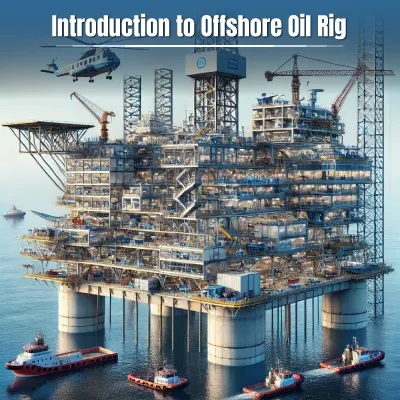
Offshore oil rigs, towering structures erected over water bodies, are designed to explore, extract, and process minerals from beneath the sea. They house all essential drilling equipment, power supplies, and a dedicated workforce. Offshore rigs primarily store minerals temporarily before they are transported to shore for refining and sale.
Most modern oil rigs feature accommodations and catering facilities for their crews. The offshore rig structure is similar to the onshore structure, yet it includes additional amenities such as Living Quarters, Risers, Heliports, and Cranes.
Living quarters are specially designed for workers to perform their tasks in comfortable surroundings. These quarters primarily feature spacious dining areas, clean bedrooms, office spaces, and recreation rooms. Adjacent to the living quarters, emergency escape boats are readily available.
Additionally, the rig is equipped with risers that extend from the mudline to the wellhead above the surface. Additionally, offshore oil rigs are equipped with heliports and cranes. Heliports, located at the rig's summit, facilitate helicopter landings. It is primarily used to transfer the large amount of minerals to the shore in minimal time as well as carry the workers in case of emergency.
Along with this, cranes on the offshore rigs are placed into service to move the equipment and materials from one location to another and shift the loads from one end of rig to another. Every imaginable amenity necessary for a comfortable life is present on these offshore rigs.
How is a Worker's Life on an Offshore Oil Rig?
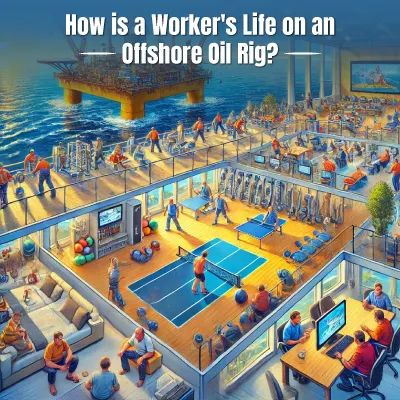
In the oil and gas industry, every worker benefits from several financial alternatives, such as a good salary, incentives, additional payments for extra working hours, and so on. Yet entering such a growing industry often makes it challenging for workers, especially in the offshore landscape.
As offshore drilling rigs are positioned over water bodies and require workers to remain at sea continuously, only a select few choose to pursue this line of work. Although Working in such an environment can seem like a daunting task, life on an offshore oil rig gives you all the essentials required to live a better life, similar to other working environments.
Below are all the crucial factors that help understand the life of a worker on an offshore oil rig.
-
Once workers enter into offshore oil rigs, the safety glasses, coveralls, steel-toed shoes and hard hats are provided to them on a prior basis.
-
Frequent safety training programmes are arranged before and during the employment period of the worker.
-
Typically, workers are assigned 8-12 hour shifts, which could either be during the day or night. They can get food breaks and other breaks during the shift.
-
Workers who complete two consecutive weeks of work are often granted nearly three weeks of leave.
-
Workers enjoy benefits like unlimited food and lodging, as rigs offer clean bedrooms with bunk beds and spacious dining and laundry facilities.
-
Oil rigs also cater to the recreational needs of workers, albeit with some variations. It consists of movie theaters, televisions per room, a wide gym and workout area, indoor sports facilities such as table tennis, and modern computers with high speed internet.
These are some of the major facilities and benefits that help attain a better life on an offshore oil rig. Yet, it presents some challenges for workers while working in such an environment.
Workers are at risk of drowning accidents without proper safety measures. Any sudden equipment failure or fire incident may damage some portion of the rig structure, ultimately affecting workers' safety. Moreover, due to consistent working in water areas, workers may feel a lack of oxygen and fresh air.
To overcome these issues, precautions should be taken. The digital equipment can be installed to reduce fire accidents and explosions. Additionally, extra oxygen cylinders can be provided on the rigs. It will help spend a better day for workers on an offshore oil rig.
A Day of a Worker on an Offshore Oil Rig
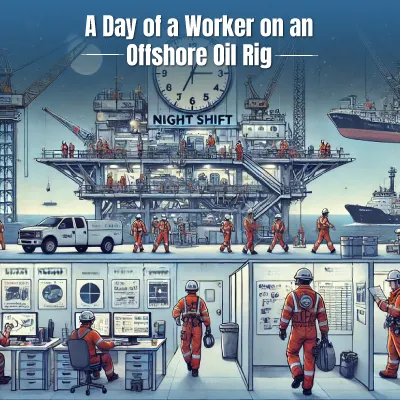
Workers on oil rigs must adhere to assigned shift schedules. The work shifts are assigned to the workers based on their arrival timings which may be 8 hours or 12 hours shifts. Shift lengths, ranging from 8 to 16 hours, also depend on the workers' specialties.
Occasionally, the discovery of significant mineral reservoirs might require workers to extend their shifts to maximize extraction in a shorter period.
A majority of the workers are scheduled for the night shift. Below are the typical night shift timings that illustrate a day in the life of an offshore oil rig worker. These timings are followed in most offshore oil rigs, yet they are not the exact timings and may vary according to work volume and company to company. Beginning at midnight, the work is done around the clock.
-
11:30 PM:
Waking up and making arrangements for the shift.
-
12:00 AM:
Instructions are provided, and major meal 1.
-
02:00 AM:
Break 1 is provided.
-
04:00 AM:
Break 2 is provided.
-
06:00 AM:
Offered major meal 2.
-
08:00 AM:
Time is provided for personalized activity.
-
10:00 AM:
Break 3 is provided.
-
12:00 PM:
Break 4 is provided.
-
02:00 PM:
Offered major meal 3.
-
03:30 PM:
Break 5, the last shift break, is provided.
-
04:00 PM:
Preparation to be done for the next day. A light snack is offered, and workers go to sleep.
Salary and Payment Structure of a Worker on an Offshore Oil Rig
When individuals choose to work in offshore oil and gas activities, they are rewarded with attractive payment packages and additional incentives. The salary and payment structure for offshore oil rig workers are based on their roles and the outcomes of mineral extraction, production, and sales.
If any worker, especially those who have significant expertise and experience, decides to work in an offshore area, they become eligible to earn $1500 to $2500 per day with above mentioned facilities on offshore rigs. In case the exploration exceeds and workers perform their tasks for extra hours, now they are able to earn the additional amount except basic salary and payment structure.
Most offshore oil rigs issue payments to workers on either a daily or weekly basis. Along with workers ‘Service Hands’ also work in offshore rigs. Service hands are employed by oil and gas service companies that operate on offshore rigs.
The Service Hands comprise roles such as Chefs, Galley Hands, Janitorial Staff, Cementers, Directional Drillers, Mud Loggers, and more. These service hands can get the payment of $50K to $150k annually.
Every worker who diligently and effectively performs their tasks can secure the best possible salary and payment structure that can help improve their financial outlook. Along with salary, workers on offshore rigs get immense safety as the rig follows effective oil rig management safety strategies for workers.
Effective Oil Rig Management: Safety Strategies for Workers
As offshore rigs offer several facilities and benefits to the workers, it also focuses on effective oil rig management safety strategies for workers. It makes life on an offshore oil rig smoother for a worker. Below are some major safety strategies followed by oil rigs.
-
Carrying out frequent maintenance of the machinery and equipment to prevent accidents.
-
Implementing a proactive inspection schedule for oil rigs to safeguard against structural damage.
-
Preparing emergency response plans and initiatives to ensure the rig’s safety
-
Arranging maximum training programs for workers to gain experts in the field and respected working areas
-
Implementing the latest technologies and innovations to enhance safety and improve production outcomes.
Conclusion
Life on an offshore oil rig demonstrates the unique and challenging landscape for workers, offering multiple benefits. Workers on offshore oil rigs benefit from strong financial support, excellent accommodation facilities, and immense safety measures, all while offering significant contributions to the growth of the state's economy through mineral extraction and production.
Regardless of some challenges and concerns, living a life on an offshore oil rig delivers lucrative benefits to the workers, along with a maximum payment structure and timely salary. Spending a day on an offshore oil rig delves into an extraordinary lifestyle for a worker.
The integration of advanced technology, modern amenities, and rigorous safety protocols makes offshore rigs a highly appealing and challenging workplace for those pursuing careers in offshore drilling.
FAQ’s
What is Life Like on an Offshore Oil Rig?
Life on offshore oil rigs means benefiting from incentives, enjoying spacious and clean living quarters, having access to food and entertainment facilities, and more. Yet it also includes risks of accidents and longer working hours.
What are the Living Conditions on an Offshore Oil Rig?
Offshore oil rig offers better living conditions to the worker. The living quarters include bedrooms with bunk beds, locker space and a desk. The latest offshore rigs also offer television facilities in bed rooms, gymnasium area and movie theater.
How Long Do People Live on Offshore Oil rigs?
The workers generally live for several weeks or months at a time on offshore rigs. In case of maximum mineral extraction, the living period may extend.