Over the years, this reservoir has subtly helped numerous exploration projects . Often overshadowed by its better-known neighbors like the Eagle Ford Shale, this play has a plethora of unexplored resources, offering enormous prospects for innovative extraction techniques and profitable discoveries.
This shale play is stepping out of the shadows and showing itself to be a hidden gem for companies ready to believe in its potential as the industry changes with new tactics and technologies.
Introduction to Austin Chalk
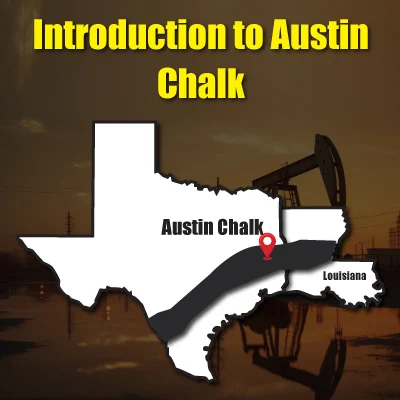
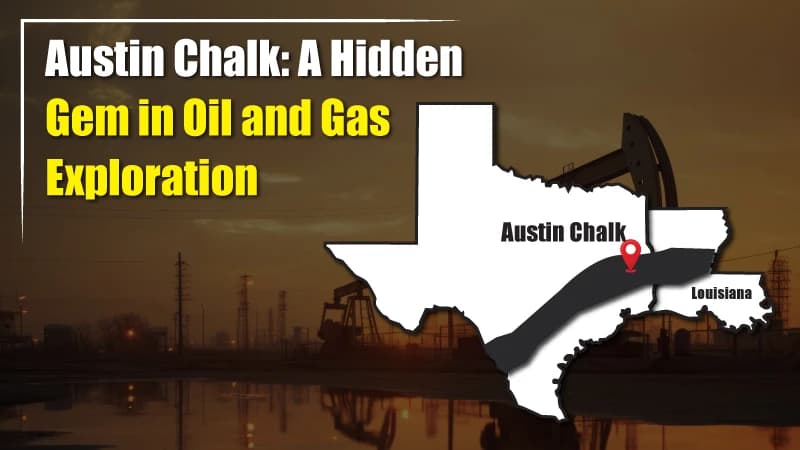
An upper Cretaceous geologic formation called the Austin Chalk is located along the US Gulf Coast. The type section outcrops close to Austin, Texas, inspired the name. Chalk and marl formed the formation. This formation has been known for being complicated play in the past. The play moves from South Texas through East Texas and finally into Central Louisiana in a crescent pattern.
It is a cross between an unconventional carbonate matrix reservoir and a traditional fractured carbonate reservoir. Even though the chalk's properties are generally consistent throughout the play, there is a great deal of variation in its thickness and depth, leading to a variety of manufacturing techniques. This reservoir comprises potential mineral reserves and has a strong historical background.
History of Austin Chalk
Oil and gas extraction in this formation has an extensive history, dating back to the early 1900s. First founded in the 1920s, it went through several boom phases.
In 1950, there marked the beginning of the Austin Chalk's significant production when vertical wells tapped into its cracks. The constant production continued in the play until the 1960s. It was then hydraulically fractured for the first time in 1973, which led to a significant increase in production during the 1980s and 1990s. Up until the underlying Eagle Ford Shale became the industry’s primary choice, this level of activity persisted.
For the decade that followed, the majority within the sector believed that the formation had reached its limit. Yet, new technologies and increased awareness of the play generated fresh enthusiasm. In spite of this, producers are now seeing returns from this shale play that are comparable to those from the Bakken, Eagle Ford, and Permian Basin. This reservoir is identified for its rich geology and fossils.
Fossils and Geology of Austin Chalk
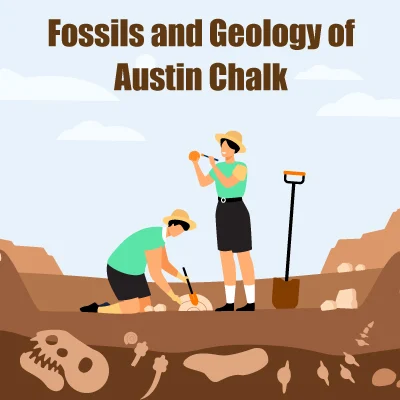
This play is a potential site for the Alleged Galloanserae Bird Austinornis Lentus. The Austin limestone is marine in origin, mainly made up of tiny shell fragments from floating sea organisms called "Coccolithophores" (the same organisms that contributed to the White Cliffs of Dover, on the south coast of England).
This explains why dinosaurs are generally absent from the area. However, larger animals like inoceramus clams, ammonite cephalopods, and massive marine vertebrates like the predaceous fish Xiphactinus will occasionally be found fossilized in the play.
The fossiliferous, interbedded, recrystallized chalks and marls are found in the shale play’s rocks. Its exposures are primarily discovered in stream beds, roadcuts, and quarries where water has eroded the soil. Dallas is home to these outcrops, which stretch south beneath I-35 into Austin and San Antonio.
The formation contains layers of volcanic ash, and dates derived from radioactive materials in these ash layers suggest that the wind carried the ash from far-off erupting volcanoes around 86 million years ago. These eruptions took place in the modern south central region of Texas, along a belt of undersea volcanoes that stretches 250 miles long and 50 miles wide. This belt of volcanoes correlates with the trend of the Balcones Fault Zone and is known as the Balcones volcanic province.
Remains of these ancient volcanoes are only evident in a few places, as most were buried by the Austin and Taylor Group and now are in the subsurface. There is a correlation between the Laramide orogeny and the presence of this volcanism during the deposition of this play.
In order for the Austin Chalk to deposit and for the maximum extent of the Cretaceous Interior Seaway to occur, sea level had to rise. The formation was deposited at a depth of about 250 meters, or 820 feet, in water that was ideal for coccolith deposition. Currently, more than 15 counties come under this play, and its geology captivates several operators to explore within it.
Various Operators and Counties in Austin Chalk
List of Operators:
| Operators | |
|---|---|
| EOG Resources | Marathon Oil |
| ConocoPhillips | Devon Energy |
| B M Energy, Inc. | Enervest Operating, L.L.C. |
| Everest Resource Company | Impetro Operating LLC |
| Tex-Lee Operating Company | Texas Onshore Energy, Inc. |
List of Counties:
| Counties | |||
|---|---|---|---|
| Atascosa County | Austin County | Bastrop County | Brazos County |
| Burleson County | Colorado County | Dewitt County | Dimmit County |
| Fayette County | Frio County | Gonzales County | Grimes County |
| Guadalupe County | Jasper County | Karnes County | La salle County |
| Lee County | Live oak County | Maverick County | McMullen County |
| Milam County | Newton County | Polk County | Robertson County |
| Tyler County | Washington County | Webb County | Wilson County |
| Zavala County | |||
Understanding the Mineral Rights in Austin Chalk
Mineral rights in this shale play provide owners the authority to extract or lease underground resources like oil and gas. These resources are abundant in this formation, which stretches from Texas to Louisiana, making these rights essential. However, while understanding the mineral rights in this region, the following factors should be kept in mind:
Factors of Valuation
-
In South Texas, particularly in areas like the Austin formation, the value of mineral rights is highly dependent on a number of variables. Because it directly affects the output and possible revenue from these mineral assets, the timing of drilling activities is critical. Furthermore, market trends are a crucial factor to take into account because the value is greatly impacted by the fluctuations in the prices of gas and oil.
-
Although advanced drilling techniques allow for access to deeper resources, they also bring along higher costs, which can affect the overall value of these rights. It is imperative for all those participating in the South Texas mining sector to comprehend these dynamics.
Impact of Market Fluctuations
-
Fluctuations in the market have had a big impact on the mineral rights and royalties industry, especially when they are caused by international events like the COVID-19 pandemic or the Ukraine-Russia War. The value of these assets significantly dropped during this time, mostly due to a decline in the demand for gas and oil.
-
Market swings show how sensitive mineral and royalty interests can be to broader economic and international factors. This highlights the importance of staying informed and adaptable in this ever-changing industry landscape.
The Highlight of the Region: Eagle Ford Shale and Austin Chalk
-
The rich Eagle Ford Shale royalties in Texas and Austin Chalk production demonstrate the region's mineral and royalty value. These regions are important targets for future investment and expansion since development possibilities there have a significant impact on the valuation of mineral and royalty interests.
Owners' Strategic Considerations
-
It is important for individuals with mineral and royalty interests in this area to know where their assets stand in terms of development currently. In Texas, owners should think about strategies like selling oil royalties or negotiating mineral rights, especially in light of the constantly shifting market circumstances.
If you are willing to engage in the mineral rights of this formation, you must go through the above factors thoroughly. This will help you receive maximum return on your investment. According to mineral experts, the region still holds potential oil and gas reserves, helping investors to benefit in the future.
Austin Chalk’s Future Overview
The future overview of reservoirs in the USA appears promising, driven by technological advancements and increasing interest from major operators. The formation, which spans Texas and Louisiana, has a significant contribution of horizontal drilling and hydraulic fracturing technologies that allow for better access to its naturally fractured reservoir.
The following are important elements that will influence shale play’s future:

Innovation in Technology
Improved well completion methods, geomechanical modeling, and new 3D seismic data are enabling more accurate identification of potential spots and production optimization. Operators like SM Energy and Treadstone Energy employ these technologies to save costs and boost production.
Increasing Operations
Exploration and production have increased dramatically, particularly in areas like Texas's Karnes County , which borders the rich Eagle Ford Shale. An additional benefit that lowers operating costs for the formation is its closeness to the Gulf Coast and its pre-existing infrastructure.
Targeting Efficiency and Sustainability
With a better understanding of the geology of the reservoir, operators are concentrating on extracting resources as efficiently as possible while limiting their impact on the environment. Using proppants to increase well performance is another common recovery approach.
Economics of Competition
The play’s competitive production returns have made it a compelling play. Because of some wells' quick payback times, operators are more likely to be interested in them.
Unrealized Potential
Thanks to the discovery of additional cracks and improved understanding of the matrix porosity of the formation, there is still untapped potential in places that were previously thought to be exhausted.
Comprising such aspects, operators are likely to continue developing this formation in the upcoming years as they improve extraction methods, making it a profitable and feasible component of the US shale landscape.
Geological unpredictability and the formation's complexity, however, will continue to present difficulties. Yet, the play has the potential to greatly increase US oil and gas output with continued innovation.
Conclusion
Once overshadowed by other similar formations, the Austin Chalk formation is becoming more and more of a viable participant in the oil and gas development game. Major operators are becoming more interested in it due to its untapped potential, extensive production history, complex geology, and new developments in extraction methods.
The Austin Chalk is expected to play a bigger role in the energy industry as long as companies keep updating their drilling methods and making the most of their resources.
Interesting Facts about Austin Chalk
Located on the US Gulf Coast, the Austin Chalk yields both gas and oil. Since the 1920s, it has been a focus of intensive exploration, yielding 1.28 billion barrels of oil and 6.27 trillion cubic feet of gas. In Louisiana, it produced 57 wells.
84.7 MMcfd of gas flowed from Austin chalk perforations in UPR's 1 Eberle well. Additionally, UPR is the owner of the 1 Neumann Unit, which has been generating at a rate of 48 MMcfd since 1996.
Horizontal drilling and hydraulic fracturing methods have enabled the identification and emphasis on porous periods in the reservoir.
According to estimations from the U.S. Geological Survey (USGS), there are 41.5 trillion cubic feet of natural gas and 6.9 billion barrels of oil in the Austin Chalk.