
Loading article
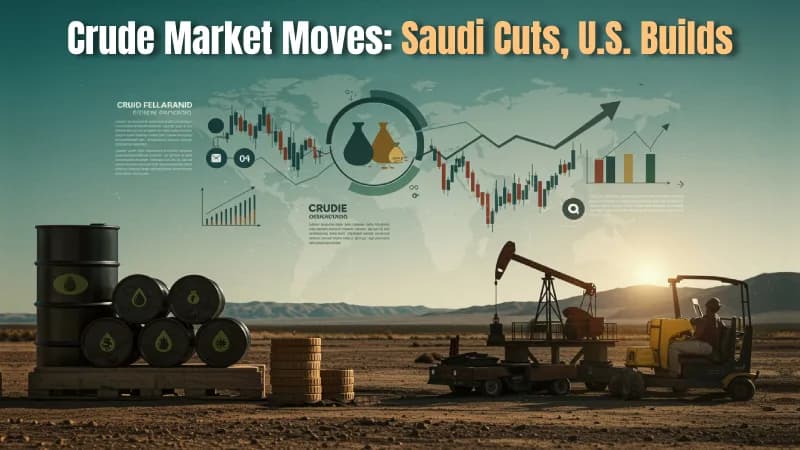
Oil prices saw a small dip recently, but there's still a lot of good news for mineral owners and oil and gas investors. While global markets are adjusting to changing demand and supply, there are many signs that smart investing in the energy sector can still bring strong returns.
Let’s break it down in the simplest way.
U.S. gasoline and diesel stockpiles went up more than expected.
Saudi Arabia lowered its oil prices for buyers in Asia.
Even with this slight drop, the overall market still offers many opportunities.
Brent crude went down 14 cents (0.2%), now around $64.72 a barrel.
WTI crude oil price dropped 24 cents (0.4%) to $62.61 a barrel.
These changes aren’t huge but do reflect current global market trends.
There are a few reasons why crude oil prices dropped this week:
More gasoline and diesel in storage means that demand was slightly weaker in the U.S., the world's biggest oil user. This usually puts a little pressure on prices.
However, for mineral owners, this can be a good sign that supplies are being adjusted, which often leads to more balanced markets over time.
The latest Saudi Arabia news showed that the country reduced its oil prices for July deliveries to Asian buyers. The price is now near a four-year low. This might seem like bad news, but there’s a bright side.
Lower Saudi prices often encourage more purchases, which could boost oil trade volumes and eventually support price recovery. For investors, this could lead to stronger activity in the months ahead.
OPEC+, the group of oil-producing countries including Saudi Arabia and Russia, decided over the weekend to increase production by 411,000 barrels per day for July.
The goal? To keep the market in check, and ensure that countries that overproduce are kept in line.
This move is part of a larger plan. As Reuters reported, the leaders of the group want to:
Keep control over global supply.
Regain market share from other producers.
Set fair prices that help both suppliers and buyers.
For oil and gas investors, these decisions often lead to price stability over the long term, which makes investments less risky.
Experts believe these small price drops don't mean long-term problems. For example, ANZ analysts mentioned that even though the Saudi price cut was smaller than expected, it still signals some softness in demand.
However, they also pointed out we are now entering a time when oil use is at its peak – summer travel, industrial activities, and shipping usually go up during this season. This can lift the crude oil price again soon.
Besides oil supply and demand, the global economy plays a big role in setting oil prices. Here’s what else is affecting the energy market:
The U.S. services sector shrank for the first time in nearly a year in May. Also, businesses are paying more for materials and services. This could lead to slower growth and inflation.
But for mineral owners, this might not be all bad. Why?
Slower U.S. growth might cause the government to keep interest rates low.
Lower rates often push investors to look for better returns elsewhere—like energy.
So even in a slower economy, energy investments may still shine.
U.S. President Donald Trump said it’s hard to make a deal with China’s President Xi Jinping. That made some traders cautious. Still, many are hopeful about upcoming phone talks between the two leaders.
If the U.S. and China do agree on trade, global business will likely get a boost—and that’s good news for oil demand and the crude oil price.
Meanwhile, Canada is preparing to respond to new U.S. metal tariffs, and the European Union said its trade talks are moving forward.
All this activity shows one thing: Countries are actively trying to protect and grow their economies, which often leads to increased energy use—and that's a win for the oil and gas industry.
If you own mineral rights, here's why you should stay positive:
Even if crude oil prices go up and down short-term, long-term production plans often stay steady. If companies keep drilling and producing, you could earn more money from your land.
Even with small drops, the world still needs oil. Planes, ships, trucks, and factories all use it. This strong demand supports a healthy market for mineral rights holders.
Even with global uncertainty, many investors see oil and gas as a solid choice. That keeps money flowing into the sector and supports ongoing exploration and production.
Here’s why people investing in oil and gas should feel confident:
By keeping overproducers in check and slowly increasing output, OPEC+ is helping to avoid a flood of cheap oil. This keeps the crude oil price from falling too far and protects investor returns.
As seen in the Saudi Arabia news, lower oil prices may make countries buy more. This could support oil prices later in the year.
Summer usually means more driving and more fuel use. That’s great for both wti crude oil price and Brent prices, which in turn benefit all parts of the oil market.
Despite near-term economic worries, energy needs are still rising in many parts of the world. As developing countries grow, their fuel needs increase—and so does demand for oil.
This growing need helps support the crude oil price over time.
Yes, the market is facing short-term bumps. Stockpiles are up, and Saudi Arabia has made some price cuts. But the full picture still looks promising, especially if you:
Own mineral rights
Invest in oil and gas
Want long-term growth
The crude oil price might have dipped a little this week, but with demand expected to rise and smart moves by global oil producers, there's still plenty of room for optimism.
For investors, these shifts are not red flags—they're signs to watch the market closely, find good opportunities, and make smart moves.
For mineral owners, this is a reminder that your land holds value, and the long game still looks bright.
Informational only — not legal, tax, or investment advice.