Oil Field
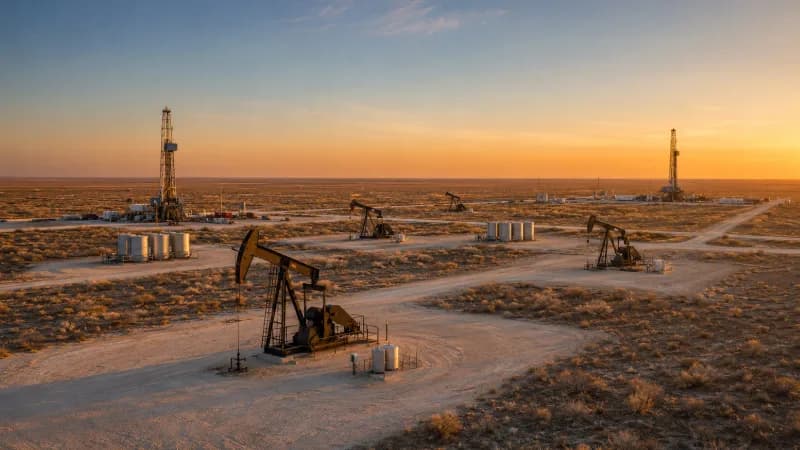
An oil field is a defined geographic area where multiple wells produce oil or gas from the same underground reservoir. The Railroad Commission of Texas formally designates each oil field by name and assigns specific rules that govern how wells in that field can be drilled, spaced, and produced.
If your minerals sit inside a designated oil field, your land is part of a regulated, mapped, and monitored production area. That designation typically affects how your lease is structured, how soon drilling may reach your property, and how predictable your royalty income is likely to be.
What This Means for Mineral Owners
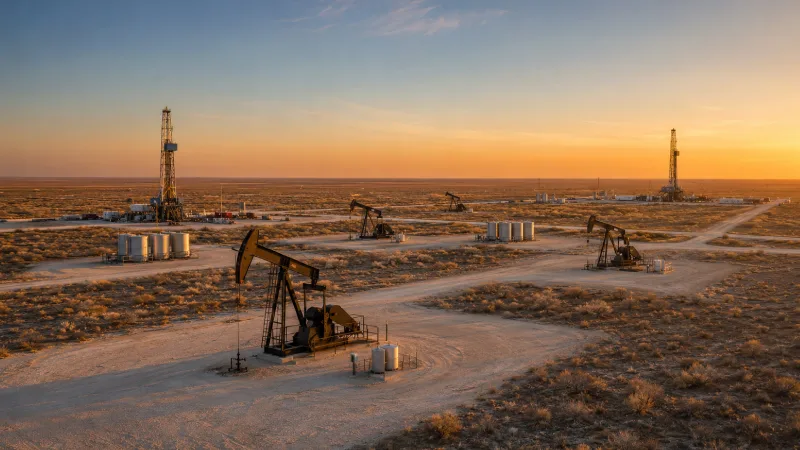
Three things change when your minerals sit inside a designated oil field.
- Documented production history: your land carries evidence from nearby wells, which usually translates into higher lease bonus offers and more competitive royalty rates.
- More predictable drilling activity: operators have already mapped the reservoir, so development typically follows patterns rather than long-shot exploration timelines.
- Steadier royalty income: production volumes from nearby wells in the same field give you a realistic baseline for what to expect from your own lease.
If your minerals sit outside any designated field, that does not mean they are worthless. It means the area has not yet been proven, and offers will reflect that risk.
What Makes a Group of Wells an "Oil Field"
An oil field is not simply a place where one well happened to find oil. The term has a specific meaning in Texas, where the Railroad Commission of Texas designates fields based on geological and production criteria.
The process typically begins with a discovery well: a single well that successfully produces from a previously untapped reservoir. Once the discovery is confirmed, the operator drills appraisal wells around the discovery to determine how far the reservoir extends. When enough wells confirm a continuous producing zone, the Railroad Commission of Texas formally designates the area as an oil field, gas field, or combined field, depending on what the wells produce.
Each designated field is assigned a name (often after the original discovery well or the closest town) and a unique identifier in Railroad Commission records. From that point forward, every new well drilled into that reservoir is filed under the field's designation, and the operator is bound by the field rules that govern spacing, density, and production limits.
Key point for mineral owners
The field designation is the regulatory boundary that defines your land's production context. It is the answer to the question: what reservoir does my land sit over, and what is being produced from it?
How Texas Designates and Regulates Oil Fields
The Railroad Commission of Texas is the state regulator that establishes field designations and field rules. Understanding how the RRC handles fields helps you understand what to expect when wells appear on or near your land.
Field designation
Once a discovery is confirmed, the RRC assigns the field a name and creates an official field designation. The designation includes the producing reservoir (for example, "Wolfcamp" or "Spraberry"), the geographic extent, and the type of hydrocarbon (oil, gas, or both).
Field rules
Each field has rules that govern how operators can develop it. These rules typically cover well spacing (how close wells can be drilled to each other), density (how many wells are allowed per acre), allowables (how much each well can produce per month), and pooling (whether and how multiple tracts can be combined for production).
Production reporting
Every oil well in a designated field reports its monthly production to the RRC, and those reports become part of the public record. This is the same data that flows into Mineral View's Lease Report, giving you a window into what the wells around your property are producing.
Being inside a designated field means your land is part of a publicly documented production system. You can look up the field, see which operators are active, and check production trends without needing to ask anyone's permission.
How Oil Field Designations Affect Your Mineral Rights
Field designation is one of the most direct factors in determining the value and behavior of your mineral interest.
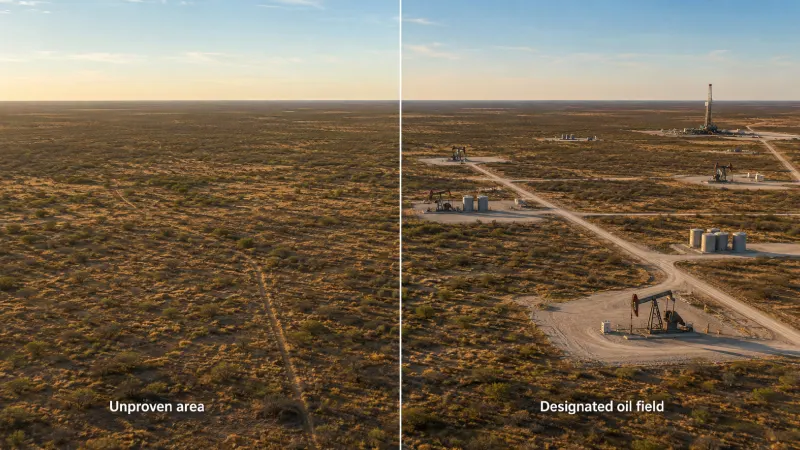
Lease bonus offers tend to be higher in proven fields
Operators are willing to pay more upfront when they know the field's geology, average production rates, and decline patterns. A property inside a producing field in the Permian Basin will typically command a higher per-acre bonus than an equivalent property in an unproven area.
Royalty rates are often more favorable
In active fields with strong competition for acreage, mineral owners can usually negotiate higher royalty fractions. In undeveloped areas, operators have less incentive to compete and may offer the minimum royalty.
Drilling activity is more predictable
Once a field is producing, operators tend to drill in patterns dictated by the field rules and reservoir geometry. Knowing that your tract sits inside a producing field gives you a reasonable expectation that drilling will reach your property within a defined timeframe, rather than being a long-shot exploration play. Mineral View's Lease Activity tool shows current permit and completion activity for leases you have claimed.
Production decline patterns are documented
Nearby wells in the same field have known decline curves. This means your future royalty income can be modeled with reasonable accuracy. Mineral View's MVestimate uses this data to project six-year royalty income for properties inside producing fields, giving you a data-backed forecast rather than a guess.
Famous Texas Oil Fields and What They Teach Mineral Owners
Texas has been home to several oil fields whose history offers practical lessons for mineral owners today.
Spindletop (Beaumont, 1901)
The discovery well at Spindletop launched the modern Texas petroleum industry. For mineral owners, Spindletop's lesson is that a single discovery well can transform the value of every nearby tract overnight. Mineral interests near Spindletop went from agricultural land to industrial real estate in months.
East Texas Oil Field (Kilgore, 1930)
Discovered by Columbus Marion "Dad" Joiner, the East Texas Oil Field became one of the largest conventional reservoirs ever found in the Lower 48. Decades of production have shown that large fields can sustain royalty income across multiple generations of mineral owners, though individual wells decline. For owners with inherited interests in long-producing fields, the historical record is the best guide to what continued income may look like.
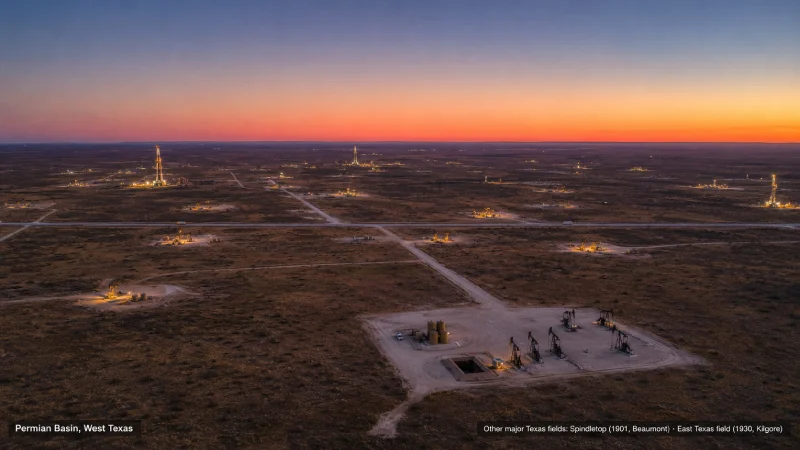
The Permian Basin (West Texas)
Not a single field but a collection of stacked plays including the Wolfcamp, Spraberry, and Bone Spring. The Permian's lesson is that modern horizontal drilling and well completion technology can revive fields that were once considered mature, opening new production from rock that vertical wells could not economically reach. Mineral owners in the Permian often find that interests once considered depleted become productive again under new technology.
The pattern across all three examples
Field designations evolve over time. A field that looks mature today may produce again under different technology, and a field that looks promising may underperform expectations. The lesson: monitor current production rather than rely on historical reputation alone.
A Real-World Scenario
Example: Margaret's Wolfcamp acreage in Reeves County
Margaret inherited mineral rights in Reeves County, Texas, from her grandfather. The 80-acre tract had been in the family since the 1940s but produced no income through the 1990s and 2000s. The Railroad Commission of Texas had designated the area as part of the Wolfcamp field, but no horizontal wells had been drilled near her tract.
In 2022, an operator approached Margaret with a lease offer. Because the property sat inside the designated Wolfcamp field with nearby wells producing approximately 600 barrels of oil per day on average, the operator offered Margaret $4,500 per net mineral acre with a 25 percent royalty rate. Without the field designation and nearby production history, that same property might have drawn a $500 to $1,000 per-acre offer with a 20 percent royalty.
The first horizontal well on Margaret's lease was completed in late 2023. Her royalty checks during the first year of production averaged around $2,800 per month, in line with what nearby completions in the same field had been producing.
The lesson: the field designation did not put oil in the ground, but it established the framework that made Margaret's mineral interest valuable, predictable, and ultimately income-producing.
What to Check
Confirm whether your land is inside a designated field
The Railroad Commission of Texas maintains public records of every field designation, including geographic boundaries. Your county appraisal district or a landman can identify whether your tract sits inside a designated field and which one. Mineral View's Lease Report shows the field designation for claimed leases alongside production data.
Look at production from nearby wells in the same field
The strongest indicator of what your minerals may produce is what wells in the same field on similar geology are currently producing. Comparing your lease's production (or expected production) against the field average gives you a realistic baseline.
Understand the field rules that apply to your tract
Field rules govern how close wells can be drilled to each other and how many wells can be drilled per section of acreage. These rules directly affect when and how operators can develop your property. Your lease should reflect the applicable field rules, and any new lease should be reviewed in light of them.
Important
Mineral View can help you understand field designations, production context, and operator activity for your minerals. For questions about how a specific field designation affects your lease terms, royalty calculation, or title situation, review the documents with a qualified landman or Texas oil and gas attorney.
Common Questions
You can find out by checking Railroad Commission of Texas records, asking your county appraisal district, or having a landman do a brief title and field review. If you have a Mineral View account and claim your lease, the Lease Report shows the field designation for your property. Note that being inside a designated field does not by itself mean there is a well on your tract; it means your land sits over the same reservoir as nearby producing wells.
No. Field designation tells you the geology is proven, but operators still decide when and where to drill based on economics, lease obligations, and operational priorities. A property in an active field with high drilling intensity is more likely to see development than one in a field where activity has slowed.
Field rules govern spacing and allowables, which determine how many wells can be drilled per acre and how much each well can produce per month. More wells per acre typically means faster development of your property and more total royalty income over the field's life. Allowables can also cap monthly production, smoothing royalty income over a longer period rather than concentrating it in the first months after a well is completed.