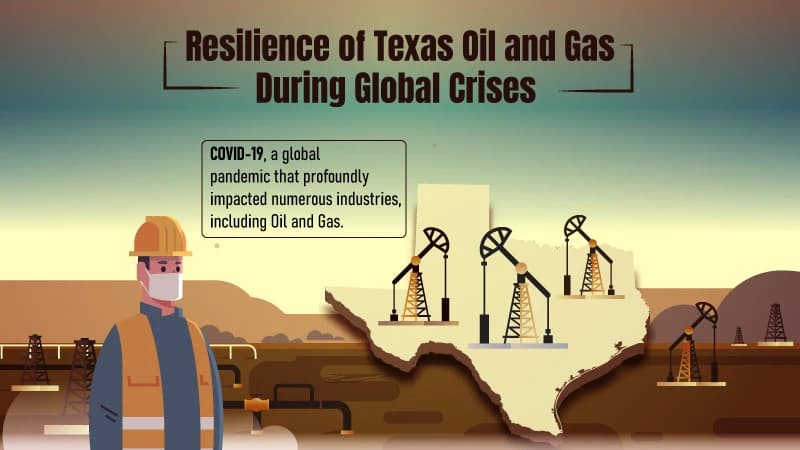
If you're reading this, you've navigated through COVID-19, a global pandemic that profoundly impacted numerous industries, including healthcare. But how did this pandemic affect the Texas oil and gas sector? Clearly, the impact was significant. The pandemic led to disruptions in oil and gas supply chains, subsequently driving up energy prices. Additionally, it’s important to remember how the 2014 oil price crash affected Texas producers, with oversupply and falling demand compounding their challenges.
To survive, companies slashed expenses, laid off employees, and scaled back production. Yet, Texas has managed to maintain the state of its economy. This article will assist you with the resilience of Texas oil and gas during such global crises and what additional actions the state may take to overcome them.
Texas oil and gas sectors have shown outstanding resilience in the face of global crises like COVID-19 and hurricanes. This resilience has highlighted their robustness and adaptability in the face of adversity. Texas's oil and gas sector has faced many challenges since the early oil discoveries. Nevertheless, today's advancements have transformed the overall way of the industry. First, let's explore how technologies influence oil and gas resilience.
The Role of Technology and Innovation in Enhancing Resilience of Texas Oil and Gas
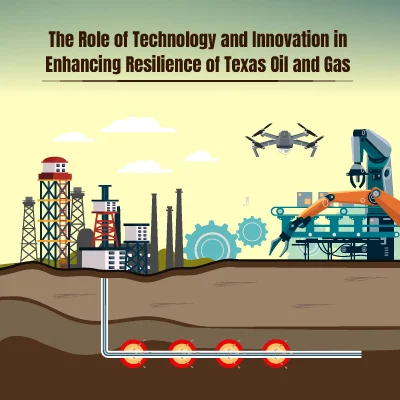
We are all aware of the Spindletop discovery and the subsequent oil boom. Since then, the Texas oil and gas sector has continued to flourish. Several factors contributed to achieving such a rigorous growth of this sector. Amongst them all, technology and innovation brought a new era of enhanced operations in the Texas oil and gas industry. Technologies like horizontal drilling and hydraulic fracturing added to their attempts to secure and enhance drilling activities.
In the early 21st century, the shale revolution began. It's a remarkable outcome of combining horizontal drilling with hydraulic fracturing. Moreover, seismic imaging technology and the deployment of AI (Artificial Intelligence) and ML (Machine Learning) algorithms have transformed operations from drilling to production. Technology and innovation have taken the oil and gas industry towards better economic development.
Technology and innovations play a crucial role in revolutionizing the Texas oil and gas sector. Here are some factors that underline the role of implementing technology and innovations in the oil and gas sector.
Lower Upfront Costs
Rapid Operations
Enhanced Operational Efficiency
Reducing Carbon Footprints
-
Reducing costs by focusing drilling efforts in high-potential areas only
Reduced Environmental Concerns
Minimized Carbon Emission
Enhanced Safety for Workers
Secured Pipeline Operations
Rapid Fault Detection
The above factors indicate how technology and innovation played a vital role in enhancing the resilience of Texas oil and gas.
Economic Impacts and Recovery Strategies for Texas Oil & Gas:
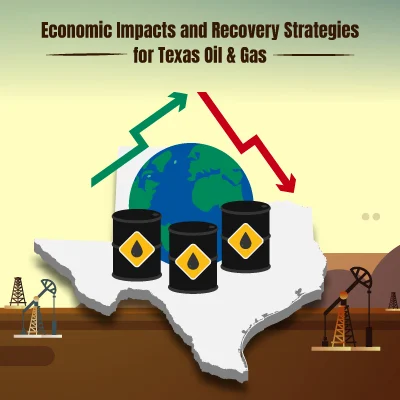
The oil and gas industry in Texas is considered one of the high-producing industries. However, in some cases, due to global crises, political scenarios and conflicts may have positive as well as few passive impacts on the economy.
Recently, in January, the Biden administration made a significant decision. They announced a hold on pending approvals of Liquefied Natural Gas (LNG) exports to non-FTA countries until the energy department can enhance the underlying analyses for these authorizations. This delay could impact LNG production until additional approvals are granted. It may cause some economic impacts on the Texas oil and gas industry.
Here are some positive and few passive economic impacts on the Texas oil and gas sector, along with recovery strategies.
Positive Economic Impacts
According to the latest data from the Texas Oil and Gas Association (TXOGA), the Texas oil and gas industry paid a staggering amount of $26.3 billion in state royalties, as well as municipal and state taxes. This was documented for the fiscal year 2023. This sum has highlighted the vital role of such funds in Texas' economy.
This figure surpasses the previous record by approximately $1.5 billion. Such enhanced value made TXOGA president Todd Staples organize a press conference to discuss. They hosted this conference to present the Association's Annual Energy and Economic Impact Report. They also shared the latest updates on policy preferences, worldwide energy leadership of the industry, and the progress of the environment.
| 2023 | 26.3 billion | State’s Local taxes and royalties |
|---|
Texas oil and gas pipelines also bolster economic growth. The latest study conducted by the Texas Tech University’s Center for Energy Commerce, and sponsored by the Texas Pipeline Association, has been released. That study reveals that Texas' midstream sector has contributed over $60.5 billion to the state's economic growth. This was recorded in the year 2022.
The study estimates that with current projects and construction in 2022 alone, the Texas oil and gas pipeline industry provided the following economic benefits.
| Additional Gross State Product | $34 billion |
|---|---|
| Local and State Government Revenues | $3.6 billion |
| Employment Opportunities | 234,000 |
| Property Tax Revenues per mile of Pipeline | $12,250 |
The study also informs the midstream sector will continue to enhance. Over the next 40 years, it is anticipated that the pipeline industry will secure significant economic benefits:
| Economic Output | $1.86 trillion |
|---|---|
| Additional Gross State Product | $1.05 trillion |
| Local and State Government Revenues | $110.34 billion |
| Employment Opportunities | 525,000 |
| Property Tax Revenues per mile of Pipeline | $37,700 |
Passive Economic Impacts
-
Occasionally, oil spills occur. This is often due to accidents or human errors. Such spills are responsible for the wastage of oil. It may affect the economy.
-
In some cases, the aged workforce fails to perform tasks such as managing data, monitoring drilling activities, etc., in oil and gas plants. It may impact production, ultimately affecting economic output.
Recovery Strategies:
-
Implement Enhanced Oil Recovery (EOR) techniques to maximize oil extraction.
-
To utilize oil spill prevention methods to reduce accidental costs.
-
Implementing cutting-edge technologies to minimize human intervention where possible.
-
To educate communities about the economic impact of the oil and gas industry.
Though the Texas oil and gas industry holds passive economic impacts, we should also focus on its positive impacts on the economy. The oil and gas sectors are a crucial part of the nation’s real economy. Its growth directly influences several important factors like job prospects, its degree of progress, its ecological environment, and the industry infrastructure.
While oil spills and labor issues might have subtle economic impacts, the Texas oil and gas sector remains dedicated to finding recovery solutions and achieving favorable financial outcomes.
Sustainable Development for Oil and Gas Infrastructure from Risk, Reliability, and Resilience Perspectives
The oil and gas industry is transforming the overall economic landscape of Texas. Although considering some environmental factors, risk, reliability, and resilience perspectives, the oil experts should focus on sustainable development for oil and gas infrastructure. It will be an environmentally friendly option.
In March 2023 the research paper on the topic “Sustainable Development for Oil and Gas Infrastructure from Risk, Reliability, and Resilience Perspective” was published. The paper was authored by Yasir Mahmood, Tanzina Afrin, Ying Huang, and Nita Yodo. This paper indicates the new perspective towards sustainable development in the oil and gas sector. It inspects the oil and gas sector from 3R’s (Risk, Reliability and Resilience) approach.
This paper talks about these 3Rs of oil and gas to deliver:
-
The continued supply of oil and gas without any interruptions.
-
Providing consumers with competitive oil and gas prices.
Reducing environmental concerns.
Better environmental footprints.
Sustainability in the oil and gas sector refers to the good practices of available resources’ management, various technologies, and investments to optimize and monitor operations. It targets secure, efficient, environmentally friendly, and reliable operations. It also emphasizes social awareness.
Sustainable oil and gas development initiatives include:
Enhanced Legislation.
-
Develop systems to observe the state, environment, and pollution levels.
-
Generate uniform and safety measures for ensuring greener production of oil and gas.
In times of crisis, with support from government initiatives, Texas' oil and gas sector prioritizes maintaining supply, competitive pricing, and environmental commitment.
Geopolitical Factors and the Resilience of Texas Oil and Gas
The oil and gas industry is widespread in Texas. It is a bit of a complicated sector integrated with global circumstances. This industry often faces challenges such as geopolitical and strategic economic factors. The geopolitical factors can affect the resilience of oil and gas in both positive and negative ways. Here are some major considerations.
Positive Influence:
-
National Energy Independence:
Events in geopolitics could emphasize the significance of energy independence for both Texas and, ultimately, the United States. For Texas oil and gas, this can indicate a bigger boost to production at home.
-
Global Disturbance:
Some significant oil-producing regions like the Middle East may cause a disturbance in supply chains. Such disruptions can lead to increased oil prices globally. The eventual price increase may be beneficial to Texas oil producers. Making their oil more competitive is one way to do this.
Negative Impacts:
-
Price Volatility:
Geopolitical swings may generate frequent rises and falls in oil prices. Such volatility may distract from the development and investment plans in Texas's oil and gas sector.
-
Geopolitical Sanctions:
Occasionally, sanctions are imposed on major oil-producing nations. These sanctions on oil production may generate uncertainty. It may also result in limitation for accessing the market for Texas oil
These are some of the key geopolitical factors that can influence the resilience of Texas oil and gas in positive and negative ways. The ability of the oil and gas sector to adapt, leverage, and innovate its infrastructure will be pivotal for holding its prolonged resilience.
The recently published report of Deloitte states the oil and gas industry in the US is anticipated to have a great beginning in 2024. It is due to its financial status and increased oil prices. However, this evolving financial scenario could boost expectations among stakeholders, investors, and regulators.
Conclusion
The Texas oil and gas sector transformed the overall outlook of the economy. With integrating technology and innovations, the resilience of the Texas oil and gas industry has been enhanced throughout the nation.
When we look at such an ingrown sector, the Biden administration released an announcement in September 2023. They will permit oil companies to lease some parts of the Gulf of Mexico for drilling purposes over the upcoming five years. They plan to allow drilling undertakings in three new areas between the current year 2024 and the upcoming year 2029.
Regardless of some concerns, for instance, geopolitical factors, shifts in policy, and others, stathe te’s oil and gas sector maintains its leading position in the stability and rapid growth. By adopting the sustainable development of oil and gas infrastructure, the Texas oil and gas industry will continue to thrive in the evolving energy landscape in the forthcoming years.
MineralView.com offers the most recent and valuable data about the Texas oil and gas industry, ranging from counties to well data and operators to drilling permits. You can access each detail at your leisure in standard or customizable formats, benefiting several companies, professionals, and so on.
FAQ's
Why is the Oil Industry Important to Texas?
Due to its significant production and contribution to the economy, the oil industry became essential to Texas. It holds around 1.37 million jobs in Texas.
Why is Texas having an Energy Crisis?
The electricity demand has broken records. It is due to the population of the state continuing to increase, causing a rapid transformation in its energy mix. Due to such conditions, Texas may have an energy crisis.
Why is Texas the Energy Capital of the World?
Texas is the US’s leading producer of oil and gas and renewable energy. It produces 42% of crude oil and 27% of marketed natural gas. Such production positively impacts the economy and becomes the energy capital of the world.