Rule of Capture
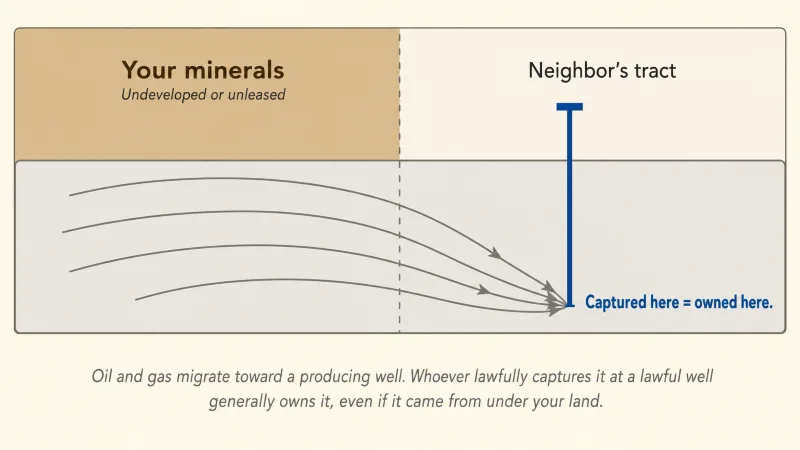
The Rule of Capture is a Texas oil and gas doctrine that generally allows a person or operator with the legal right to drill and produce from a lawful well to own the oil or gas captured at that well, even if some of it migrated from beneath a neighboring tract.
As oil and gas flow naturally toward low-pressure wellbores, ownership is determined by who legally pumps it to the surface, meaning landowners generally cannot sue a neighbor for draining their minerals.
What This Means for Mineral Owners
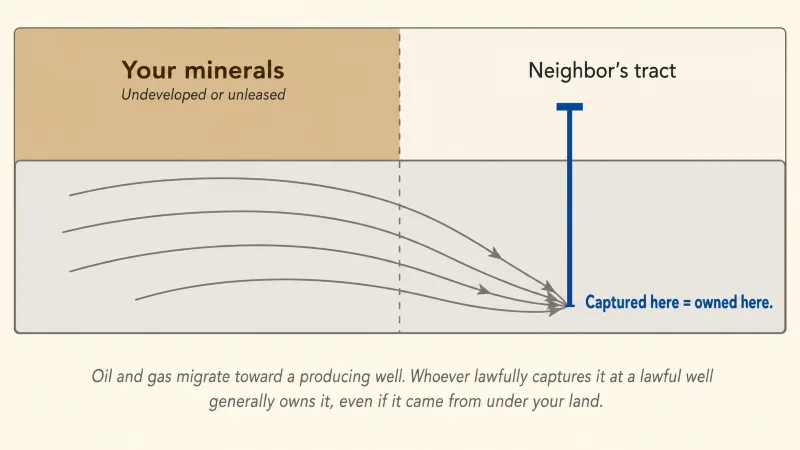
The rule of capture can feel surprising, and even unfair, the first time an owner encounters it. You may own the minerals beneath your land, but because oil and gas can migrate underground, ownership of the produced hydrocarbons is determined by who lawfully brings them to the surface. If a neighbor drills a lawful well that pulls oil or gas from beneath your property, that production generally belongs to the party that lawfully captured it, and you usually have no direct claim for the drainage itself.
The practical lesson is not to panic but to act. The rule of capture is exactly why leasing, pooling, and development matter so much. Your protection against ordinary lawful drainage is rarely a lawsuit. It is making sure your own minerals are being developed or validly pooled so you can share in production rather than watching nearby development happen without your interest included.
Two Things to Keep in Mind
- Under the rule of capture, oil and gas lawfully drained to a neighbor's well generally belongs to the producer, and you typically cannot recover for that drainage alone.
- Your real protections are having your minerals developed or validly pooled, along with spacing and correlative-rights rules that limit how harshly the rule can apply.
How the Rule of Capture Works
Oil and gas are often described as fugitive resources, meaning they can migrate underground toward areas of lower pressure, such as a producing well. When a well produces, it can pull in oil and gas from a wide area, including from under neighboring tracts. The rule of capture says that whoever lawfully produces those hydrocarbons from a lawful well generally owns them, even if they migrated from beneath another tract.
The traditional remedy is to capture your own share
Historically, an owner's protection against drainage was self-help: drill a lawful offset well or have one drilled to capture production from the owner's own tract before a neighbor captured it. For most mineral owners today, who lease rather than drill themselves, the practical protection is making sure an operator is developing your minerals or that your minerals are validly pooled into a producing unit.
The rule has limits
The rule of capture is broad but not unlimited. It does not protect waste, regulatory violations, or production through a wellbore that physically trespasses beneath your land, such as an improperly deviated well. Regulation by the state also limits its harshest effects, which is where correlative rights come in.
What the Rule Does Not Allow
The rule of capture protects ordinary lawful drainage, but it does not give a neighbor or operator the right to produce oil or gas in any manner they choose. It does not allow a wellbore to physically cross under your land without proper rights, excuse waste, or override Railroad Commission rules, lease terms, pooling limits, or other legal requirements.
For mineral owners, the key distinction is simple: lawful drainage is one thing; trespass, regulatory violations, or lease problems are separate legal issues that should be reviewed by a qualified Texas oil and gas attorney.
Rule of Capture vs. Correlative Rights
The rule of capture does not stand alone. It is balanced by a second doctrine that protects owners.
Rule of capture
You generally own oil and gas lawfully produced from your well, even if some migrated from a neighbor's tract.
Correlative rights
The counterbalancing principle that each owner over a common reservoir should have a fair opportunity to produce a fair share, and that production should not be conducted wastefully or in a way that unfairly harms another owner's opportunity to produce.
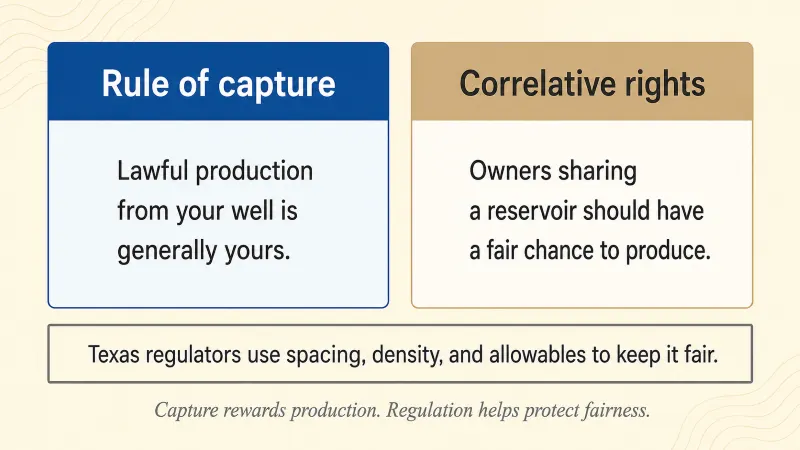
To protect correlative rights and prevent waste, the Railroad Commission of Texas regulates how wells are spaced, how densely an area can be drilled, and how much wells may produce. Together, the rule of capture rewards production while correlative rights and regulation keep it from becoming a free-for-all.
Why the Rule of Capture Matters to You
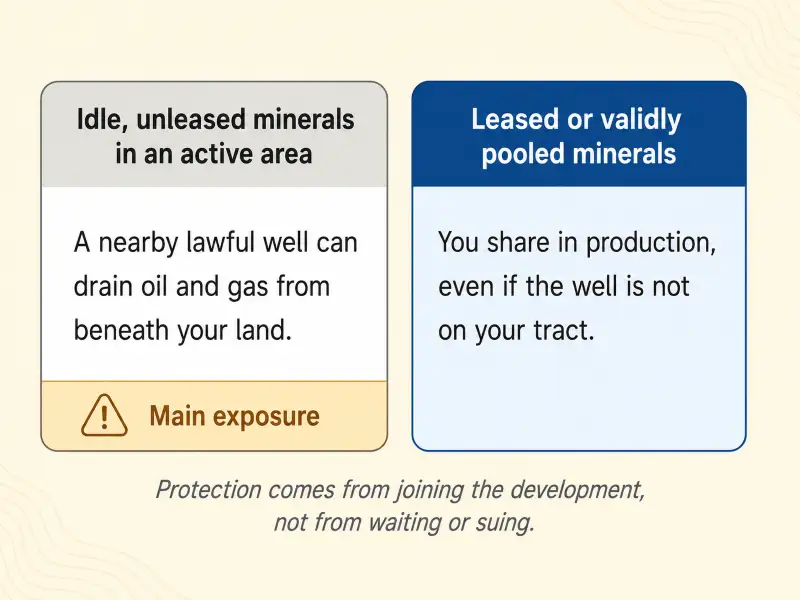
The rule of capture creates a real drainage risk for owners who hold idle minerals in an active area, because a neighboring well can lawfully draw oil and gas from beneath unleased land without owing compensation for the drainage itself. The practical takeaway is that protection comes from being part of the development, not from waiting.
Leasing your minerals puts an operator in charge of developing them and competing for the production around them. Valid pooling combines tracts into a unit so that included owners share in the unit's production according to their interest, which reduces the drainage concern even when the well is not on their tract. The state's spacing and correlative-rights rules add a further layer by giving each owner a fair opportunity to produce a fair share.
For owners trying to gauge their exposure, Mineral View's Map shows nearby drilling and activity, which helps you assess in practical terms whether your minerals may be facing drainage and whether leasing or pooling has become urgent.
What to Check
Watch for drilling near undeveloped or unleased minerals
The rule of capture matters most when you hold idle minerals in an active area. Keeping an eye on drilling near your minerals tells you when drainage could become a real concern and when leasing or pooling becomes urgent. Mineral View's Lease Activity tracks permits and filings near your minerals, which helps you notice nearby development as it starts.
Understand whether pooling protects you
If your minerals are validly pooled into a producing unit, you generally share in the unit's production according to your interest, even if the well is not located on your tract. If they are not, you may be more exposed. Knowing your pooling situation tells you how protected you actually are.
Do not assume you can sue over drainage
The rule of capture generally bars recovery for oil and gas a neighbor lawfully produces from a lawful well, even if it migrated from beneath your land. The remedies that matter are practical ones like leasing and pooling, not litigation. If you believe drainage involves something improper, such as a trespassing well, that is a specific legal question for an attorney.
Important
Mineral View can help you see nearby wells, permits, and activity around your minerals. Because the rule of capture, correlative rights, pooling, and any drainage remedy are legal matters that turn on your specific facts, consult a qualified Texas oil and gas attorney before relying on or acting against the rule of capture. This page is general education, not legal advice.
Common Questions
In general, yes. Under the rule of capture, a neighbor whose well produces oil and gas that has migrated from beneath your property usually owns that production, because ownership is established by capturing the resource at a lawful well. This is one of the more surprising features of oil and gas law for new mineral owners.
Generally not for the drainage itself. The rule of capture typically prevents recovery for oil and gas a neighbor lawfully produces, even if it came from under your land. Your protections are usually practical, such as leasing and pooling, rather than a lawsuit. Improper conduct, such as a well that physically trespasses under your land, is a different and fact-specific matter for an attorney.
The main protections are leasing your minerals so an operator develops them, and having them pooled into a producing unit so you share in nearby production. The state's spacing and correlative-rights rules also help by giving owners a fair chance to produce their share. The key is to be part of the development rather than holding idle minerals in an active area.
No. The rule of capture generally protects lawful drainage, not physical trespass. A neighbor may benefit from oil or gas that migrates to a lawful well on their tract, lease, or pooled unit. But if a wellbore physically crosses under your land without the proper rights, that is a different legal issue and should be reviewed by a qualified oil and gas attorney.
Pooling can reduce drainage concerns when your minerals are validly included in the producing unit. If you are pooled, you generally share in production according to your unit interest, even if the well is not located directly on your tract. If your minerals are not leased, not pooled, or not included in the producing unit, nearby drilling may create a greater drainage concern.
Start by checking whether your minerals are leased, whether they are included in any pooled unit, and how close the nearby wells are to your tract. The rule of capture usually makes it hard to recover money after ordinary lawful drainage has occurred, so the practical step is to understand your leasing, pooling, and development options before more production happens nearby.