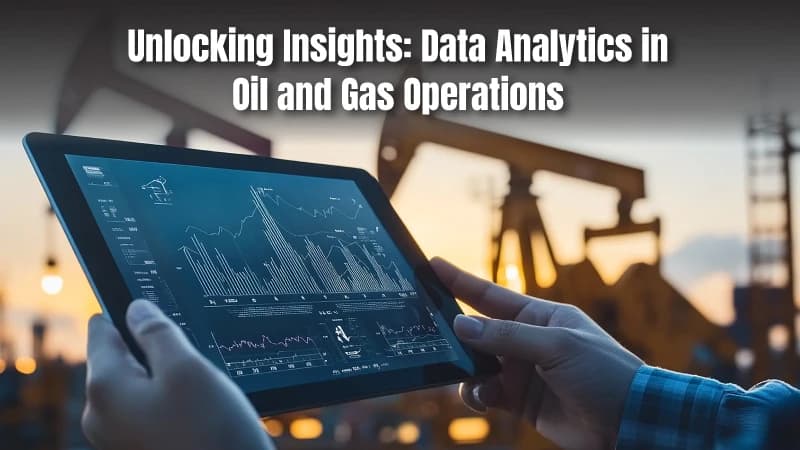
Digital technologies have dramatically changed industries, and oil and gas operations are no exception. The large amount of information collected from exploration, drilling, production, and logistics has expanded rapidly over the past decade. Yet, the real breakthrough is not just the amount but the insight data analysis now brings to the forefront of decision-making and new ideas.
Data analysis uses powerful math tools, statistics, and industry-specific knowledge to pull out useful information. The effects on work efficiency, safety, and profits can be huge.
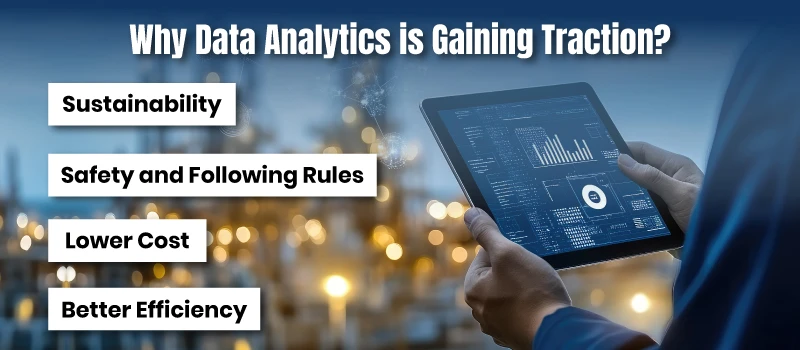
Why Data Analytics is Gaining Traction?
Changing and hard-to-predict markets push oil and gas companies to operate smarter. Data analysis offers a competitive advantage by showing problems early, finding risks sooner, and opening doors for steady progress.
Key drivers include:
Better Efficiency:
Analytics improves workflows from exploration through later operations, cutting waste and saving resources.
Lower Cost:
Smart forecasting helps cut downtime, guide maintenance, and manage supplies better.
Safety and Following Rules:
Real-time monitoring strengthens hazard detection and ensures following safety rules.
Sustainability:
Improved data helps support clean energy goals and track emissions.
Companies are putting more money into advanced analytics not just to stay in the game but to lead.
Transforming Traditional Workflows
Old oil and gas workflows often rely on separate teams, old systems, and hands-on reporting. Using analytics means rethinking these systems.
Picture Drilling Operations: In the past, different data sets (from seismic studies, sensors, or production logs) were looked at separately. Now, advanced analytics connects them. Teams work together using dashboards that show well performance, equipment status, and predicted models, leading to better teamwork and choices.
A drilling supervisor can now access:
-
Real-time sensor reads showing possible problem
-
AI-driven forecasts choosing the best drilling settings
-
Maintenance alerts helping stop major equipment breakdowns
This connected system removes barriers, speeds up decisions, and raises total performance.
Types of Analytics in Oil and Gas Operations
Not all analytics are created equal. Oil and gas operations benefit from a layered approach:
| Analytics Type | Focus Area | Examples in Oil & Gas |
|---|---|---|
| Descriptive | What happened? | Production dashboards, reporting |
| Diagnostic | Why did it happen? | Root cause analysis, downtime investigation |
| Predictive | What is likely to happen? | Predictive maintenance, reservoir forecasting |
| Prescriptive | What should we do about it? | Equipment optimization, drilling automation |
Sophisticated tools, from smart computer programs to better visuals, fuel each type. Being able to move forward from only describing the past to actively making smart decisions marks a big change in how things are done.
Data Sources: From Machines to Satellites
Oil and Gas companies collect huge amounts of data from many sources:
Sensors and Smart Devices:
Pumps, valves, and drilling gear give a steady stream of information.
Map Data:
Satellites and drones give clear images from above for exploring and checking the environment.
Business Systems:
Supply chain, money flow, and inventory tools provide important operation data.
Outside Data:
Market prices, weather, rule changes, and world events affect business choices.
The hard part lies in bringing all these different pieces together. Data tools and cloud systems are now must-haves for building a strong, unified database.
Predictive Maintenance: Uptime Without Surprises
Unexpected breakdowns cause big money losses. Smart maintenance has become one of the most useful ways that data analysis helps oilfields, refineries, and pipelines.
Live data streams—like vibration, temperature, and chemical makeup—go into smart programs trained to find signs of problems. Fixes can then made early, usually with little interruptions.
The benefits that help machines last longer:
-
Planned fixes mean fewer emergency visits.
-
Keeping track of parts is easier.
-
Less danger for field workers.
-
Machines work better overall.
Today, top companies see data-based maintenance not just as a helping role but as a smart way to compete.
Reservoir Management: Squeezing Value from Every Well
Good reservoir modeling is key to a project’s success. In the past, simulations needed regular manual updates using limited field information. New steps in data analysis have changed this process.
Now, smart computer models adjust constantly as new data from sensors, seismic surveys, or logs come in. This helps with:
-
Better predictions of how reservoirs act under different drilling plans,
Faster spotting of poorly performing wells,
Smarter planning for injection and recovery.
Because of this, companies are getting more oil and gas with less harm to the environment, making equipment last longer and reacting fast to changing field conditions.
Exploration: Smarter, Faster, and Less Risky

Companies now spend billions on exploration, with long waits for returns and big dangers. Data analysis helps teams deal with the unknown.
Geoscientists use AI to study seismic data, mixing it with past drilling results, geology records, and even machine views of rock samples. These models show new places to drill, improve planning paths, and help spot good prospects quickly.
-
Easy-to-use dashboards help teams from different fields share data fast.
-
Smart pattern finding cuts down months of work compared to doing it manually.
These improvements let exploration projects be handled with more speed and certainty.
Improving Operational Safety
Safety is extremely important in oil and gas. Analytics boosts safety by checking field data for dangerous patterns.
Some examples:
-
Real-time gas leak warnings based on odd sensor signals,
Spotting unsafe work conditions automatically,
-
Voice and video tools check for tiredness or safety gear use.
Alerts can be sent to bosses and set off automatic shutdowns or other actions. This forward-thinking step can save lives and protect companies from heavy rule-breaking fines or damage to reputation.
Driving Sustainability
Stakeholders want more clarity on emissions, gases, and how well the environment is being protected. Data analysis helps by:
-
Tracking methane and CO2 emissions in real time,
-
Creating clear pictures of risks from spills or ecosystem damage,
Using energy better across vehicles and machines.
Besides following rules, good environmental performance helps win trust from investors and the general public.
Challenges on the Road to Value
Using data analysis is not a quick or simple job. Oil and gas companies must face several roadblocks:
Data Quality and Silos
Old systems and scattered data can slow progress. Data workers spend a lot of time cleaning and matching data before it can be used.
Culture and Skillsets
Switching from gut decisions to smart data use needs both technical learning and team openness. Companies that encourage learning and teamwork tend to succeed the fastest.
Cybersecurity and Governance
Important data must be kept safe from hacking and leaks. Strong tech defenses and spending on cyber safety are must-haves.
Scaling Solutions
Fixes that work in small test areas sometimes are hard to grow. The best success stories mix creative tech with real business needs and leadership that fully supports the change.
What the Future Holds?
Oil and gas will still face financial, rule-related, and social pressures. Those who use data smartly will be best prepared for steady profits and growth.
Emerging fields like digital oilfields, advanced data use, and clean energy show strong promise for big changes. As needs shift, experts expect more exact and self-running decisions.
New tech like smart models changes how data is shared between teams, systems, and suppliers, offering strong teamwork and better handling of risks.
Today, oil and gas companies don’t ask if they need data analysis. The questions now focus on how fast and widely they can include it in safe and flexible ways.
People with skill, drive, and a promise to use the best data methods will lead the industry into the future.
Conclusion: Smarter Choices Through Data
Oil and gas operations are changing fast, and data analytics is leading the way. From spotting equipment issues early to finding better drilling spots, using data helps companies work safer, faster, and at lower cost.
Platforms like Mineral View make this easier. With tools like Mineral Royalties, users can estimate future income more clearly. The Monitor Well Activity feature also helps track field updates in real time—cutting delays and boosting decisions.
In today’s fast-paced energy world, using smart tools and real-time data isn’t just helpful—it’s key to staying ahead.