The workforce in Texas' oil fields is dynamic and constantly evolving. Texas includes major shale plays like the Permian Basin and Eagle Ford shale. These plays attract a range of skilled professionals, including drillers, roughnecks, geoscientists, executives, and engineers. Along with ongoing technological advancements, the oil and gas sector may see a labor shift in the workforce. This post will aid you in understanding the workforce dynamics of oil fields in Texas.
Technological advancements automate most of the tasks in any industry, which may impact the human workforce to some extent. Though the technology enhances efficiency, it still requires a skilled workforce to meet the market demands with improved productivity. Let us grasp how the workforce of oil fields in Texas has evolved.
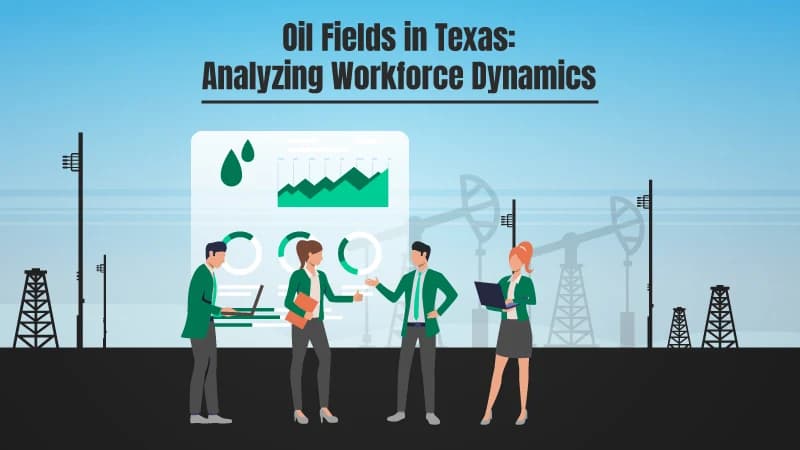
Evolution of the Workforce
The workforce of the oil field in Texas has gone through a major evolution since its early years. It has involved multiple factors. Some of the factors include market conditions, advancements in technologies, shifts in the energy landscape, and a few environmental concerns. Here is a brief overview of the evolution of the workforce in the Texas oil fields.
-
1901 and Early 20th Century:
-
The oil boom at Spindletop marked the beginning of oil discoveries.
-
This incident brought vast exploration and production efforts to the state.
-
Due to a rise in the oil and gas industry, it increased the workforce.
-
The workforce mainly included roughnecks, labors, and drillers.
-
-
Mid-20th Century:
-
After World War II, the industrialization of the Texas oil and gas sector significantly expanded.
-
This growing industry involved several technological advancements.
-
Seismic imaging and rotary drilling transformed the overall extraction and production activities.
This transformation caused an enhanced workforce.
-
The geologists, technicians, supporting staff and engineers were the key people in the workforce.
-
-
Late 20th and Early 21st Century:
-
Technological advancements continued extension and introduced hydraulic fracking and horizontal drilling.
-
This innovation gave birth to the shale revolution. The Shale revolution is the combination of these two modern drilling techniques.
-
It ultimately revolutionized oil and gas exploration in Texas.
-
Along with this, digitization and automation techniques have arisen. It included the adoption of IoT equipment, robotics, data analytics, and AI-ML algorithms to intensify drilling operations.
-
These advances in drilling technology dramatically transformed the workforce.
-
The workforce should place better emphasis on specified technical skills, such as greater proficiency in computer programming, automation, and data analytics.
-
-
2022-23:
-
In 2022, the spotlight shifted to the service sector of the oil and gas industry, positioning it as a major player in Texas.
-
The past year alone has seen the creation of approximately 28,400 job opportunities.
-
Till June 2023 the upstream industry of oil and gas has recorded about 208,000 employees.
-
Since June 2022, the employment rate has risen 13.5 %.
-
This significant rise is due to an additional 51,000 jobs added from the Covid low point in September 2020.
-
Based on the recently published report by McKinsey and Company, the global oil and gas industry will be required to fill the positions of around 1.9 million skilled labor by 2025.
Diversity and Inclusion in the Oil Fields
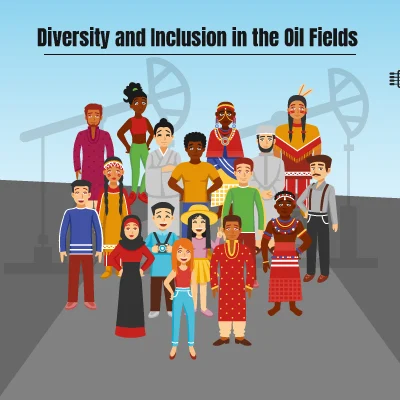
In recent years, Texas oil fields have increasingly focused on diversity and inclusion. The principles of diversity and inclusion are now widely recognized as one of the crucial concepts of the oil and gas sector. These conceptions aim to encourage a workforce that belongs to multiple backgrounds, ages, cultures, and genders. The primary objective of implementing such concepts is to ensure that every individual feels respected, empowered, and valued while working in the oil and gas industry.
In Texas oil fields, diversity and inclusion undertakings are executed to enhance the working environment. In this environment, talent, innovation, and unique approaches are valued for their competitive advantages. This primarily involves actively embracing diversity during the hiring process as well as invigorating such a culture where respect and collaboration are dominant. The oil and gas industry integrates with upstream, midstream, and downstream industries.
In respective industry’s, several types of work need to be done. Inclusion plays a significant role in such industries. It helps to create a workplace where every employee feels respected and motivated to take part and get away from intolerance or discrimination. To ensure it, there is a requirement to minimize barriers in the workforce, such as demotivating staff members, assigning them additional tasks, and so on.
Understanding the industry’s current scenarios for instance, geopolitical swings, the effect of climate change, oil price fluctuation, and others, implementing diversity and inclusion would be the foremost alternative. It will bring a positive perspective to the workforce. Moreover, there’s a concern in fewer industries to manage the aged workforce. Some of the industries are facing a workforce with a lack of skills due to modernization and digitalization.
By embracing diversity and inclusion, the Texas oil field workforce can propel the industry to new heights. It also leads the market in a vigorously developing landscape. Embracing these concepts will be the improved business strategy to access enhanced performance for prolonged success.
Technological Impact on Labor
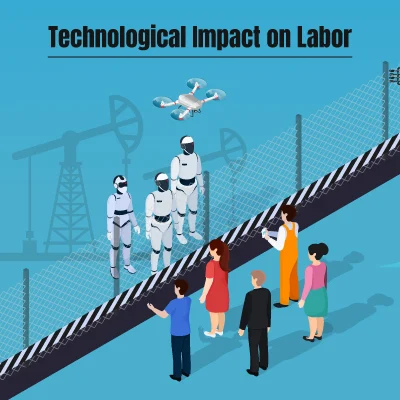
The Texas oil and gas industry, said to be one of the top industries, is now facing the challenge of shaking hands with technology in some cases. The new directional drilling technology involves automation and robots, reducing the intervention of the human workforce. Meanwhile, the more seasoned workforce tends to favor traditional drilling methods. While some workers welcome digital tools, they often lack the skills to use them effectively. To overcome such a few aspects, the oil and gas companies are involving AI (Artificial Intelligence) - ML (Machine Learning) algorithms. It helps to provide enhanced operations, more accuracy, and improved production.
Additionally, hydraulic fracking and horizontal drilling innovations reduce resource wastage. Such technological advancements somehow reduce the human workforce. Though it reduces human intervention, it still has the requirement of a human workforce with high skills in software technologies. Employees need to gain coding and programming skills to manage AI-ML algorithms effectively.
In today's industry, the shift from traditional methods to technological advancements makes it challenging to fulfill market demands. Technological advancements have reduced labor requirements while increasing efficiency and production. Despite some challenges for the workforce, digital technologies offer several employment opportunities for a technically skilled workforce. Accepting technology is a crucial thing to lead the energy market.
Challenges of WorkLife Balance in the Oil Industry
The oil and gas industry in Texas has some challenges that may affect the work life balance of the workforce. Here are some challenges that can arise while working in the oil and gas industry.
| Challenges of Work Life Balance in the Oil and Gas Industry. |
|---|
| Workers often face the significant challenge of extended work hours. Sometimes, sudden equipment failure affects the quantity of production. To get the desired production, the worker must have to work for longer hours, involving nights and holidays. |
| The oil and gas industry often meets some high-pressure deadlines that may cause severe effects of delays. Such high-pressure deadlines also put pressure on the workforce. The workers may get exhausted due to prolonged work to meet these deadlines. |
| The nature of work in the oil and gas industry often brings unpredictable conditions. It involves hazardous working situations, harsh environments, and some remote areas. Such unpredictable working conditions make it challenging for workers to find their personal time. It may also affect the physical and mental health condition of the workforce in some cases. |
Above are a few challenges the workforce may face while working in the oil and gas industry. To overcome such challenges, below are mentioned several strategies that workers can follow:
| Strategies to Overcome the Challenges |
|---|
| The employees can set a realistic goal to maintain a healthy work life balance while working in the oil and gas industry of Texas. It may ensure the worker has some time to go for the goals. |
| It's essential for skilled workers to put their health first. Taking care of personal health is an important strategy for maintaining an appropriate work life balance. The worker should eat healthy, get sufficient sleep, and follow a workout routine. This can lead to energetic and healthy working conditions for the workers in their personal as well as professional lives. |
| The personnel should communicate with their friends and families for any needs. Open communication can help reduce stress and achieve a better work-life balance. |
| Skilled employees can use the latest technologies to achieve enhanced production with minimum time. They can utilize the remaining time for personal activity. |
| Workers are encouraged to make full use of their sick and casual leave entitlements to take some time off from work. They can utilize those leaves to spend time with family and nature, contributing to work life balance. |
Health, Safety, and Environmental Concerns
Texas’s oil and gas industry plays a vital role in generating a solid economy worldwide. Though these industries are leading the market, they hold few concerns. The workforce in these industries is facing few health issues and safety hazards. The environment is also often harmed by these industries. Here are the health, safety, and environmental (HSE) concerns and safety efforts to overcome them.
Health Issues:
-
The workforce constantly working in oil fields may get through some health issues.
-
It includes hearing problems due to prolonged noise and breathing issues due to chemical exposure.
-
Moreover, the communities near drilling sites may suffer from water and air pollution, which increases the risk of cancer and respiratory issues.
Safety Hazards:
-
It mainly includes explosions, falling of materials, transportation accidents, and equipment damage.
-
These safety hazards may harm the workforce and nearby communities.
It may also cause severe damage to the environment.
Environmental Concerns:
-
Oil spills and air and water pollution may cause climate change and harm the environment.
To overcome such HSE concerns, following regulatory efforts and safety measures can be implemented.
-
Organizations like ISO (International Organization for Standardization), API (American Petroleum Institute) and OSHA (Occupational Safety and Health Administration) set standards to overcome HSE concerns.
-
Process safety and occupational safety can be put into service. Process safety aims to avoid serious accidents, whereas occupational safety assures the well-being of workers during tasks. Along with this, the administrative control, engineering control and personal protective equipment (PPE) are necessary safeguards.
-
To support eco-friendly operations, the workforce can utilize various oil spill prevention techniques, waste management, and digital technology.
-
By executing these safety measures, the oil and gas industry in Texas can ensure a healthy working environment for the workforce while sustaining its undertakings for a more extended period.
Workforce Management Trends in Oil and Gas
Oil and gas prices fluctuate according to the market demands. With the high demand, the industry tackles the appropriate workforce management. However, digital technology brought some green signals in the proper management of the workforce. Despite some concerns, innovations perform operations more effectively and are cost friendly.
The ongoing innovation and technologies are revolutionizing the drilling undertakings and workforce management. It reduces human employment in some cases but still has requirements for staff with divergent skills. Today, along with technology, the oil and gas industries are implementing workforce management trends. They help in engrossing productivity and performance. Here are two popular workforce management trends in the oil and gas sector:
Repetitive Work will Proceed with Automation
Automation Technologies are now becoming trending in every industry. Advanced technologies, such as ML, data analytics, and AI, emphasize automatic operations. It also includes the back-office functions. However, this trend may cause some employment redundancies. Some panelists focus on the chances of reallocating workers and generating trending skill sets.
The Oil industry experts state that automation techniques enhance working conditions, follow accuracy, and minimize risks. Moreover, technology allows the workforce to target knowledge intensive and more specialized tasks, implementing automation for repetitive tasks.
New Skill Requirement, Specifically in the Data and Digital Field
The workforce in the oil and gas industry is evolving due to technological advancements. It includes the increased demand for new skill sets, specifically in data and digital proficiency. With enhanced data development in the oil and gas industries, the capability to utilize and explicate this data becomes crucial.
Most of the oil and gas companies in Texas are prioritizing digital upskills over their organizations to emphasize their productivity. Additionally, soft skills like problem-solving and excellent communication are achieving demand in the automation era. It highlights the essential requirement for balanced skills.
Conclusion
The oil fields in Texas have evolved based on market demands and technology. The development of oil industries brought drastic changes in the workforce from roughnecks to technically skilled workers. Implementing diversity and inclusion, the oil industries deal with challenges, for instance work life balance and tech disruptions. The need for a workforce that is proficient in digital technologies is growing, and with it, great possibilities!.
Although technology has certain impacts on the workforce balance, the need for new skilled workers will continue to be in high demand. Oil fields in Texas strive for a revolutionized, productive, and skilled workforce, navigating market fluctuations to lead to a high position in the market.
To get the latest updates on the oil and gas industry, stay tuned with MineralView.com. We will assist you in analyzing your cash flow, offer you value analysis, help you receive your purchase and download report, connect you with like minded communities, and much more. The shift of the workforce towards digitalization and automation is shaping the overall oil fields in Texas, increasing the demand for a skilled workforce. It will continue to do so in upcoming years.
FAQ’s
Where are the maximum oil fields in Texas?
The Permian Basin, located in west Texas, consists of a maximum number of oil fields. US studies state the Permian basin includes the oil that will last up to 2050.
What are the New Technologies in the Oil and Gas industry?
Directional drilling, horizontal drilling, hydraulic fracking, digital and automation, AI-ML algorithms, seismic imaging, and many more are some trending and latest technologies in the oil and gas industry.
What are the Flames in Oil Fields?
Burning natural gas belonging to oil extraction produces flames. These flames are also referred to as gas flaring.
Who discovered the East Texas oil fields?
Columbus Marion “Dad” Joiner discovered the east oil fields of Texas between 1929 and 1930.